 Save
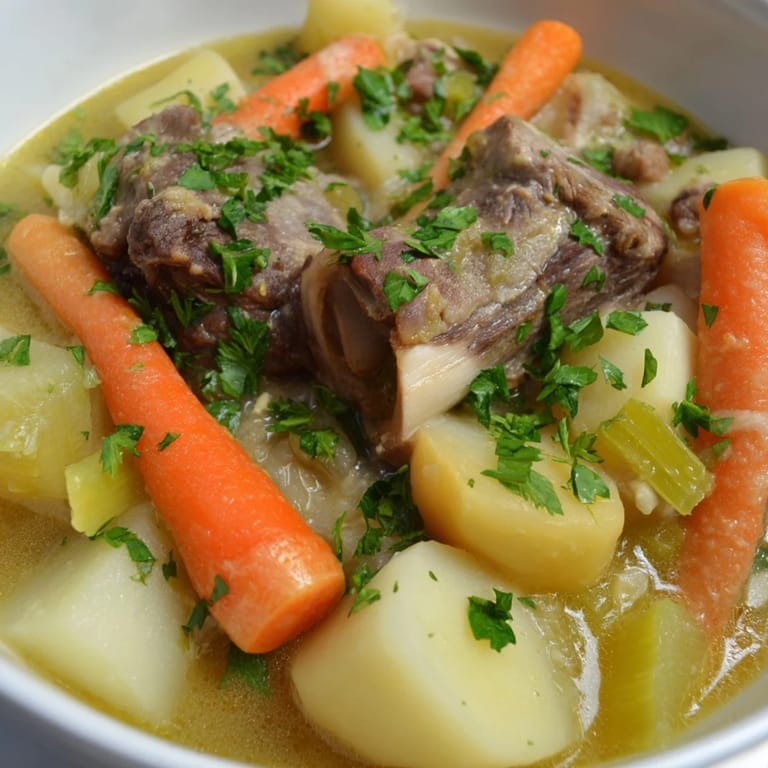
Save My nan always said cawl was Welsh comfort in a pot, and the first time she let me help make it, I understood why. The kitchen filled with this gentle, savory steam while she taught me to layer the lamb and vegetables with the patience of someone who'd made this dish a hundred times. I was maybe ten, more interested in sneaking tastes than following directions, but that stew stayed with me—the way the lamb fell apart at a spoon's touch, how the root vegetables softened into sweetness. Now when I make it, I still hear her voice telling me to skim the foam carefully, that the best broths are worth the small attention.
I made this for friends on a sudden cold snap in November, didn't think twice about it—just started the stew that morning and let it bubble quietly while we talked about nothing important. When we sat down to eat, someone said it tasted like home, and I realized that's what cawl does. It doesn't show off. It just wraps around you and makes you feel looked after.
Ingredients
- Lamb shoulder (1 kg, bone-in if possible): The bone gives the broth incredible depth and richness; I always ask the butcher for it specifically because it transforms the whole stew.
- Carrots and parsnips (2 of each, sliced): These two together create a natural sweetness that balances the lamb without added sugar.
- Potatoes and swede (2 medium and 1 small, diced): The potato dissolves slightly into the broth while the swede stays firmer—they're partners in texture.
- Leeks (2, cleaned and sliced): Split them lengthwise first, then slice—it's easier to rinse the layers this way and they taste cleaner.
- Onion (1 medium, diced): Diced small rather than sliced; it dissolves into the background and adds gentle sweetness.
- Stock (1.5 liters, chicken or lamb): Lamb stock is worth seeking out, but good chicken stock works beautifully too; taste it first because some are quite salty.
- Bay leaves (2): These anchor the flavor subtly—don't skip them, but do remember to fish them out at the end.
- Fresh parsley (one small bunch, chopped): Add most during cooking and save fresh sprigs for garnish so the brightness comes through.
Tired of Takeout? 🥡
Get 10 meals you can make faster than delivery arrives. Seriously.
One email. No spam. Unsubscribe anytime.
Instructions
- Start with the lamb:
- Place the lamb chunks in your largest pot and pour in the cold stock. Bring it to a gentle boil, watching as the white foam rises—this is the impurities cooking out. Skim this away with a spoon or small ladle; it only takes a minute but makes the final broth crystal clear.
- First simmer:
- Drop the heat to low, cover the pot, and let it bubble just barely for a full hour. The lamb needs this time to become tender; rushing it with high heat makes the meat tough.
- Build the stew:
- Add your carrots, parsnips, potatoes, swede, onion, and most of the leeks—save a handful of fresh leek slices for the very end. Season generously with salt and pepper now; the vegetables need time to absorb the seasoning.
- Second simmer:
- Cover again and let everything cook gently for 45 minutes until the vegetables are soft enough to cut with the spoon's edge and the lamb practically dissolves. The kitchen should smell unbelievably good by now.
- Final touch:
- Stir in the reserved leeks and most of your chopped parsley, then simmer uncovered for 10 more minutes. The fresh leeks will soften just enough while staying slightly bright.
- Finish and serve:
- Remove from heat, fish out the bay leaves, taste and adjust the salt and pepper one more time. Ladle into bowls and scatter fresh parsley on top.
 Save
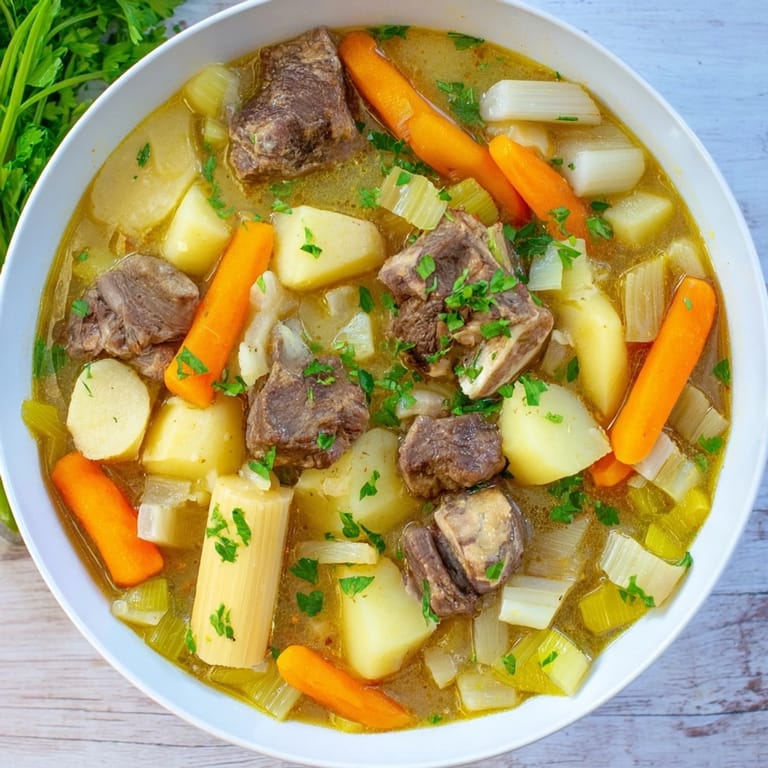
Save There's a moment, right around the 90-minute mark, when the house smells so good that people start appearing in the kitchen without being asked. That's when I know the stew is almost ready—when the aroma does the inviting for you.
Why This Works as a Dish
Cawl is built on a simple principle: let good ingredients do their work without interference. The lamb seasons the broth as it cooks, the vegetables add body and sweetness, and the long, low heat transforms everything into something greater than the sum of its parts. There's no cream, no flour thickener, no complicated technique—just time and attention.
Making It Your Own
Some people add barley for more body, or substitute beef if lamb isn't available. I've made versions with chicken stock when that's what I had, and they were lovely in a lighter way. The structure stays the same—long braise, root vegetables, generous herbs—and it always turns into something warming and true.
Serving and Storing
Cawl is meant to be eaten hot, ideally with good crusty bread or thick slices of Welsh cheese like Caerphilly melting into the warmth. It reheats beautifully—sometimes even better the next day when the flavors have settled and deepened. I often make it on a Sunday and eat from it twice more that week, and it never feels like leftovers.
- Make it a day ahead if you can; the flavor deepens overnight and you've done the hardest work already.
- Store it in the coldest part of your fridge and it keeps for up to four days, or freeze it for up to three months.
- Reheat gently on the stove rather than the microwave so the vegetables don't turn mushy.
 Save
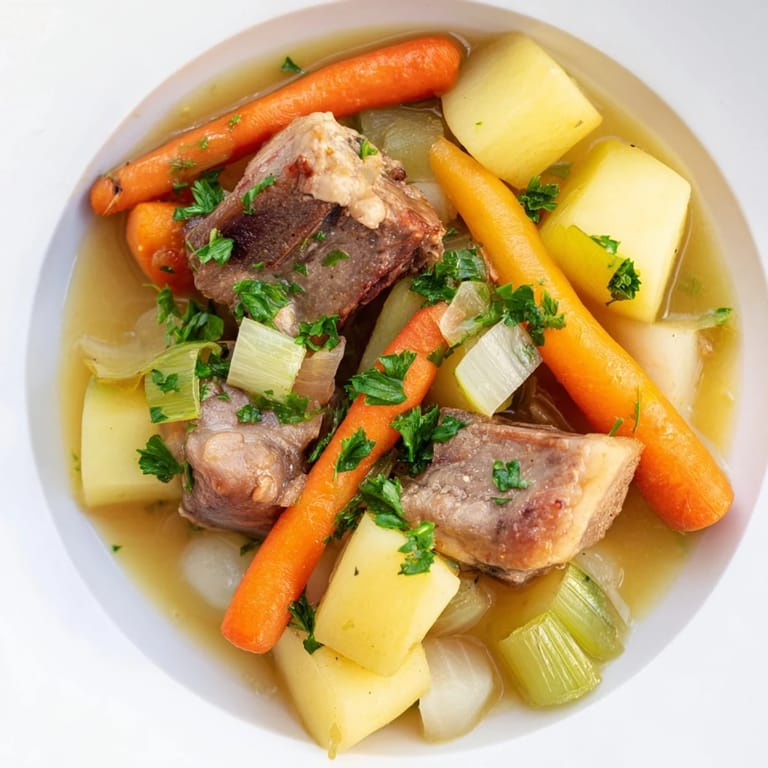
Save This is the kind of dish that reminds you why people cook—not for novelty or technique, but for the simple act of feeding someone well. Make it when you have time to let the stove do most of the work.