 Save
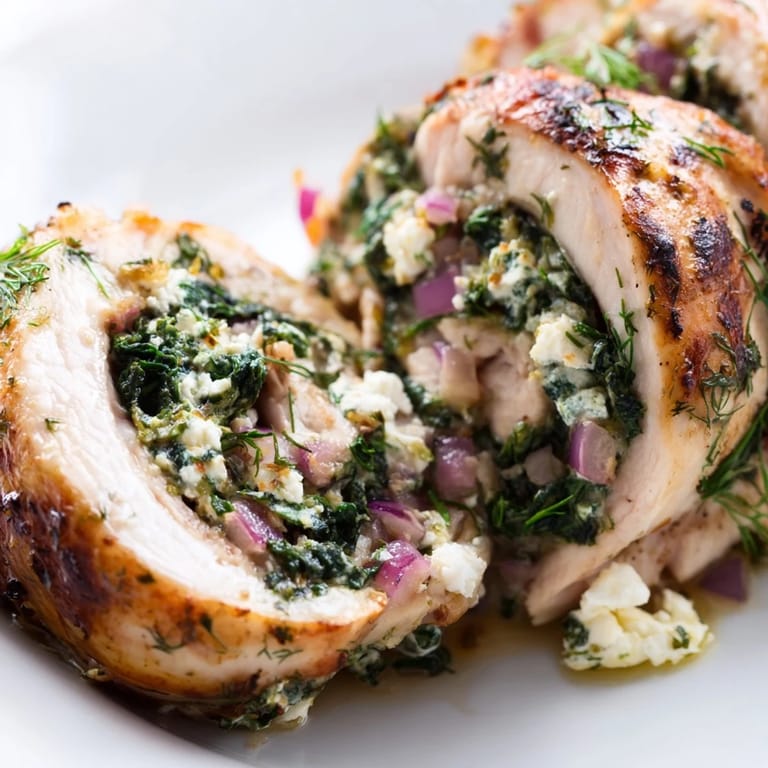
Save I was halfway through a weeknight when my neighbor knocked on the door with a bundle of fresh spinach from her garden, and I suddenly remembered a summer trip to Santorini where we ate chicken rolled with creamy feta at this tiny taverna overlooking the Aegean. That memory sparked something, and I started experimenting that very evening, trying to capture that briny, herbaceous feeling in my own kitchen. The first batch was a little dry, the second too salty, but by the third attempt, something clicked—the chicken stayed tender, the filling was perfectly balanced, and my family asked for seconds before I'd even sat down. Now whenever I make these rolls, I'm transported right back to that sun-soaked afternoon, but with the comfort of my own dining table.
I made these for my parents' anniversary dinner last spring, and my dad—who usually picks at things—actually asked me to write down the recipe. He said it tasted like the kind of food you'd pay too much for at a restaurant, and somehow that meant more than any compliment ever has. Watching them both slow down mid-conversation to really taste what was on their plates, that's when I realized this wasn't just a dinner, it was a moment.
Ingredients
- Boneless, skinless chicken breasts (4, about 170g each): The key to tenderness is pounding them even, so every bite cooks at the same rate and none of it dries out.
- Baby spinach, chopped (150g): Fresh spinach wilts down dramatically, so don't be shocked by the volume—it becomes this silky base for the filling.
- Feta cheese, crumbled (120g): Buy block feta if you can and crumble it yourself; the pre-crumbled versions can be drier and won't meld as beautifully into the spinach.
- Red onion, finely chopped (1 small): The red onion adds a gentle sweetness and color that white onion can't quite match.
- Garlic cloves, minced (2): Mince it fine so it distributes evenly and cooks completely in that quick sauté.
- Fresh dill, chopped (1 tbsp, or 1 tsp dried): Dill is non-negotiable here—it's what makes this feel Mediterranean instead of just herby.
- Fresh parsley, chopped (1 tbsp): Parsley brightens everything and keeps the filling from tasting too heavy.
- Olive oil (3 tbsp total, divided): Use a good quality oil; it's tasted directly in the finished dish.
- Dried oregano (1 tsp): Oregano goes on right before baking so it releases its oils from the heat.
- Lemon juice (from 1/2 lemon): Fresh lemon is crucial—it cuts through the richness of the feta and lifts the whole plate.
- Salt and freshly ground black pepper, to taste: Season the chicken itself first, then taste the filling separately so nothing ends up over-salted.
Tired of Takeout? 🥡
Get 10 meals you can make faster than delivery arrives. Seriously.
One email. No spam. Unsubscribe anytime.
Instructions
- Get your oven ready:
- Preheat to 200°C (400°F) so it's fully heated by the time your chicken hits the oven.
- Pound the chicken gently:
- Place each breast between two sheets of parchment paper and tap with a meat mallet until it's about 1 cm thick everywhere. You want them responsive to pressure, not pounded thin—there's a difference.
- Make the filling shine:
- Heat 1 tbsp olive oil in your skillet over medium heat, add the onion and garlic, and let them soften for two minutes until fragrant. Toss in the spinach and stir until it's completely wilted and any excess moisture cooks off, about two minutes.
- Bring it all together:
- Cool the spinach mixture slightly, then fold it together with the feta, dill, and parsley in a bowl. Taste it as you go—this is where you adjust seasoning before it meets the chicken.
- Roll with care:
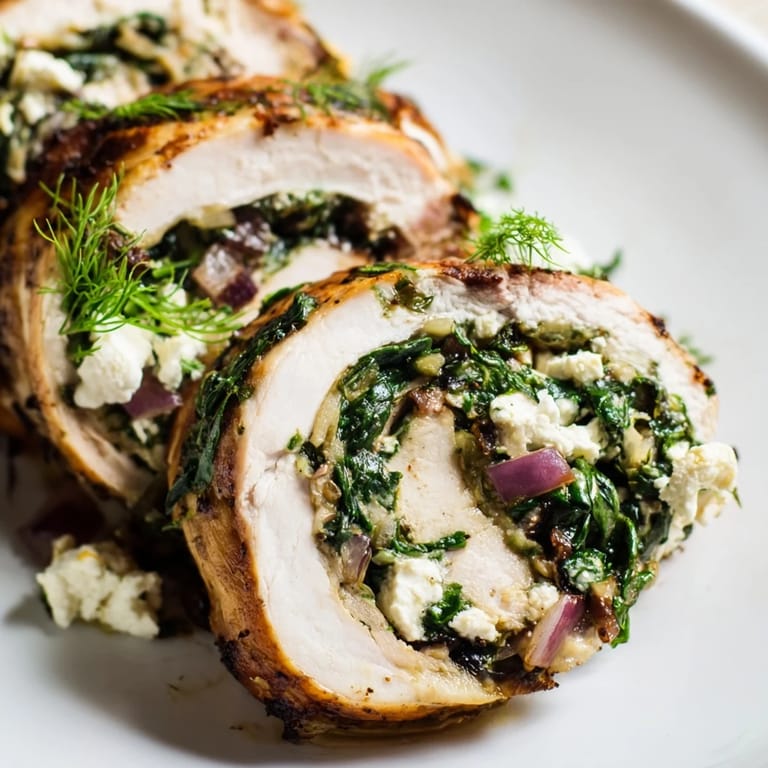
- Lay each chicken breast flat, spread a quarter of the filling along one long edge, and roll it up tightly. Secure each roll with a toothpick or loop of kitchen twine—tight enough that it won't unravel but not so tight it bursts open.
- Sear until golden:
- Heat 2 tbsp olive oil in an ovenproof skillet over medium-high heat and sear the rolls for about two to three minutes per side, rotating gently so they brown evenly without the filling pushing out. You're creating a golden crust that keeps the chicken moist.
- Season and finish:
- Sprinkle oregano over the rolls, squeeze that fresh lemon juice across them, and slide the whole skillet into the oven.
- Bake until cooked through:
- Bake for eighteen to twenty-two minutes, checking that the internal temperature reaches 74°C (165°F) with a meat thermometer. The rolls will look slightly browned on top and the filling will be warm all the way through.
- Rest and serve:
- Remove the toothpicks or twine and let them rest for a minute before slicing, so the juices redistribute and the filling stays intact.
 Save
Save There's this moment, right when you pull the skillet out of the oven and the steam rises up carrying the smell of oregano and lemon and warm feta—that's when I remember why I cook. It's not really about feeding people, though that matters too. It's about creating something with your hands that makes someone pause and actually taste what they're eating.
The Art of the Perfect Pound
Pounding chicken correctly is genuinely a skill, not just a step, and it took me longer than I'd like to admit to get it right. I used to bash the breasts flat with way too much force, turning them into thin discs that cooked unevenly and never had any body to them. Then I watched a chef work once—gentle, deliberate taps that gradually brought the meat to the same thickness without destroying its structure. Now when I pound, I'm thinking about creating a canvas that's ready to receive the filling and stay tender, not just making it smaller. The meat should still have some dignity when it's done.
Filling That Stays Put
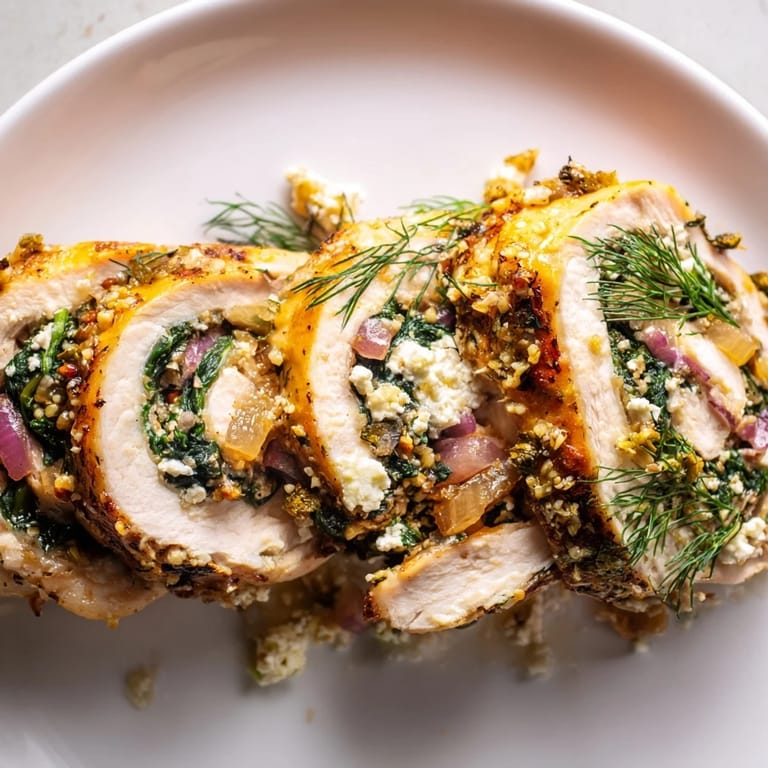
The first time I made these, the filling leaked everywhere during baking, and I served chicken rolls that looked deflated next to filling-less scraps on the plate. I realized I was overstuffing them and not rolling tight enough, as if I was scared to commit to the roll. Now I pack it firm but not angry, roll it snug enough that it stays together, and secure it with purpose. The filling should peek out slightly when you slice them open, not escape during cooking. Once you've done this two or three times, your hands just know the right pressure.
Sides That Complete the Picture
These rolls don't need much, but what you serve alongside them matters enormously. I've learned that roasted potatoes with rosemary work beautifully because they echo the Mediterranean theme without competing for flavor, while a simple Greek salad with olives and lemon-dressed greens balances the richness of the feta. Sometimes I just do a fresh green vegetable tossed with a little olive oil and garlic, letting the chicken and its filling be the star. Tzatziki on the side is always welcome—something cool and tangy to cut through the warmth.
- Roasted potatoes with herbs let you feel like you've put in real effort without any extra stress.
- A Greek salad with Kalamata olives and fresh lemon dressing keeps the meal bright and balanced.
- Cool tzatziki on the side gives people a choice in how to eat, which somehow makes it taste even better.
 Save
Save These rolls have become my go-to when I want to cook something that feels like it matters, something that tastes like travel and care and attention. They're proof that weeknight cooking doesn't have to be complicated to feel special.
Questions & Answers
- → What can I use instead of spinach in the filling?
Kale or Swiss chard work well as alternatives to spinach, offering similar texture and a slight variation in flavor.
- → How do I ensure the chicken rolls stay secure while cooking?
Use toothpicks or kitchen twine to tightly secure the rolls before searing and baking to maintain their shape.
- → Can I prepare the rolls ahead of time?
Yes, you can assemble the rolls in advance and refrigerate them for a few hours before cooking for added convenience.
- → What side dishes pair well with these chicken rolls?
Roasted potatoes, Greek salad, or a side of tzatziki complement the flavors and round out the meal nicely.
- → Is this dish suitable for gluten-free diets?
Yes, provided you use gluten-free feta cheese and check for any additives, this dish fits gluten-free requirements.