 Save
Save The smell hit me first—earthy, iron-rich, unmistakable. I was standing in a cramped Edinburgh kitchen, watching my flatmate's grandmother stir a bowl of minced offal with the same calm authority she might use folding laundry. She didn't romanticize it, didn't apologize for it. She just said, pass me the oats, and I did. That night, I tasted haggis made with hands that had done this a hundred times, and it wasn't strange or scary—it was warm, peppery, deeply savory, and somehow exactly right with buttery mashed neeps on the side.
I made this for a Burns Night dinner once, half-joking, half-serious. My friends were skeptical until the first forkful. Then the room went quiet except for the sound of cutlery on plates. Someone said it tasted like a really good sausage, but deeper, and that felt like the perfect description. We toasted with whisky, laughed too loud, and went back for seconds.
Ingredients
- Sheeps heart, liver, and lungs: The soul of the dish—if you can't find them, lamb or liver mince works, though the flavor will be gentler and less mineral.
- Beef or lamb suet: This adds moisture and richness that keeps the haggis from drying out during the long simmer.
- Steel-cut oats: Toast them lightly in a dry pan first for a nutty depth that regular oats just won't give you.
- Onions: Finely chop them so they melt into the mixture and add sweetness without chunks.
- Beef stock: Use good stock here—it binds everything and carries the spices through each bite.
- Ground black pepper, coriander, nutmeg, allspice, salt: This blend is non-negotiable; it's what makes haggis taste like haggis, warm and layered.
- Sheeps stomach or sausage casing: Traditional and atmospheric, but a pudding basin wrapped in foil works perfectly if casings feel like a step too far.
- Potatoes and turnips: Boil them separately so each keeps its own character, then mash with butter until creamy and smooth.
Tired of Takeout? 🥡
Get 10 meals you can make faster than delivery arrives. Seriously.
One email. No spam. Unsubscribe anytime.
Instructions
- Prepare the offal:
- Rinse everything well, then simmer in a big pot of water for an hour or two until tender and easy to mince. The kitchen will smell strong, but lean into it—that's part of the process.
- Mix the filling:
- Combine the minced offal, suet, toasted oats, onions, and stock in a large bowl. Season generously and mix until it looks moist and cohesive, like a loose meatloaf mixture.
- Fill the casing:
- If using a stomach or casing, don't overstuff—leave room for the oats to swell. Tie the ends with twine and prick a few tiny holes to prevent bursting.
- Simmer gently:
- Lower the filled haggis into a pot of simmering water, never boiling hard, and cook for two hours. Check the water level every so often to keep it steady.
- Make the neeps and tatties:
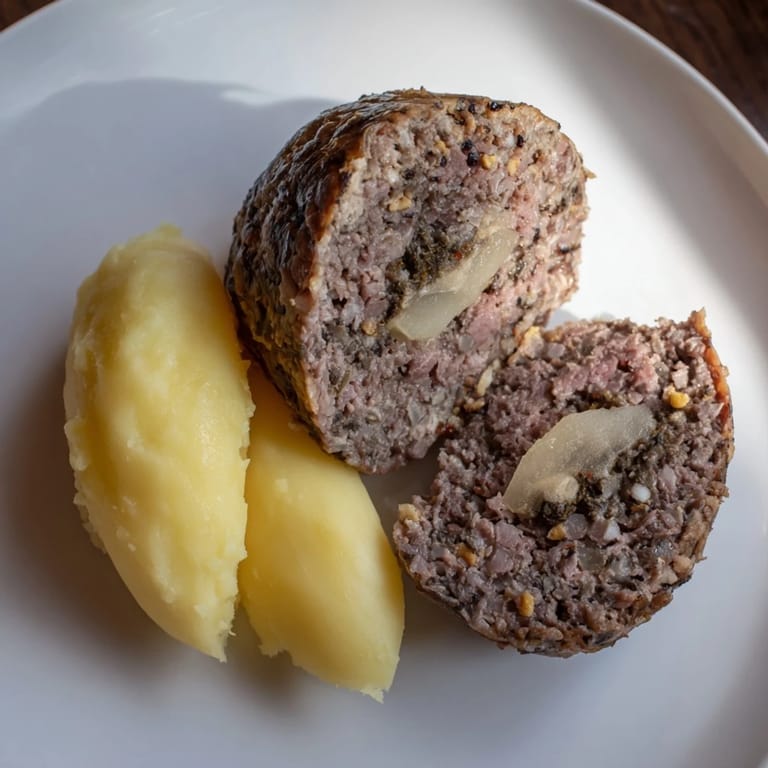
- Boil potatoes and turnips separately until soft, then mash each with butter, salt, and pepper. Keep them fluffy and buttery—they're the perfect foil to the haggis.
- Serve:
- Slice the haggis open carefully, spoon it onto plates alongside the mash, and serve immediately while everything is steaming hot.
 Save
Save There was a moment, after everyone had eaten and the whisky bottle was nearly empty, when someone asked me if I'd make it again. I said yes without thinking. Because for all its strangeness on paper, haggis had become something I wanted to share—a dish that felt generous, grounding, and worth the effort.
What to Serve Alongside
Whisky cream sauce is traditional and adds a silky, boozy richness that cuts through the spice. A simple green salad with a sharp vinaigrette balances the plate. Some people like oatcakes or crusty bread on the side for texture. And of course, a dram of Scotch whisky is practically required, both in the cooking and in the glass.
Storing and Reheating
Leftover haggis keeps well in the fridge for up to three days, wrapped tightly. Reheat slices gently in a covered pan with a splash of stock to keep it moist. You can also freeze it for up to two months—just thaw overnight in the fridge before warming through. The neeps and tatties reheat beautifully too, with a little extra butter stirred in.
Making It Your Own
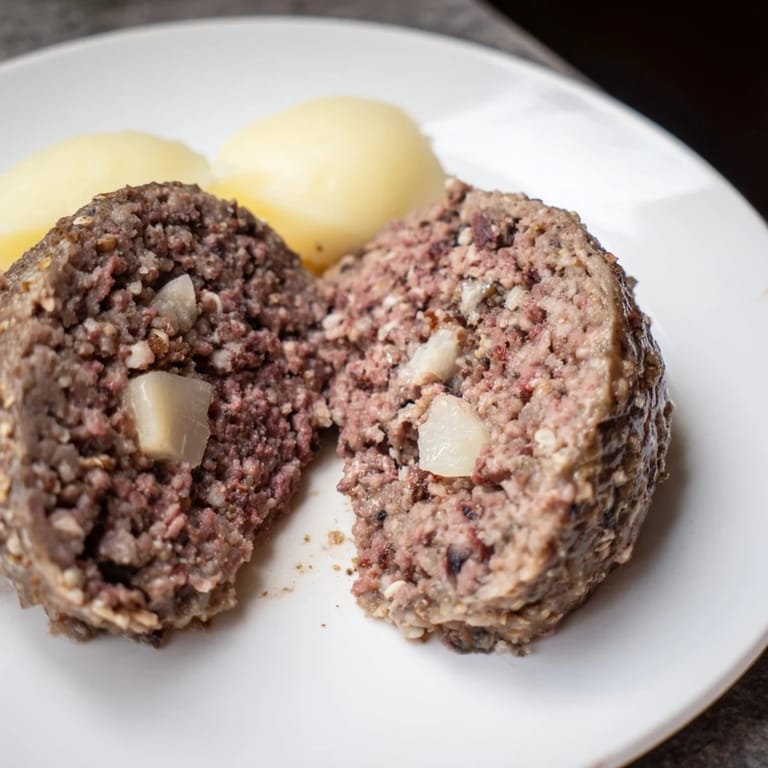
If offal isn't your thing, a mix of beef and lamb mince with extra liver gives you something close in spirit. Vegetarian haggis made with lentils, mushrooms, and vegetable suet is surprisingly good and holds the spice blend well. Some cooks add a splash of whisky directly into the mixture for extra depth. You can also bake it in a loaf pan instead of simmering, though you'll lose some of the traditional texture.
- Try adding a pinch of cayenne if you like a little heat.
- Swap turnips for parsnips in the mash for a sweeter, earthier side.
- Serve with a fried egg on top for a hearty breakfast twist.
 Save
Save Haggis isn't just a dish, it's a story you get to tell with your hands, your spices, and your table. Make it once, and you'll understand why it's lasted this long.
Questions & Answers
- → What meats are used in authentic Scottish haggis?
Traditional haggis includes sheep’s heart, liver, and lungs, finely minced and mixed with suet and spices.
- → How is the oatmeal prepared for the pudding?
Steel-cut oats are toasted before mixing to enhance their nutty flavor and provide texture.
- → What is the purpose of the sheep’s stomach casing?
The casing holds the mixture together during slow simmering, allowing flavors to meld while retaining moisture.
- → How are the neeps and tatties served alongside?
Turnips (neeps) and potatoes (tatties) are boiled until tender, mashed with butter, and seasoned gently to complement the pudding.
- → Are there variations for those avoiding offal?
Yes, substituting with lamb or beef mince can soften the flavor while maintaining texture and richness.