 Save
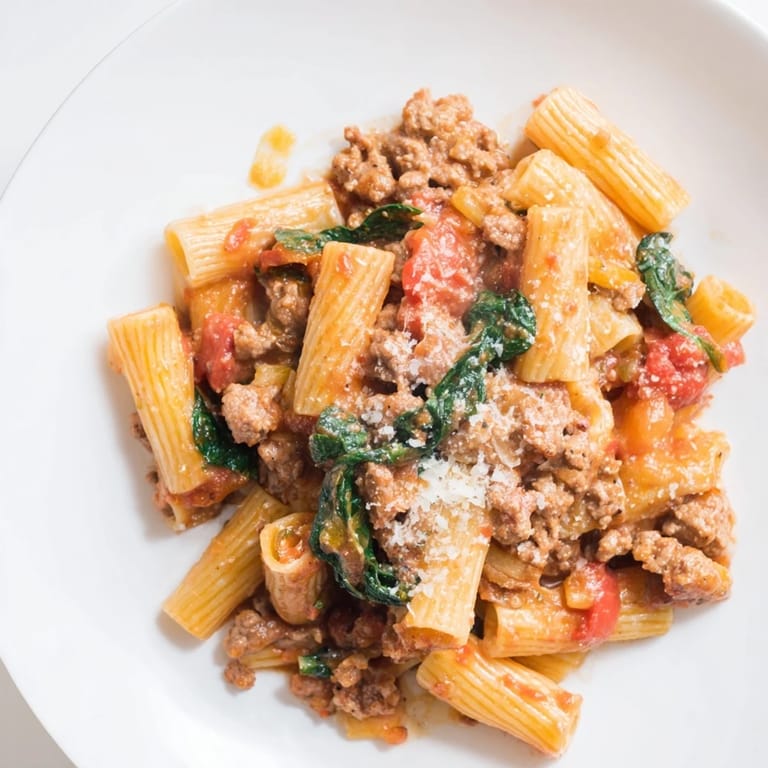
Save I discovered this dish on a Tuesday night when my fridge had three things: Italian sausage, a can of tomatoes, and the end of a box of pasta. My partner was working late, and I wanted something that didn't require multiple pans or fussy timing. One pot, thirty-five minutes, and the whole kitchen smelled like garlic and tomato—that's when I knew I was onto something special.
The first time I made this for friends, they showed up expecting something fussy. Instead, I was standing at the stove stirring one pot while we talked, and dinner was ready just as we sat down. Someone asked for the recipe before they'd even finished eating, which told me everything I needed to know about whether this was keeper material.
Ingredients
- Italian sausage: Use mild if you're cooking for mixed tastes, spicy if you like heat that builds as you eat. Removing the casing lets it break down into the sauce naturally.
- Onion and garlic: These two create the flavor foundation, and taking a minute to mince them properly makes a difference you'll taste.
- Canned diced tomatoes: The ones with juice matter more than you'd think, since they'll become part of your cooking liquid.
- Pasta: Short shapes like penne or rigatoni hold onto the creamy sauce better than long noodles ever will.
- Chicken broth: Low-sodium lets you control the salt yourself, and the pasta will absorb it while cooking.
- Heavy cream: Just a splash at the end, but it transforms the entire character of the dish into something luxurious.
- Parmesan cheese: Fresh grated tastes entirely different from the pre-shredded kind, and it's worth the thirty seconds it takes.
- Italian herbs, red pepper flakes, and olive oil: These small amounts build layers of flavor that make people ask what's your secret.
Tired of Takeout? 🥡
Get 10 meals you can make faster than delivery arrives. Seriously.
One email. No spam. Unsubscribe anytime.
Instructions
- Brown the sausage:
- Heat olive oil until it shimmers, then add the sausage and break it into small pieces as it cooks. You want it golden and slightly crispy at the edges, which takes about five minutes.
- Soften the aromatics:
- Once the sausage is done, add your onions and stir frequently. You'll notice the color change from translucent to golden, and that's your signal that they're ready for the garlic.
- Build the base:
- Add garlic and cook for just one minute until fragrant, then pour in the tomatoes with all their juice. Stir in the herbs and red pepper flakes, letting everything combine into a cohesive sauce.
- Add the pasta and liquid:
- This is where the magic happens, and it looks chaotic at first. Dump in the uncooked pasta and broth, stir everything together, and bring it to a boil so the pasta begins absorbing the liquid.
- Simmer until pasta is tender:
- Lower the heat, cover loosely, and let it cook for twelve to fifteen minutes while you stir occasionally. The pasta will absorb most of the liquid and become creamy naturally from the starch it releases.
- Finish with cream and cheese:
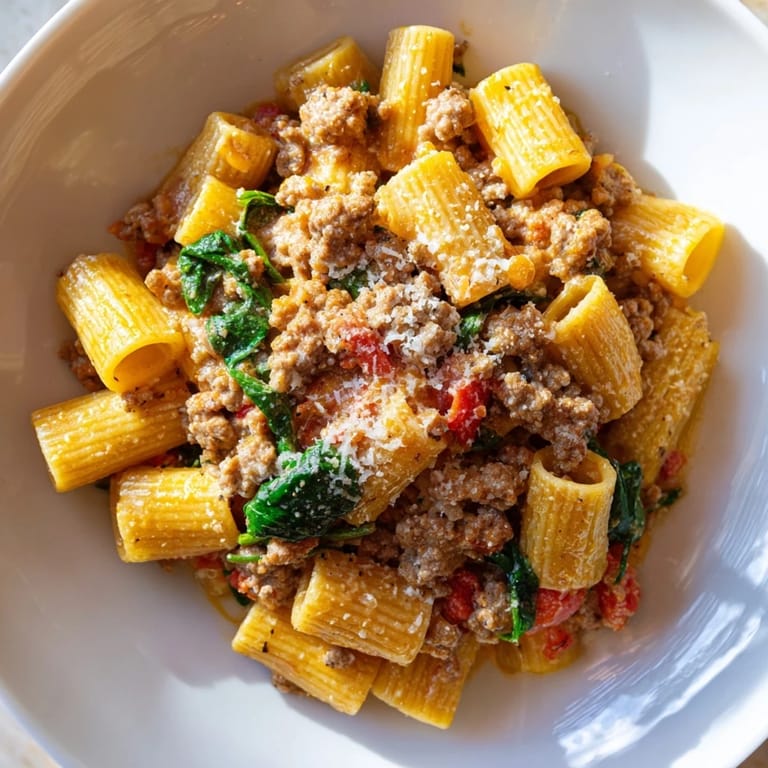
- Stir in the heavy cream and Parmesan, which will melt immediately. Add spinach if you're using it, and cook for just two or three minutes until it wilts into the pasta.
- Taste and adjust:
- Season with salt and pepper, tasting as you go. Remember that the Parmesan adds saltiness, so go light at first.
 Save
Save There's something about watching someone taste this for the first time and see their eyebrows go up slightly, like they weren't expecting something this good from one pot. That's the moment it stopped being just dinner for me.
Why This Works as a Weeknight Meal
The beauty of one-pot cooking isn't just about cleanup, though that matters. It's about how the pasta soaks up all the flavor from the sausage and tomatoes as it cooks, creating something deeper than if you'd cooked them separately. By the time it's done, every bite tastes intentional rather than assembled.
The Cream Question
I was skeptical about adding cream to a tomato pasta at first, thinking it would muddy the flavor. But it doesn't mask anything, it just softens the edges and adds richness that makes you want another bite. You notice it most in how the sauce clings to the pasta instead of pooling at the bottom of the bowl.
Flexibility Without Losing Yourself
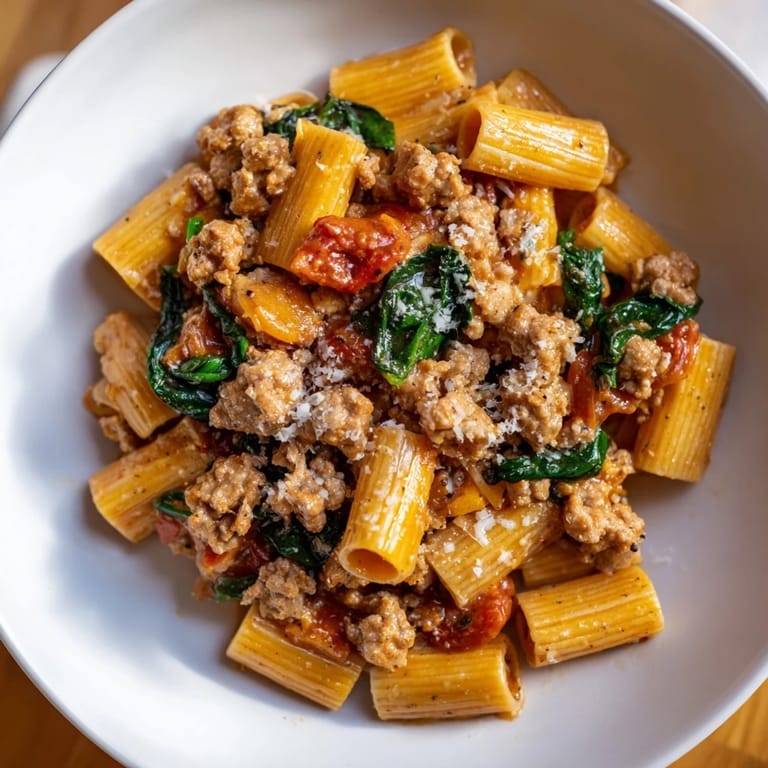
This recipe holds up well to small changes because the core is so solid. You can add mushrooms, swap in turkey sausage, or skip the spinach if it's not your thing. The foundation remains strong enough that variations feel like choices rather than compromises.
- Bell peppers or mushrooms go in when you add the onion, cooking down with it into the sauce.
- If you want it lighter, use half-and-half instead of heavy cream and it still tastes rich.
- Fresh basil scattered on top at the end adds brightness that the dried herbs can't quite reach.
 Save
Save This is the kind of recipe that earns its place in your regular rotation not because it's fancy, but because it delivers every single time. Make it once and you'll stop looking for complicated alternatives.
Questions & Answers
- → Can I make this dish gluten-free?
Yes, simply swap regular pasta for gluten-free varieties to accommodate gluten sensitivities.
- → What types of Italian sausage work best here?
Both mild and spicy Italian sausages work well. Choose according to your spice preference.
- → Is it possible to add vegetables?
Absolutely, adding mushrooms or bell peppers with the onions enhances flavor and nutrition.
- → How do I know when the pasta is perfectly cooked?
Cook until the pasta is al dente, meaning it should be tender but still firm to the bite, absorbing most of the broth.
- → Can I substitute turkey sausage for a lighter meal?
Yes, turkey sausage provides a leaner protein option while keeping the dish flavorful.
- → What wine pairs well with this dish?
A light Italian red such as Chianti complements the rich flavors beautifully.