 Save
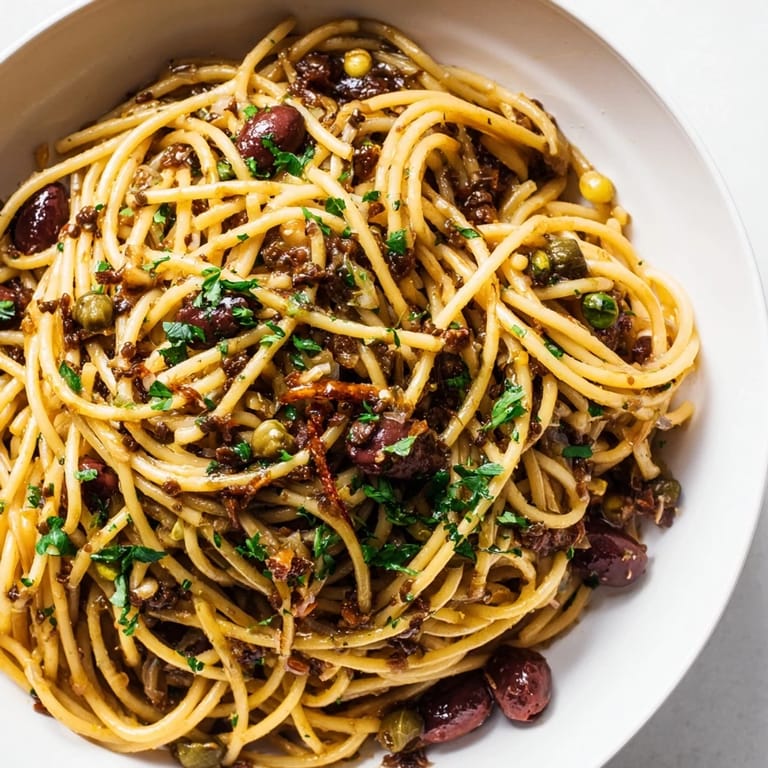
Save The smell hit me first, sharp and briny, as I pulsed olives in the food processor one weeknight when the fridge was nearly empty. I had bought a jar of fancy mixed olives on a whim and forgotten about them until that moment. What started as an experiment, tossing that salty, garlicky paste with hot pasta, turned into something I craved weekly. It was fast, bold, and required almost no effort, which felt like a small victory after a long day.
I made this for friends one Friday night when plans changed last minute and everyone ended up at my place. I doubled the batch, tossed it with extra lemon zest, and served it in a big bowl with wine and crusty bread. No one expected much from something so simple, but the bowl emptied fast. One friend asked for the recipe three times before leaving, which is always the best compliment.
Ingredients
- Mixed pitted olives: Use a combination of Kalamata and green for depth, the Kalamata adds richness while green olives bring a sharper, brighter bite.
- Capers: These little bursts of brine balance the olives and add a floral, tangy edge that keeps the tapenade from feeling one note.
- Garlic: Fresh cloves are key here, roasted or jarred garlic will dull the punch you want from this paste.
- Fresh parsley: It brightens the whole mix and cuts through the saltiness, don't skip it or use dried.
- Lemon juice: Just a teaspoon wakes everything up and ties the flavors together without making it acidic.
- Extra virgin olive oil: This is your silky base, use good quality because you will taste it.
- Dried spaghetti or linguine: Long pasta works best for clinging to the chunky tapenade, but any shape you have on hand will do.
- Reserved pasta water: This starchy liquid turns the tapenade into a glossy sauce that coats every bite.
Tired of Takeout? 🥡
Get 10 meals you can make faster than delivery arrives. Seriously.
One email. No spam. Unsubscribe anytime.
Instructions
- Boil the pasta:
- Bring a large pot of well salted water to a rolling boil, then add the pasta and cook until al dente, stirring occasionally. Before draining, scoop out a coffee mug full of the starchy cooking water and set it aside.
- Blend the tapenade:
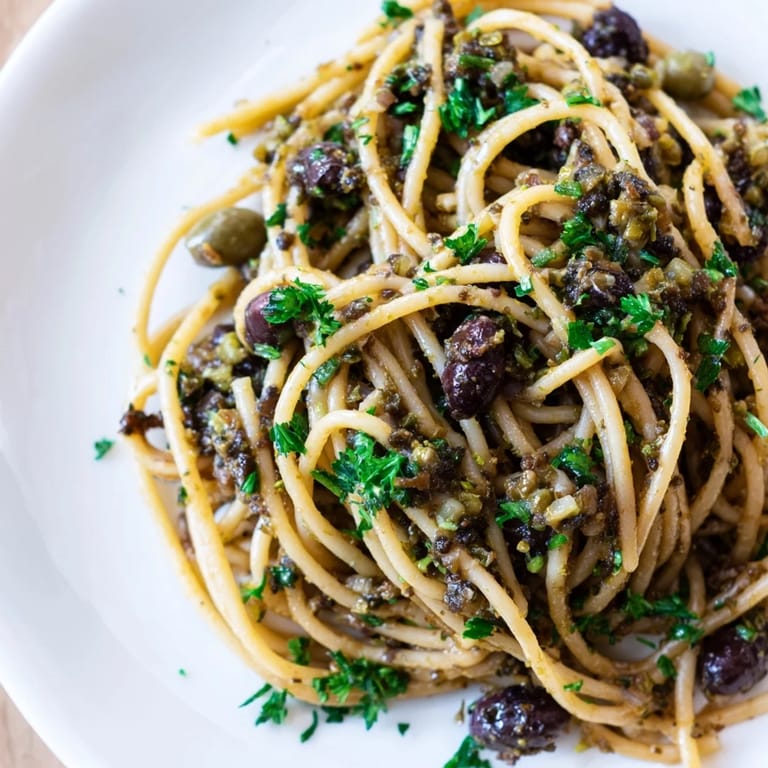
- Toss the olives, capers, garlic, parsley, and lemon juice into a food processor and pulse until coarsely chopped, then drizzle in the olive oil while it runs until you have a thick, chunky paste. Taste it and add black pepper, it should be bold and a little aggressive.
- Toss everything together:
- Return the drained pasta to the warm pot, add the tapenade, and toss vigorously with tongs. Add reserved pasta water a splash at a time until the sauce loosens and clings to the noodles like a glossy coat.
- Serve hot:
- Plate immediately and finish with fresh parsley, lemon zest, or a sprinkle of Parmesan if you like. The heat from the pasta will release all the aromatics, so serve it right away.
 Save
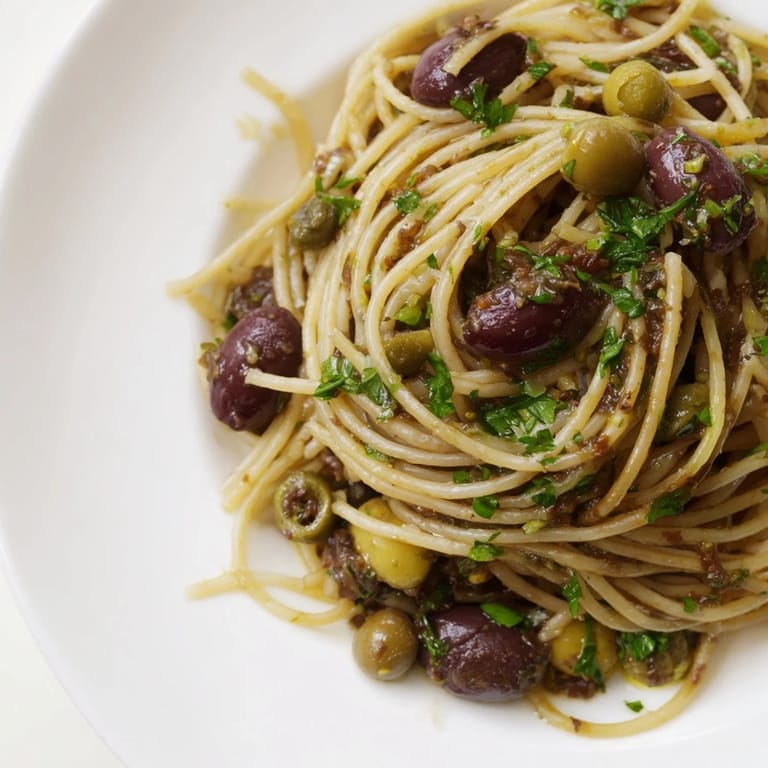
Save I remember sitting at the table alone one night, twirling this pasta on my fork and realizing how much I had missed simple, honest food. No fuss, no plating tricks, just big flavors that made me slow down and enjoy the moment. It became my reset meal, the thing I made when I needed to remember why I love cooking in the first place.
Choosing Your Olives
The olive bar at the grocery store used to intimidate me until I started mixing varieties and tasting as I went. Kalamata olives bring a deep, wine like richness, while green olives add a firm bite and grassy sharpness. I usually go half and half, but you can lean heavier on whichever you prefer. Avoid canned black olives, they taste flat and will make the whole dish feel dull.
Making It Your Own
This recipe is forgiving and loves improvisation. I have stirred in sun dried tomatoes for sweetness, added red pepper flakes for heat, and even folded in a handful of arugula right before serving for a peppery bite. One time I tossed in chopped anchovies because I had an open tin, and it added a savory depth that made the dish feel even more complex. Trust your instincts and use what you have.
Storing and Reheating
Leftovers keep in the fridge for up to three days, though the pasta will soak up some of the oil as it sits. When reheating, add a splash of water or olive oil to a skillet and warm it gently over medium heat, tossing constantly until it loosens up again. I actually love it cold the next day, straight from the fridge, eaten standing at the counter with a fork.
- Store the tapenade separately if you are meal prepping, it keeps for a week and tastes great on toast or with roasted vegetables.
- Reheat gently to avoid drying out the pasta, low and slow is better than high heat.
- If it feels dry, a drizzle of good olive oil will bring it back to life.
 Save
Save This dish taught me that bold flavor does not require complexity, just good ingredients and a little confidence. Make it once and you will find yourself coming back to it whenever you need something fast, satisfying, and completely unfussy.
Questions & Answers
- → What type of olives work best for the tapenade?
A combination of Kalamata and green olives provides the ideal balance of flavors. Kalamata olives contribute a deeper, more robust taste, while green olives add brightness and slight bitterness. Use good-quality pitted olives to save preparation time, and ensure they're well-drained before processing.
- → Can I make the tapenade ahead of time?
Yes, tapenade keeps well in an airtight container in the refrigerator for up to 5 days. This makes it perfect for meal prep. Let it come to room temperature before tossing with hot pasta, or warm it gently in the pot before combining with the cooked pasta.
- → How do I prevent the pasta from being too dry?
Always reserve pasta cooking water before draining. This starchy water creates a silky sauce when added gradually to the tapenade and pasta mixture. Start with a small amount and add more as needed until you reach your desired consistency—the sauce should coat the pasta without pooling.
- → What can I add for extra flavor and nutrition?
Consider adding sun-dried tomatoes, chopped anchovies for umami depth, or a pinch of red pepper flakes for heat. Fresh herbs like basil or oregano work beautifully, and roasted vegetables such as zucchini or cherry tomatoes complement the tapenade perfectly.
- → Is this dish suitable for dietary restrictions?
Absolutely. The base recipe is naturally vegetarian and vegan when using plant-based pasta. It's also dairy-free unless you add Parmesan garnish. For gluten-free diets, simply substitute whole wheat or gluten-free pasta. Always check ingredient labels for cross-contamination concerns with capers and olives.