 Save
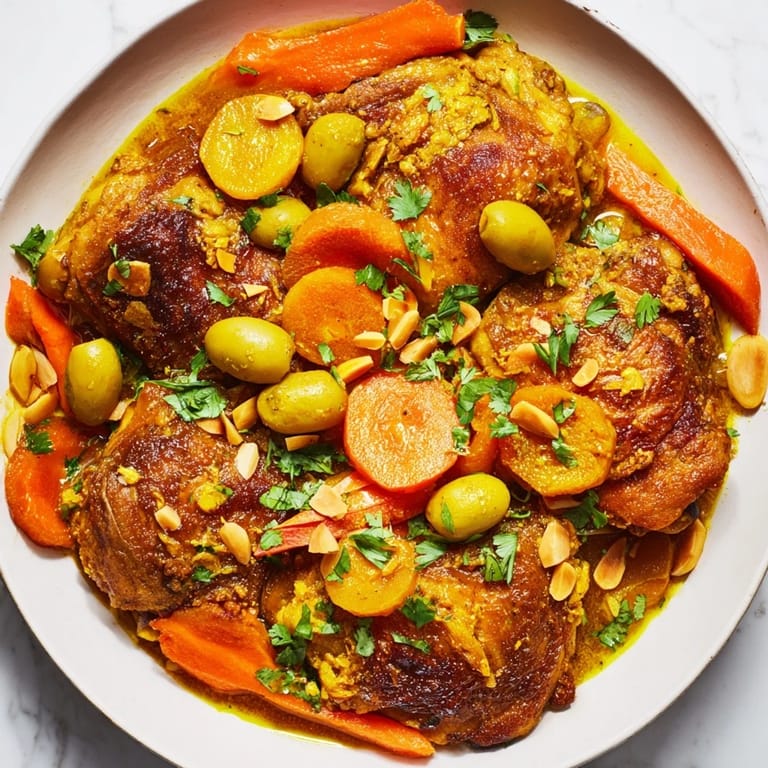
Save The first time I truly understood the magic of Moroccan cooking was standing in a cramped spice market in Marrakech, watching an elderly woman layer her tagine with such deliberate care, as if she were composing music. Back home, I tried to recreate that same warmth and complexity, and somehow this chicken dish captured it perfectly—the apricots sweetening the savory spices, the olives adding that briny depth that makes you pause mid-bite. That afternoon in my kitchen became a meditation in slow cooking, and now whenever I make this, I'm transported back to that moment.
I made this for my neighbor on a gray November evening when her kitchen was being renovated, and watching her face light up at the first spoonful told me everything I needed to know about food's real power. She asked for the recipe three times that night, each time as if she still couldn't quite believe it had come from my modest Dutch oven. That's when I realized this tagine wasn't just dinner—it was proof that a little intentionality and care could turn an ordinary weeknight into something unforgettable.
Ingredients
- Bone-in, skin-on chicken thighs: These are non-negotiable; they stay moist and flavorful during the long braise, unlike breasts which can dry out.
- Onion, garlic, and fresh ginger: This aromatic base is where the depth lives, and mincing rather than slicing helps them dissolve into the sauce.
- Dried apricots: They soften and add a subtle sweetness that balances the spices; soak them briefly if they're particularly hard.
- Preserved lemon: This is what transforms the dish from good to remarkable, adding an authentic fermented tang that regular lemon cannot replicate.
- Ground cumin, coriander, cinnamon, paprika, turmeric, and cayenne: Toast these together in the warm pan to unlock their essential oils and deepen their flavor profile.
- Green olives: Pit them yourself if possible; the briny, buttery ones with flesh make all the difference here.
- Chicken broth: Use low-sodium so you control the final salt level and the subtle flavors shine through.
- Diced tomatoes: They add body to the sauce and a slight acidity that brightens everything; drain them well to prevent excessive liquid.
- Slivered almonds: Toast them just before serving to add a textural contrast and nutty warmth.
- Fresh cilantro: A handful scattered at the end feels like a small celebration of color and freshness.
Tired of Takeout? 🥡
Get 10 meals you can make faster than delivery arrives. Seriously.
One email. No spam. Unsubscribe anytime.
Instructions
- Dry and season the chicken:
- Pat your chicken thighs completely dry with paper towels—this is what gives you that gorgeous golden crust. Sprinkle generously with salt and pepper right before cooking.
- Build a golden foundation:
- Heat olive oil until it shimmers, then lay the chicken skin-side down in the hot pan. You want a deep brown color on both sides, which takes about five to seven minutes total; don't rush this step, as it's building the flavor foundation for everything that comes next.
- Soften the vegetables:
- Once the chicken is set aside, lower the heat slightly and add your onion and carrot with a pinch of salt. The salt draws out moisture and helps them soften faster, creating a fragrant bed for the spices.
- Bloom the spices:
- Add your minced garlic, grated ginger, and all those warm spices right into the hot pan with the softened vegetables. Stir constantly for about a minute until the aroma fills your kitchen—that's when you know they've released their essential oils and are ready to transform the dish.
- Deglaze and build sauce:
- Pour in the drained tomatoes and use a wooden spoon to scrape up every caramelized bit stuck to the bottom of the pan. These are liquid gold, packed with all the chicken's rendered flavor, so make sure nothing gets left behind.
- Return chicken and simmer:
- Nestle the chicken back into the pot, then add the apricots, preserved lemon, and chicken broth. Bring everything to a gentle simmer, then cover and reduce heat to low.
- Let time do the work:
- Cook covered for forty-five minutes, stirring occasionally to ensure even cooking. The chicken will become fork-tender and the sauce will deepen in color and flavor.
- Finish with olives:
- Uncover the pot, add your pitted green olives, and simmer for ten more minutes without the lid. This allows the sauce to reduce and thicken slightly while the olives warm through and release their briny notes into the sauce.
- Taste and adjust:
- Before serving, taste for salt and spice balance. If it needs brightness, a squeeze of fresh lemon juice helps; if you want more heat, a pinch of cayenne can be stirred in.
- Garnish and serve:
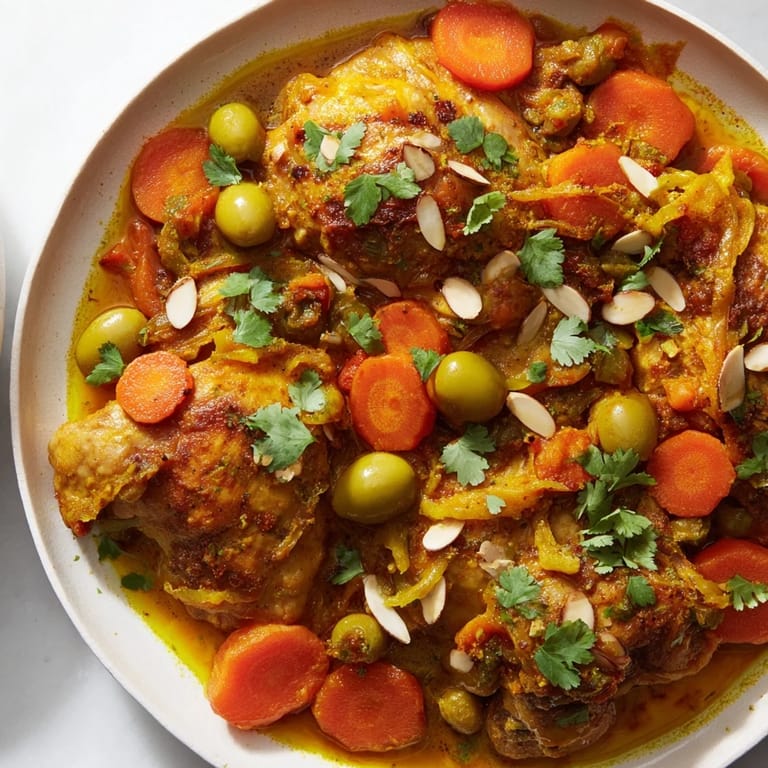
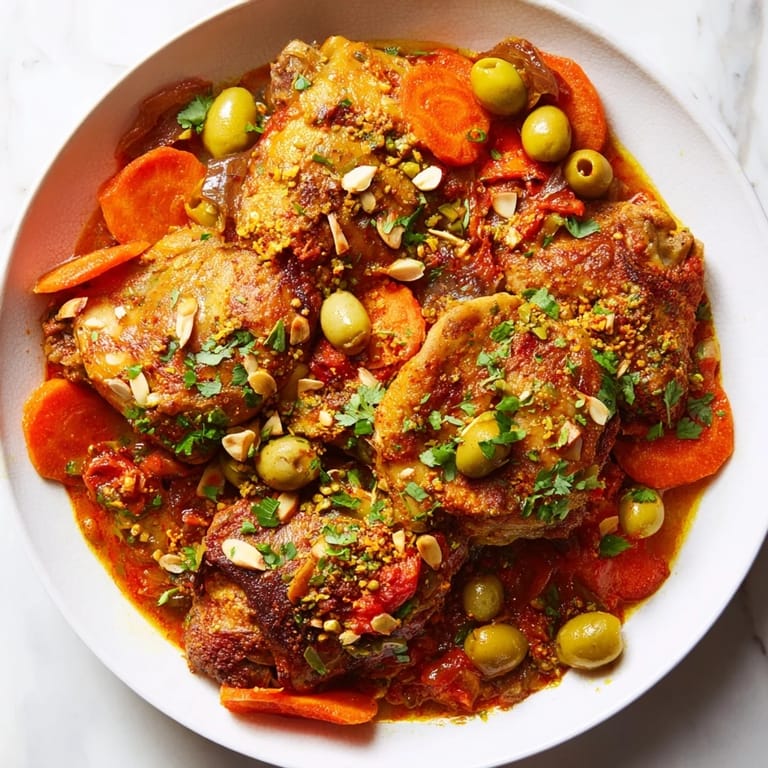
- Serve hot with a scattered handful of fresh cilantro and toasted almond slivers on top, which add both visual appeal and a textural contrast to the tender chicken and silky sauce.
 Save
Save I'll always remember my grandmother tasting this and saying, in her quiet way, that it reminded her of her grandmother's kitchen—a lineage of flavor and care passing through time. That's when I understood that recipes are really just love letters written in ingredients and technique, meant to be passed forward and made your own.
Serving Suggestions That Sing
This tagine is forgiving and versatile, happy to sit alongside fluffy couscous that soaks up every drop of the sauce, or with warm rice that provides a neutral canvas for the spices to shine. I've also served it over soft flatbread torn into pieces and used as edible spoons, which adds a casual, convivial feeling to the meal. The sauce is where all the magic lives, so don't skimp on getting every last bit onto your plate.
Making It Your Own
While this recipe celebrates the traditional balance of sweet and savory, there's room for your own discoveries. Some people add a handful of prunes alongside the apricots for even deeper sweetness, others incorporate pomegranate molasses for a tart, fruity undertone, and I've seen beautiful versions with chickpeas swapped in for the chicken. The soul of the dish—that layering of spices, the long gentle braise, the way fruit and olives work in conversation—remains constant.
When You're Short on Time or Missing an Ingredient
Not everyone has preserved lemon in their pantry, and that's perfectly fine; fresh lemon zest and a squeeze of juice at the end will give you brightness if not the same fermented depth. If you can't find good green olives, Kalamata work beautifully, bringing a richer earthiness instead. Even without the slivered almonds, the dish is complete—they're a flourish rather than a foundation.
- Harissa stirred in at the very end adds a smoky heat that some people find irresistible.
- A splash of red wine added with the broth deepens the sauce and adds subtle tannins.
- Serve with a cold mint tea or a crisp white wine that won't compete with the spices.
 Save
Save This is the kind of dish that builds community, that slows down your evening and invites conversation. Once you've made it, you'll find yourself returning to it, each time adding your own small touches, your own memories woven into the steam rising from the pot.
Questions & Answers
- → What cut of chicken works best for this dish?
Bone-in, skin-on chicken thighs provide the richest flavor and remain tender during slow cooking.
- → Can I substitute dried apricots with another fruit?
Dried apricots add a subtle sweetness, but dried figs or raisins can offer a similar effect.
- → How do preserved lemons enhance the flavor?
They add a tangy citrus note that brightens the rich spices and deepens overall complexity.
- → Is it essential to use a tagine or can I use a Dutch oven?
A Dutch oven works perfectly, providing even heat and slow cooking similar to a traditional tagine.
- → What side dishes complement this meal?
Steamed couscous, fluffy rice, or warm flatbread are ideal pairings to soak up the sauce.
- → Can this be made dairy-free?
Yes, this dish is naturally dairy-free without any adjustments needed.