 Save
Save My dad used to make this stew on the first truly cold day of autumn, the kind where you can see your breath in the kitchen before the oven warms things up. He'd spend the morning browning beef while telling stories about his grandmother's kitchen in Cork, the way she'd let the pot bubble away untended for hours while she'd sit by the window with her tea. I never understood the patience it took until I made my own batch and realized that impatience was my enemy—the slow simmer was doing all the work. Now, when I smell that rich broth developing, I'm transported back to standing on a stool next to him, watching the magic happen.
I served this to my partner on a night when we'd both had terrible days at work, the kind where words felt too heavy and nothing seemed fixable. We sat down with steaming bowls and somewhere between the second and third spoonful, we started laughing—not because anything was suddenly better, but because somehow this simple stew had softened everything enough to let the day go. That's when I learned that this isn't just comfort food; it's a tiny act of repair.
Ingredients
- Beef chuck, cut into 2-inch cubes (1.5 kg): Chuck has just enough marbling to become impossibly tender after hours of gentle simmering, and it won't shred apart the way leaner cuts do.
- Potatoes, peeled and chunked (4 large): Use waxy potatoes if you can find them—they'll hold their shape instead of dissolving into the broth, though honestly, if they break down a little, that's not a disaster.
- Carrots, sliced (4 large): The sweetness they release as they cook becomes part of the stew's personality, so don't skip them.
- Onions, chopped (2 large): They disappear into the broth and become the foundation of everything good happening in the pot.
- Celery stalks, sliced (2): This is the whisper in the background that makes people wonder what the secret ingredient is.
- Garlic, minced (3 cloves): Add it after the onions soften, or it'll turn bitter and ruin the whole thing—I learned that the hard way.
- Beef stock (1.2 liters): Use the best stock you can reasonably find; it becomes the soul of the stew, so it matters more than you'd think.
- Guinness or dark beer, optional (330 ml): This deepens everything without making it taste like beer—it's a secret weapon that transforms good stew into unforgettable stew.
- Tomato paste (2 tbsp): A small amount adds umami and richness that casual eaters won't be able to identify but will absolutely taste.
- Worcestershire sauce (2 tbsp): Check the label if you need gluten-free; it's that invisible thread pulling all the flavors together.
- Bay leaves (2), dried thyme (1 tsp), dried rosemary (1 tsp): These three create the traditional Irish flavor—restrained but unmistakable.
- Salt and freshly ground black pepper: Taste as you go; you'll likely need more salt than feels natural because the long cook mellows everything.
- Vegetable oil (3 tbsp): Use enough to actually brown the beef properly; skimping here means you lose the deep flavor that makes this dish sing.
- Fresh parsley, chopped (2 tbsp): A bright garnish that reminds you this is still a fresh, living dish even after hours on the stove.
Tired of Takeout? 🥡
Get 10 meals you can make faster than delivery arrives. Seriously.
One email. No spam. Unsubscribe anytime.
Instructions
- Dry and season your beef:
- Pat the cubes with paper towels until they're genuinely dry—this is the only way they'll brown instead of steam. Season generously with salt and pepper and let them sit for a moment.
- Brown the beef in batches:
- Heat oil in your Dutch oven until it shimmers, then add beef in a single layer without crowding. Let each batch sit for a few minutes until it develops a golden crust, then flip and repeat. This takes patience, but it's the foundation of everything that follows.
- Sauté the aromatics:
- Remove the beef to a plate and add onions and celery to the same pot. Stir them around for about five minutes until they soften and start to turn golden. You'll notice the fond—those browned bits stuck to the bottom—starting to peek through.
- Bloom the tomato paste:
- Add the tomato paste and let it cook for a full minute, stirring constantly. This transforms it from sharp to sweet and deepens the whole flavor profile.
- Deglaze with beer if you're using it:
- Pour in the Guinness and use a wooden spoon to scrape up all those precious browned bits from the bottom of the pot. The liquid will sizzle and hiss, which is exactly what you want. Let it simmer for a couple of minutes.
- Combine everything:
- Return the beef to the pot and add carrots, potatoes, bay leaves, thyme, rosemary, beef stock, and Worcestershire sauce. Stir everything together gently—you want it all incorporated but not beaten to death.
- Let time do the work:
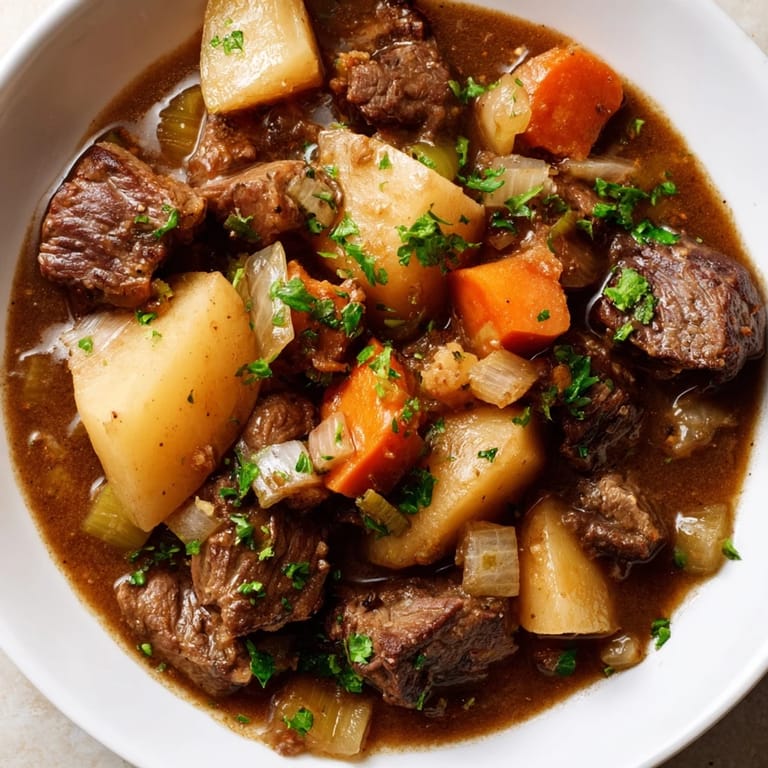
- Bring to a gentle boil, then reduce heat and cover. Simmer for 2 to 2.5 hours, stirring occasionally, until the beef falls apart at the touch of a spoon and the potatoes are completely soft. The longer and slower you go, the better it gets.
- Finish and taste:
- Remove the bay leaves and taste carefully. You'll almost always need more salt and pepper than you think—trust your palate, not your caution.
- Serve with love:
- Ladle into bowls, top with fresh parsley, and serve with crusty bread or over mashed potatoes if you're feeling indulgent.
 Save
Save The first time I got this recipe exactly right was also the first time I realized my kitchen wasn't just where I made food—it was where I felt competent and generous and a little bit proud. That matters more than any ingredient.
Choosing Your Beef
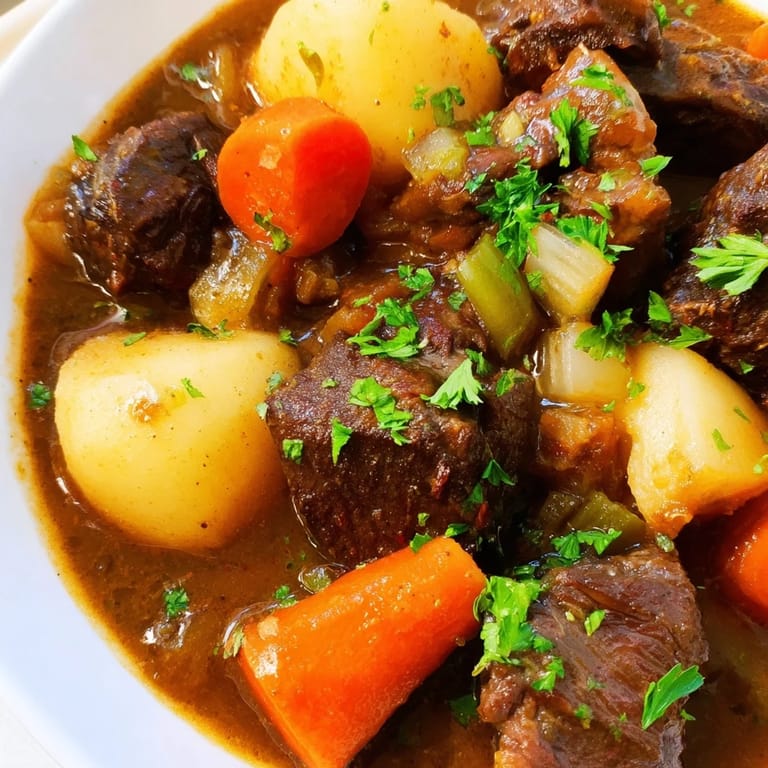
Chuck is your best friend here because it has enough connective tissue that it transforms into something silky after hours of gentle heat. I've tried brisket, and it works but takes longer. I've tried lean cuts, and they get stringy. Chuck is the Goldilocks choice—not too expensive, not too fussy, just right. If your butcher has a good chuck that's well-marbled, buy that one and feel confident you're setting yourself up for success.
The Question of Guinness
That bottle of Guinness is optional in the technical sense but feels almost essential in practice. It doesn't make the stew taste like beer; it makes it taste deeper and more complex, like you've been simmering it for even longer than you have. The first time I made this without it because I didn't have any on hand, it was still good, but it felt like watching a sunset through a window instead of being outside in it. If you're avoiding gluten or alcohol, the stew is complete without it, but if you can use it, do.
Building Flavor as You Go
The architecture of this stew matters: browning the beef, sautéing the vegetables, blooming the tomato paste, deglazing, and then building the final broth. Each step teaches the ingredients something new, layers them into something more interesting than the sum of their parts.
- Never add cold liquid to the pot at the end if you've accidentally let the broth reduce too much; bring any extra stock to a simmer first so you don't shock the pot and toughen the meat.
- The stew actually tastes better the next day, when all the flavors have had time to meld and deepen, so make it ahead if you can.
- It freezes beautifully for up to three months, and thawing it slowly on the stove top is almost as therapeutic as making it in the first place.
 Save
Save This stew is a small way of saying I care, made edible and warm. Serve it to people you love and watch what happens.
Questions & Answers
- → What cut of beef works best?
Beef chuck is ideal for slow cooking as it becomes tender and flavorful when simmered for hours.
- → Can I omit the Guinness stout?
Yes, the stout adds richness but can be left out for gluten-free dietary needs without sacrificing much flavor.
- → How do I thicken the broth?
Mash a few potato chunks against the pot's side and stir them in to naturally thicken the broth.
- → Are there suitable substitutions for beef?
Lamb can be used as an alternative for a traditional Irish variation, adjusting cooking time accordingly.
- → What sides pair well with this dish?
Crusty bread or creamy mashed potatoes complement the flavors and soak up the savory juices nicely.