 Save
Save There's something about cottage cheese that people either immediately understand or completely dismiss, and I was firmly in the latter camp until a Tuesday night when I ran out of cream and had a container of cottage cheese staring back at me from the fridge. Out of necessity—and admittedly a bit of stubbornness—I threw it into the blender with some milk and cheese, and what emerged was the silkiest, most luxurious mac and cheese sauce I'd ever made. It hit that perfect sweet spot between comfort food and something that actually makes you feel good, packed with protein but tasting absolutely indulgent.
I made this for my friend Marcus, who's always hitting the gym and constantly worried about protein intake, and watching him go back for thirds while raving about how creamy it was felt like a small victory. He kept asking what my secret was, and when I told him it was cottage cheese, he laughed—actually laughed—before asking for the recipe right there at the dinner table.
Ingredients
- High-protein pasta (300 g): Chickpea, lentil, or whole wheat varieties add real substance and nutrients that regular pasta can't match, plus they hold onto the sauce beautifully.
- Low-fat cottage cheese (300 g): This is your secret weapon—blended until smooth, it becomes an incredibly creamy base without any graininess if you choose the right texture.
- Low-fat milk (120 ml): Use whatever you have on hand, dairy or plant-based, to thin the sauce to pourable consistency.
- Sharp cheddar cheese (100 g): Go sharp, not mild, because the cottage cheese mellows everything out and you need that bite.
- Parmesan cheese (40 g): Freshly grated makes a difference in how it melts and integrates into the sauce.
- Nutritional yeast (1 tbsp, optional): Adds an extra umami depth and cheesy flavor boost if you want it.
- Cornstarch (1 tbsp): This thickens the sauce without making it feel heavy or using cream.
- Dijon mustard (1 tsp): A tiny amount brightens everything and adds sophistication you won't be able to identify but will definitely taste.
- Garlic and onion powder (½ tsp each): These aren't optional in my book—they add savory backbone to what could otherwise taste one-dimensional.
- Black pepper and salt (¼ tsp each): Season to taste because different pasta brands absorb salt differently.
Tired of Takeout? 🥡
Get 10 meals you can make faster than delivery arrives. Seriously.
One email. No spam. Unsubscribe anytime.
Instructions
- Get the pasta going:
- Fill a large pot with salted water and bring it to a rolling boil—you want the water to taste like the sea. Drop in your pasta and cook it to al dente, which means it should have just a tiny bit of resistance when you bite it, not soft all the way through. Reserve that ½ cup of cooking water before you drain; you'll need it to adjust your sauce later.
- Blend your sauce into silk:
- While the pasta's cooking, add every single sauce ingredient to your blender: the cottage cheese, milk, both cheeses, nutritional yeast if you're using it, cornstarch, mustard, spices, and salt. Blend until it's completely smooth with no visible cottage cheese specks—this usually takes about 30 to 45 seconds on high speed, depending on your blender.
- Heat gently and watch for thickness:
- Pour that silky sauce into a large saucepan and place it over medium-low heat. Whisk constantly because you want it to heat evenly and thicken without any lumps forming. After about 3 to 5 minutes, you'll see it start to bubble gently at the edges and visibly thicken—that's your signal that the cornstarch has done its job. If it gets too thick before it's warm enough, add a splash or two of that reserved pasta water.
- Bring it all together:
- Add your drained pasta directly into the warm sauce and toss everything together for a minute or two until every piece is coated and heated through. The residual heat from both the pasta and sauce will finish warming everything.
- Optional crispy topping (if you're feeling fancy):
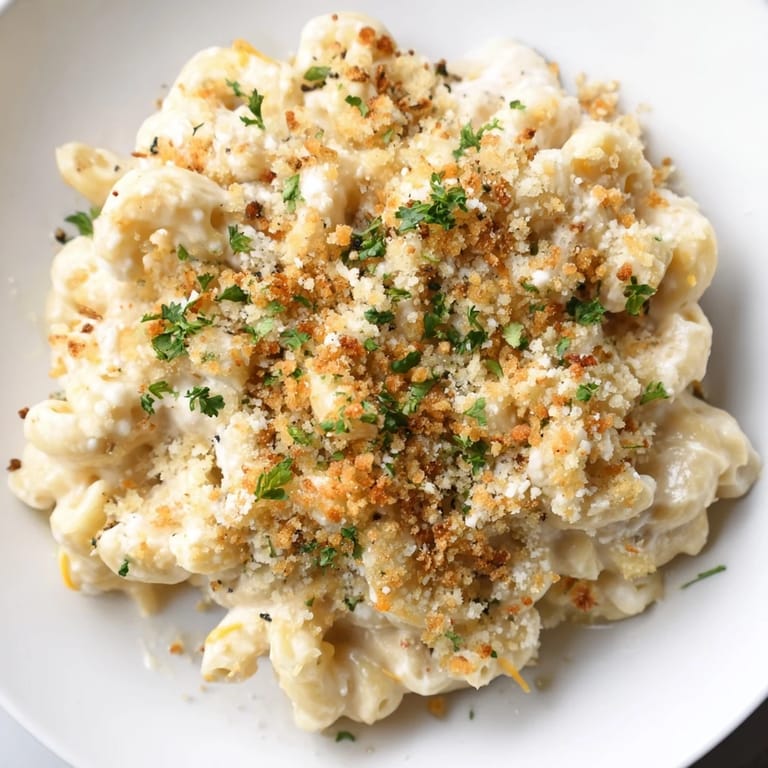
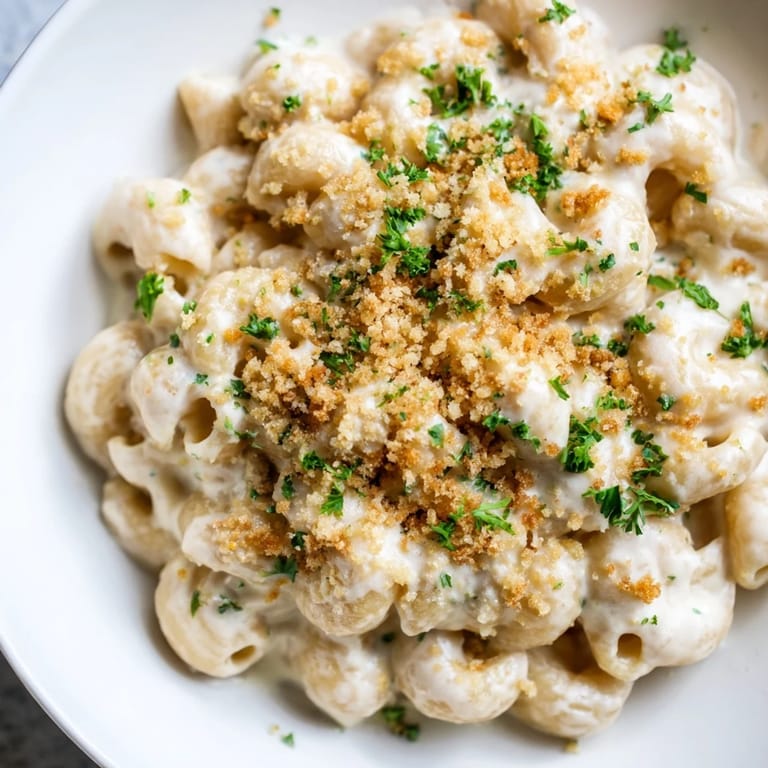
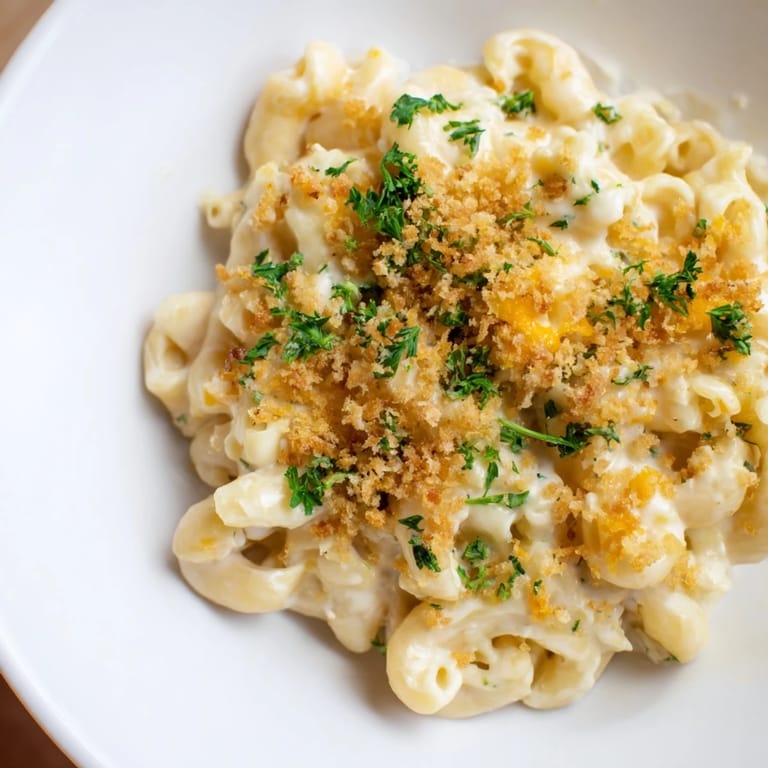
- Transfer to a baking dish, scatter breadcrumbs over the top, and run it under the broiler for 2 to 3 minutes until the crumbs turn golden and crispy. This only works if you like the textural contrast.
- Finish and serve:
- Plate it up immediately while it's still hot, scatter that fresh parsley on top for color and freshness, and serve right away.
 Save
Save The moment that really stuck with me happened on a rainy afternoon when my sister showed up unannounced with her toddler, who's notoriously picky about food. I threw together this mac and cheese, and he actually ate it without negotiation—not because I tricked him, but because it genuinely tasted like the indulgent comfort food he wanted. My sister looked at me with this quiet gratitude, the kind that doesn't need words, and that's when I realized this recipe was about so much more than hitting protein macros.
Why This Sauce Beats Traditional Béchamel
Traditional mac and cheese relies on a butter and flour roux, which tastes wonderful but leaves you feeling heavy after eating it. Cottage cheese gives you that same luxurious mouthfeel without the heaviness, and it delivers actual protein instead of just fat and carbs. The blending technique is key here—it breaks down the curds into such fine particles that your mouth experiences it as pure creaminess rather than as cheese studded with cottage cheese curds.
Ways to Build on This Foundation
Once you've mastered the basic sauce, you can take it in so many directions depending on your mood or what's in your fridge. Roasted broccoli florets stirred in at the end add vegetables without overwhelming the cheese flavor, while a handful of cooked chicken breast transforms this from a side dish into a proper dinner. Some nights I add a teaspoon of hot sauce for a subtle kick, or swap the sharp cheddar for Gruyère if I'm feeling like something earthier and more sophisticated.
Storage and Reheating Tips
This dish actually keeps better than you'd think—refrigerate it in an airtight container for up to three days, and when you're ready to reheat, use the stovetop over low heat rather than the microwave, adding a splash of milk to loosen the sauce back to the right consistency. If you make it ahead, undercook the pasta slightly because it will continue softening as you reheat everything together. One last thought: this freezes reasonably well for about a month, though the sauce texture might be slightly grainier after thawing, so I usually make it fresh when I can.
- Taste the sauce before serving and adjust the salt, because not all pasta brands absorb salt equally.
- If you're doubling the recipe for a crowd, blend in two batches so your blender doesn't overflow or leave chunks unmixed.
- Keep a little reserved pasta water in a cup nearby while eating—you can drizzle it back into leftovers to bring back the creamy consistency.
 Save
Save This recipe has become my go-to proof that eating well doesn't mean sacrificing the foods you crave, and that sometimes the best solutions come from working with what you have rather than following the traditional playbook. Make it tonight, and I bet you'll be making it again within a week.
Questions & Answers
- → What type of pasta works best for this dish?
High-protein pastas such as chickpea, lentil, or whole wheat types provide a satisfying texture and nutritional boost.
- → Can I substitute the cottage cheese in the sauce?
Low-fat cottage cheese is key for the creamy texture, but you can experiment with ricotta or blended Greek yogurt for a similar consistency.
- → How do I achieve a smooth sauce consistency?
Blend the sauce ingredients thoroughly and heat gently while whisking to thicken without curdling, adding reserved pasta water if needed.
- → Is the breadcrumb topping necessary?
The topping adds a pleasant crunch when broiled, but the dish is flavorful and creamy even without it.
- → Can I add vegetables or protein additions to this dish?
Yes, cooked chicken or steamed broccoli can be stirred in after coating the pasta with sauce to add extra nutrition.