 Save
Save The first time I tasted koshari was at a cramped Cairo street stand, watching a vendor layer rice and lentils with the practiced speed of someone who's made it a thousand times. The aroma of cumin and simmering tomatoes filled the narrow alley, and when he crowned it with those burnished, crackling onions, I understood why this humble combination had captured the hearts of an entire nation. Now, whenever I recreate it in my own kitchen, that same magic happens—the textures play against each other, the spices sing, and suddenly I'm transported back to that dusty corner of the world.
I made this for friends who'd never heard of koshari before, and watching their faces light up after that first bite reminded me why food travels across continents. One friend went back for seconds before I'd even finished serving, muttering something about the way the crispy onions changed everything. That's the moment I realized koshari isn't just street food—it's a conversation starter, a bridge between cultures, right there on a plate.
Ingredients
- Medium-grain rice (1 cup): The slightly softer texture absorbs the sauce beautifully, and rinsing it removes excess starch so each grain stays distinct rather than clumping together.
- Brown or green lentils (1 cup): They hold their shape through cooking, giving you those satisfying little pockets of earthiness beneath the rice; don't use red lentils or they'll turn to mush.
- Elbow macaroni or ditalini (1 cup): Small pasta shapes nestle perfectly between the other layers, and cooking them al dente keeps them from turning soggy when the sauce hits.
- Crushed tomatoes (15 oz can): The backbone of koshari's soul—look for good quality without added sugar, because you'll be simmering this into something deeply flavorful.
- Cumin and coriander (1 teaspoon and 1/2 teaspoon): These two spices are non-negotiable; they're what makes koshari taste like itself and not just any other rice-and-lentil dish.
- Vegetable oil for frying: You need enough to create genuine crispness in the onions, not just toasted edges—shallow frying won't give you that signature crackle.
- White vinegar and fresh garlic: The garlic vinegar drizzle is the secret finishing touch that cuts through the richness and adds a sharp, bright note.
Tired of Takeout? 🥡
Get 10 meals you can make faster than delivery arrives. Seriously.
One email. No spam. Unsubscribe anytime.
Instructions
- Start the lentils first:
- Bring them to a rolling boil, then drop the heat so they simmer gently—if you let them boil hard, they'll split and lose their structure. You're aiming for tender but not falling apart, usually around 20–25 minutes depending on how fresh they are.
- Get the rice going alongside:
- Once it comes to a boil, cover it immediately and drop the heat to low—don't peek, don't stir, just let steam do its work. The covered pot traps all that moisture and creates fluffy individual grains.
- Cook the pasta separately:
- Salt your water generously so the pasta absorbs flavor as it cooks, and keep tasting from about the 6-minute mark until it's just barely al dente. It'll continue firming up slightly as it cools and sits with the other components.
- Build the tomato sauce with patience:
- Let that onion go truly translucent before you add the garlic—it takes about 5 minutes, and rushing means you'll taste raw onion later. Once the sauce is simmering, don't cover it; let some liquid evaporate so the flavors concentrate into something deeper and richer.
- Fry the onions in batches:
- Overcrowding the pan steams them instead of crisping them, so work in two batches even if it feels slower. You'll know they're ready when they're deep golden brown and completely rigid—they'll crisp up even more as they cool on paper towels.
- Mix the garlic vinegar:
- Combine it in a small bowl and let it sit for at least 10 minutes so the garlic releases its pungent, sharp flavor. This isn't a last-second addition; it needs time to develop.
- Layer with intention:
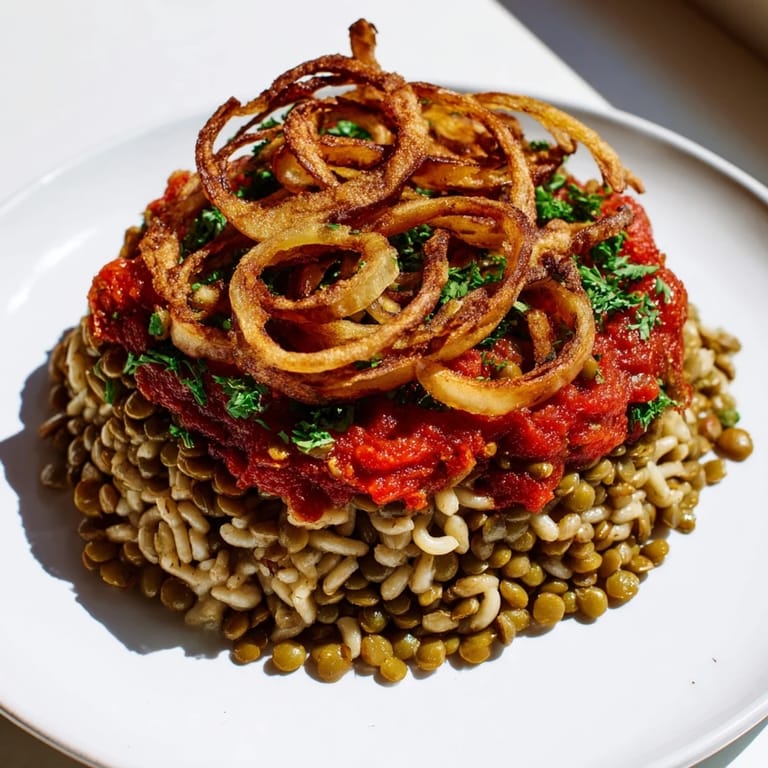
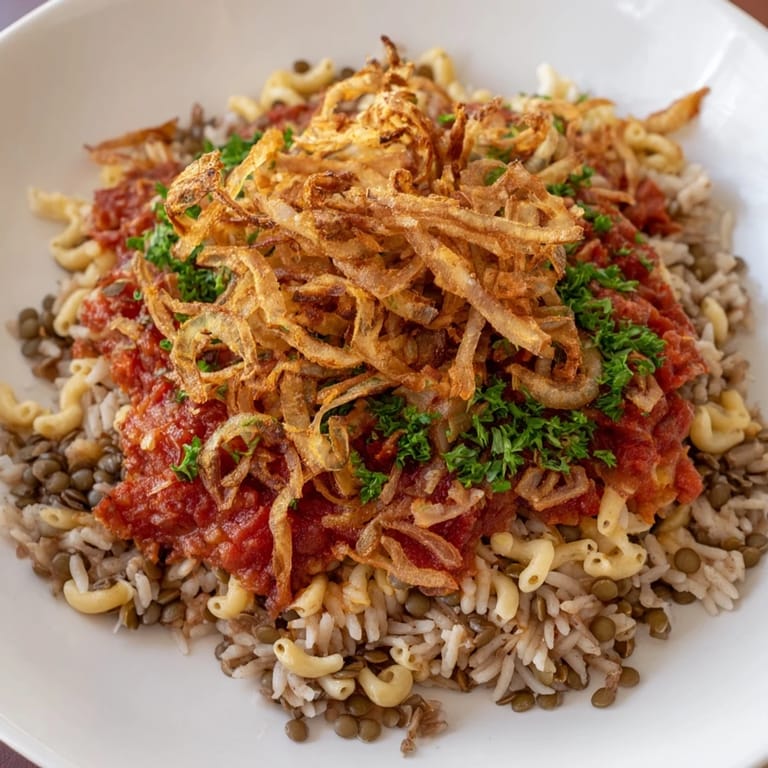
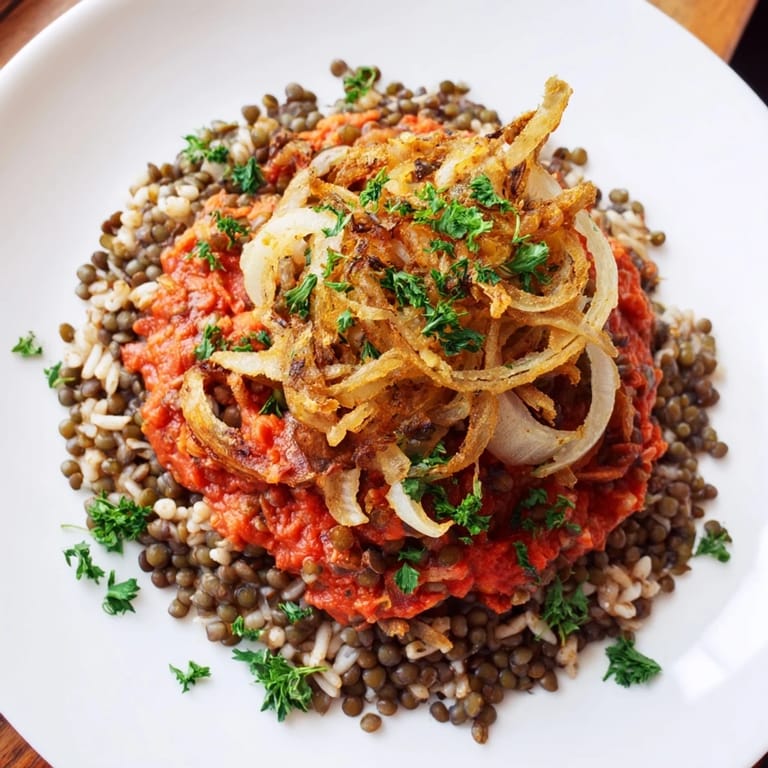
- Start with rice as your base, then lentils, then pasta—each layer gets its own moment before you pour that tomato sauce over top. The order matters because the sauce needs to drench everything evenly, and the crispy onions are your final crown.
 Save
Save There's a moment just before serving when all the components are ready and you're standing there looking at the separate bowls of rice, lentils, pasta, and sauce—and you realize you're about to create something that's somehow greater than its parts. That's when koshari stops being a recipe and becomes an experience, a small ritual of assembly that's genuinely exciting.
The Soul of Layering
Koshari works because of the contrast between its elements, not despite it. The soft rice cushions the slightly firmer lentils; the pasta adds a different texture entirely; and then the sauce and onions arrive to tie everything together. I learned this by accident once when I mixed everything together in one bowl instead of layering it, and the dish lost something ineffable—a kind of structural integrity that matters more than it sounds. Each component gets to be itself while also becoming part of something bigger, and that balance is worth respecting.
Variations That Make Sense
You can play with koshari without breaking it. Orzo or vermicelli work beautifully if you don't have elbow macaroni; they'll cook faster and nestle differently between the other layers. Some cooks add chickpeas for extra protein, and I've seen versions with a fried egg nestled on top, turning it into something almost breakfast-like. The spices are flexible too—if you don't love heat, dial back the chili flakes; if you want more intensity, add more cumin or a pinch of cayenne pepper.
Scaling and Serving Smart
This recipe makes four generous servings, but it's oddly forgiving if you need to stretch it further—add more tomato sauce and maybe another can of lentils and rice, cooked separately. Koshari is one of those dishes that's actually better served in individual bowls rather than on a communal platter because everyone gets to experience that architecture of layers before mixing. Leftover components keep separately in the refrigerator for three days, which means you can assemble fresh koshari bowls throughout the week without the sauce soaking into everything.
- Keep the crispy onions in an airtight container so they stay crackling and ready to crown last-minute bowls.
- Warm the sauce gently before serving so it's at its best, and always serve the garlic vinegar on the side so people can add as much or as little as they like.
- If you're cooking for someone new to koshari, make extra sauce—the abundance of it is part of the charm.
 Save
Save Koshari taught me that the best dishes aren't always the most complicated—they're the ones that respect their components while celebrating how those components sing together. Once you've made it, you'll understand why it conquered the streets of Cairo.
Questions & Answers
- → What grains are used in Egyptian Koshari?
It combines medium-grain rice, brown or green lentils, and small elbow macaroni or ditalini pasta for a hearty texture.
- → How is the tomato sauce prepared?
Onions and garlic are sautéed before adding crushed tomatoes, tomato paste, cumin, coriander, chili flakes, and sugar, then simmered until thick and flavorful.
- → What gives the dish its crunch?
Thinly sliced onions are coated in flour and fried until golden and crispy, then sprinkled on top.
- → Can the heat level be adjusted?
Yes, chili flakes in the sauce and garlic vinegar can be added or omitted according to taste preferences.
- → Are there alternatives for pasta in this dish?
Yes, orzo or vermicelli can be used instead of macaroni depending on availability and preference.
- → Is this dish suitable for vegans?
Yes, all ingredients are plant-based, making it a satisfying vegan option.