 Save
Save There's something about a perfectly executed Alfredo that stops conversation mid-table. I learned this dish not from a cookbook but from watching my neighbor Maria work her magic in a cramped kitchen, moving with the kind of ease that comes from making something a hundred times. She never measured anything, just trusted the way cream moves and the exact moment garlic stops smelling sharp. When I finally recreated it at home, I understood why she never needed a recipe—the magic isn't in complexity, it's in knowing when to stop stirring.
I made this for my partner on a random Tuesday when neither of us felt like leaving the house, and somehow that simple dinner became the meal we talk about—the kind that proves you don't need an occasion to cook something that feels like celebration. The kitchen filled with this warm, garlicky steam, and by the time we sat down, we were both too hungry to talk much beyond asking for more Parmesan.
Ingredients
- Fettuccine, 400g: The ribbon width catches sauce in ways thinner pastas can't—trust that the pasta shape matters here.
- Unsalted butter, 60g: Unsalted lets you control the seasoning and taste the pure, nutty flavor that makes cream sauces glow.
- Garlic, 3 cloves minced: The moment it stops being sharp and turns fragrant is the only moment that matters—miss it by thirty seconds and your sauce tastes raw.
- Heavy cream, 250ml: Full fat cream is non-negotiable; anything else breaks and separates when heat touches it.
- Parmesan cheese, 120g grated: Buy a wedge and grate it yourself if you can—pre-grated cheese has anti-caking powder that clouds your sauce.
- Cream cheese, 60g cubed: This sounds strange in an Italian sauce, but it's the secret that keeps everything smooth and forgiving, even if your heat gets a little high.
- Black pepper, 1/2 tsp freshly ground: Grind it right before you cook; pre-ground pepper is like cooking with the ghost of pepper.
- Nutmeg, pinch: It's optional but it shouldn't be—just a whisper that rounds out all the sharp dairy flavors.
- Fresh spinach, 150g: Baby spinach wilts down to almost nothing, which means you can use more than feels necessary and still get delicate greens.
- Salt, to taste: Taste as you go because the Parmesan is already salty, and oversalting a cream sauce is harder to fix than you'd think.
Tired of Takeout? 🥡
Get 10 meals you can make faster than delivery arrives. Seriously.
One email. No spam. Unsubscribe anytime.
Instructions
- Start your pasta the right way:
- Bring a large pot of salted water to a rolling boil—the kind where bubbles come up aggressively and the kitchen gets a little steamy. Drop in the fettuccine and set your timer to whatever the box says, then subtract one minute. You want it soft enough to eat but with just a tiny resistance when you bite, the thing Italians call al dente that English speakers butcher most of the time. While it cooks, grab a measuring cup and reserve half a cup of the starchy water before you drain—this is your safety net if the sauce gets too thick.
- Build the base with butter and garlic:
- While pasta boils, melt butter in a large skillet over medium heat until it stops sizzling quite so aggressively. Add minced garlic and stay right there watching it—one minute is usually the magic moment where it smells incredible and looks barely golden, not brown. This is the foundation, and it matters.
- Create the cream sauce carefully:
- Turn the heat down to low before you pour in the cream—this is not a step to rush. Drop in the cubed cream cheese and whisk gently until it melts into the cream and everything turns smooth and glossy. This takes maybe two minutes of constant whisking, and you'll feel it happen under your whisk.
- Bring the cheese in slowly:
- Add the Parmesan in a slow, steady stream while whisking, not all at once like you're feeding it to the sauce in small doses. Keep the heat low and keep whisking until you can't see any grainy bits anymore. Add the black pepper and that small pinch of nutmeg, then taste and add salt carefully—remember that Parmesan is salty and reserved pasta water is too.
- Fold in the spinach gently:
- Dump the fresh spinach into the warm sauce and stir for about two minutes, just until it's completely wilted and dark green and lost its volume. You'll see it happen—one moment it looks like a forest, the next it's integrated into the sauce.
- Toss the pasta and finish:
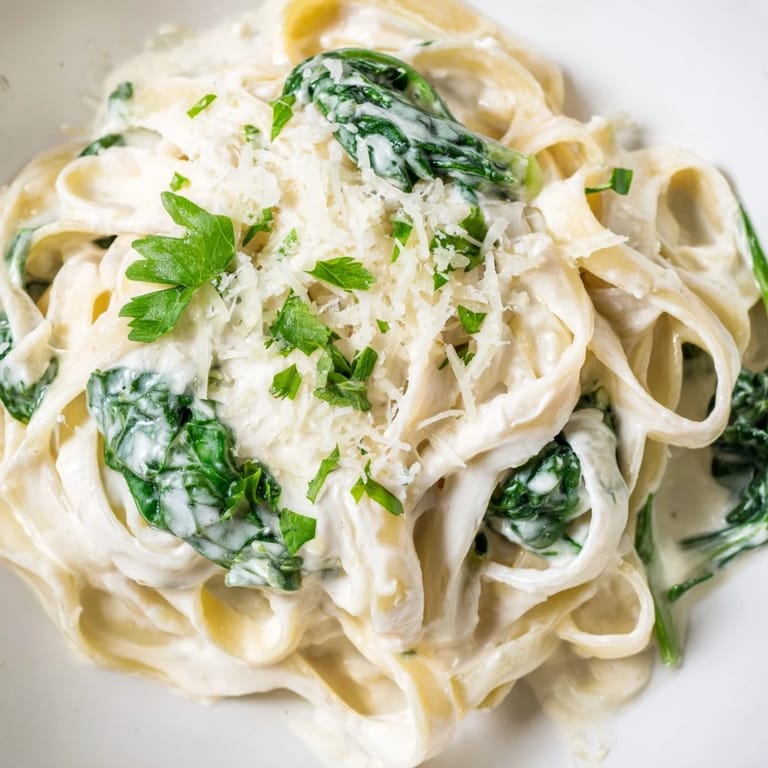
- Add your drained fettuccine directly to the sauce and use tongs to lift and turn it, coating every strand. If it looks too thick, splash in some reserved pasta water a little at a time until it moves the way sauce should—not soupy, not clinging tight, somewhere in between. Serve immediately with extra Parmesan shaved over top and parsley scattered like you meant to be generous.
 Save
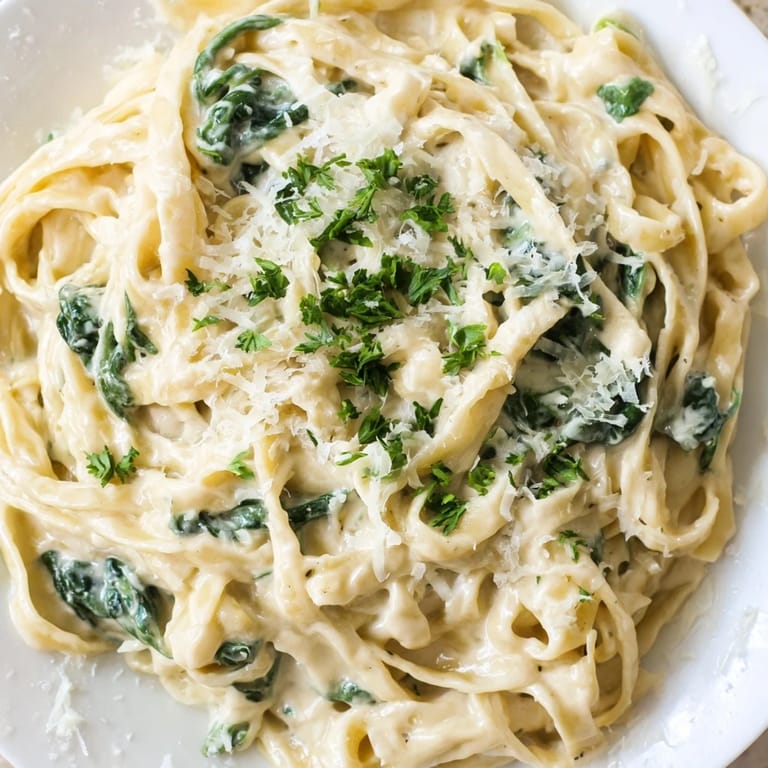
Save There was a moment when everything came together—the sauce gleaming, the pasta glistening, the spinach hidden through it all—and I realized why people come back to this dish again and again. It's not about impressing anyone; it's about knowing you can make something that tastes like care in under thirty minutes.
The Spinach Secret
Adding spinach raw to a hot sauce is a small magic trick—it wilts down in seconds and releases its flavor into the cream without ever getting bitter or dark. The first time I tried stirring it in at the end like the recipe suggested, I thought I'd done something wrong because it disappeared so completely. But then I tasted it and understood that the spinach wasn't gone, it had just become part of the sauce, adding color and nutrition and a subtle earthiness that balances all the richness.
Heat Control Matters More Than You Think
The biggest mistake people make with cream sauces is cooking them too hot, too fast. Your instinct says high heat finishes things quicker, but cream at a boil separates and looks greasy and wrong. Low heat feels slow until you realize the sauce is coming together exactly when you need it, silky and forgiving, and you're in control the whole time. After my first batch split, I learned to trust the slow way.
Make It Your Own
This recipe is a canvas, not a rulebook. I've made it with mushrooms sautéed until they're golden, with thin strips of prosciutto stirred in at the end, with peas folded into the spinach. Some nights I add a splash of white wine to the cream, and it tastes like I've been cooking professionally for years. The beauty is that the sauce base is so solid that you can build anything on top of it and it will work.
- Sautéed mushrooms or cooked chicken turn this into something that feels meatier without losing its elegance.
- A crack of fresh lemon zest at the very end brightens everything and cuts through the richness like nothing else can.
- Save this recipe because you're going to make it dozens of times and never get tired of it.
 Save
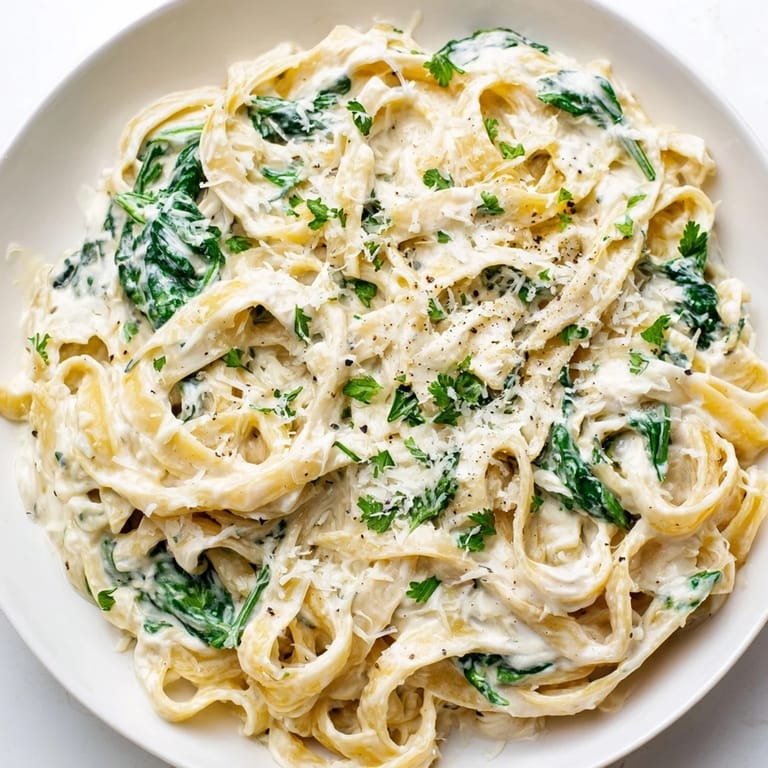
Save This is the kind of dish that reminds you why people cook at all—not to show off, but because something homemade, made with attention and a little knowledge, tastes like proof that good things are worth the small effort. Make it tonight.
Questions & Answers
- → How can I make the sauce creamier?
Use full-fat heavy cream and freshly grated Parmesan. Adding a bit of reserved pasta water also helps achieve a silkier sauce texture.
- → What’s the best way to wilt the spinach without overcooking?
Add spinach to the sauce last and stir for just 2-3 minutes until wilted but still vibrant green for the best texture and flavor.
- → Can I substitute fettuccine with other pasta types?
Yes, wider noodles like pappardelle or tagliatelle also hold creamy sauces well and make excellent alternatives.
- → How do I prevent the garlic from burning?
Sauté garlic over medium heat just until fragrant, about 1 minute, stirring continuously to avoid browning and bitterness.
- → What optional ingredients can add protein to this dish?
Adding cooked chicken or sautéed mushrooms complements the creamy sauce and enhances the meal’s protein content.