 Save
Save There's something about the smell of fish and chips frying that instantly transports me to a rainy London afternoon, standing outside a chippy with vinegar-soaked paper in hand. The first time I attempted this at home, I was terrified—surely restaurant-quality batter required some secret ingredient I'd never find. But after a few batches of soggy disappointment and one triumphant golden fillet that changed everything, I realized the magic was simpler than I'd imagined: cold batter, hot oil, and patience with the double fry.
I made this for my flatmate who swore he'd never eat fish, and watching his face when he bit into that golden, flaky exterior—no fishy taste, just buttery white fish and crunch—made me realize why this dish has survived centuries of food trends. He actually asked for seconds, which had never happened before.
Ingredients
- White fish fillets (cod or haddock): Firm, mild fish that stays tender inside while the batter shatters around it—ask your fishmonger for thick-cut pieces so they stay juicy.
- All-purpose flour and cornstarch: Cornstarch is the secret weapon; it creates that ultra-crispy exterior that regular flour simply can't match.
- Baking powder: This lifts the batter, making it lighter and airier than you'd expect.
- Cold sparkling water: The carbonation creates tiny bubbles that fry up into crispness, and the cold temperature keeps the batter light instead of dense.
- Russet or Maris Piper potatoes: Starchy varieties that develop that perfect fluffy-inside, crispy-outside texture.
- Sunflower or vegetable oil: High smoke point oils are essential—olive oil will burn and bitter your entire dish.
- Malt vinegar: The acidity cuts through the richness and completes the experience in a way lemon never quite does.
Tired of Takeout? 🥡
Get 10 meals you can make faster than delivery arrives. Seriously.
One email. No spam. Unsubscribe anytime.
Instructions
- Soak the potatoes:
- Cut your potatoes into thick batons and plunge them into cold water for at least 15 minutes. This removes excess starch, which is exactly what you need for chips that don't stick together. Pat them completely dry—any moisture left behind will splatter in the oil.
- First fry the chips gently:
- Heat your oil to 150°C and fry the potatoes in batches for about 4–5 minutes until they're tender all the way through but still pale. This step cooks them inside while keeping them from browning. Drain them well and let them cool slightly on paper towels.
- Make the batter:
- Whisk your dry ingredients together, then slowly add cold sparkling water while stirring, keeping the consistency thick enough to coat a spoon with a visible layer. If it's too thin, the batter will slip off into the oil; too thick, and you'll end up with a heavy crust.
- Crank up the heat for the second fry:
- Increase your oil temperature to 190°C and fry those par-cooked chips again, this time in batches for just 2–3 minutes until they're golden and crackling. The contrast between the gentle first fry and this aggressive second one is what creates that magic texture. Salt them immediately while they're still hot.
- Prepare and fry the fish:
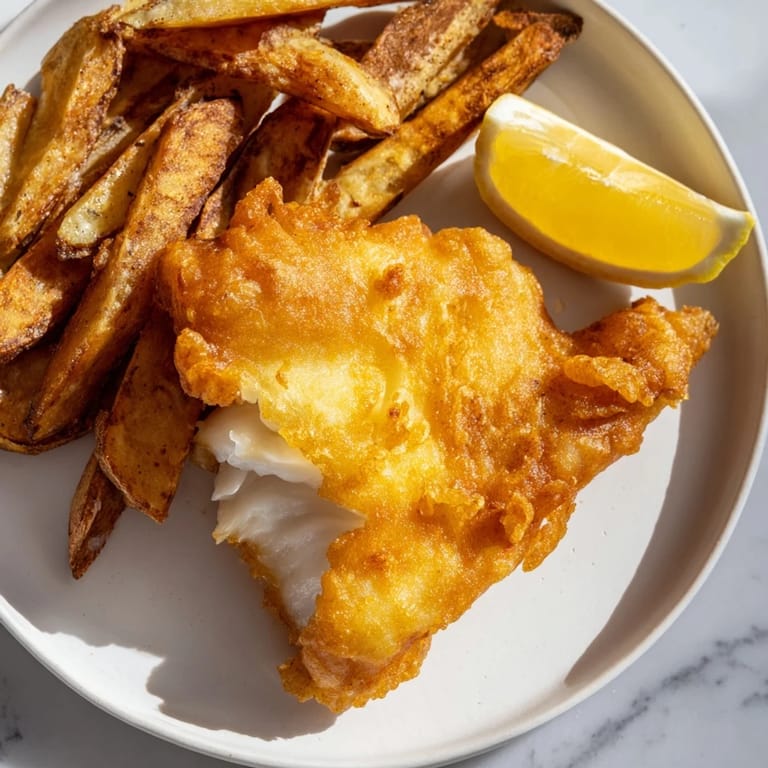
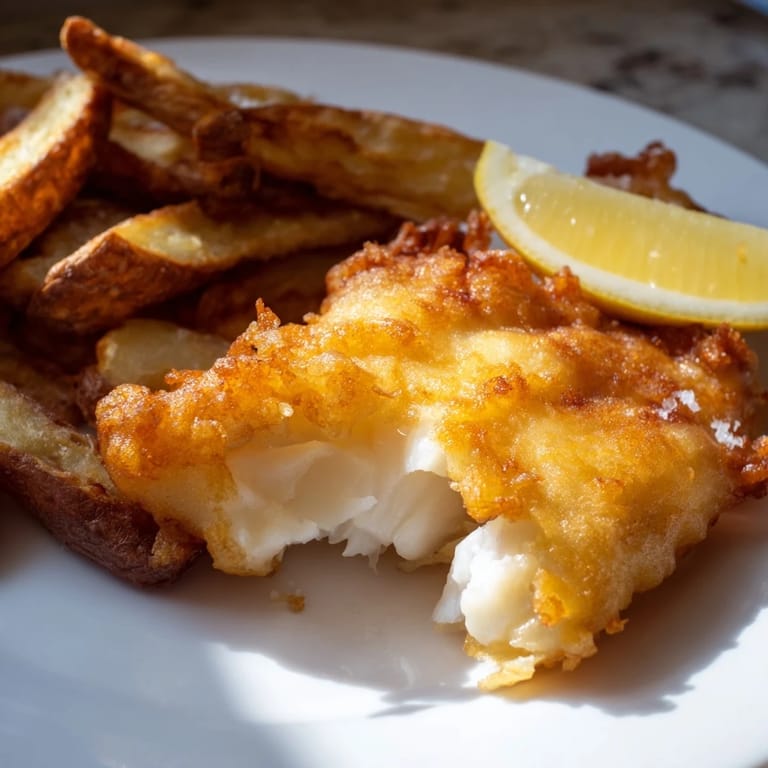
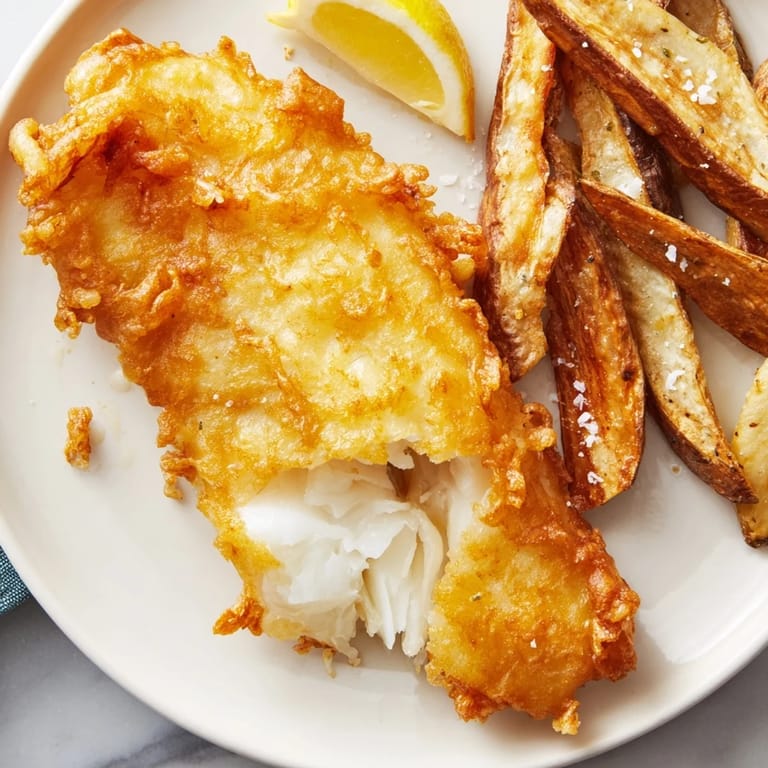
- Pat your fish fillets completely dry with paper towels—moisture is the enemy of crispness. Dust them lightly with flour, then dip each one into your batter, letting the excess drain back into the bowl for a second before carefully lowering it into the hot oil. Fry for 5–7 minutes, turning once, until the batter is deep golden and the fish flakes easily when you peek inside.
- Drain everything properly:
- Use a slotted spoon or spider strainer to pull everything from the oil and place it on a rack rather than paper towels if possible—the air circulation keeps them crispy instead of steaming themselves soggy.
 Save
Save One evening, my mum came round just as I was pulling the last batch from the fryer, and she stood there with that look of pleasant surprise—the kind that meant I'd done something right. We sat down with vinegar and salt and just ate quietly for a few minutes, which for us was the highest compliment possible.
The Double-Fry Secret
The British absolutely understand what restaurants often skip: rushing the process gets you nowhere. That first gentle fry at the lower temperature ensures your chips are cooked through to their fluffy center without any hard bits. The second aggressive fry at high heat creates the crackling golden exterior that makes them irresistible. It feels like extra effort, but it's genuinely the difference between good chips and the ones you remember.
Why This Batter Works
Regular fish and chips recipes often use just flour and liquid, but the addition of cornstarch and baking powder creates something almost lacy in its crispness—the kind of crust that shatters between your teeth. The cornstarch fries up before the moisture has a chance to escape, trapping it in a delicate structure. The baking powder contributes a lightness that keeps the batter from becoming dense or heavy, which means you get that satisfying crunch without feeling like you're chewing through an armored shell.
Timing and Temperature Matter More Than You Think
The temptation is always to cook everything at one temperature for the sake of simplicity, but fish and chips demands more thoughtfulness. Think of it as building layers: gentle heat to cook through, aggressive heat to finish. Your oil temperature determines whether your food soaks up grease like a sponge or crisps up properly. Too cold and you'll end up with soggy, greasy results; too hot and the outside will burn before the inside is done.
- Use an instant-read thermometer and trust the numbers more than your instincts.
- Let your oil come back to temperature between batches instead of rushing.
- Serve everything immediately while the contrast between crispy exterior and tender interior still exists.
 Save
Save This dish is comfort stripped down to its essentials—golden, salty, vinegary, and impossible to stop eating once you've started. It's the kind of meal that makes you understand why some recipes outlast trends.
Questions & Answers
- → What type of fish is best for this dish?
White, flaky fish like cod or haddock works best due to their mild flavor and firm texture that holds the batter well.
- → Why soak the potatoes before frying?
Soaking removes excess starch and helps achieve crispier, fluffier chips once fried.
- → Can beer be used in the batter?
Yes, substituting sparkling water with beer adds extra flavor and creates a lighter, crispier batter.
- → How does double-frying affect the chips?
Frying twice ensures a tender inside with a crunchy golden exterior, enhancing the overall texture.
- → What accompaniments complement this dish?
Malt vinegar, lemon wedges, tartar sauce, and mushy peas provide traditional flavors that balance the crispy fish and chips.