 Save
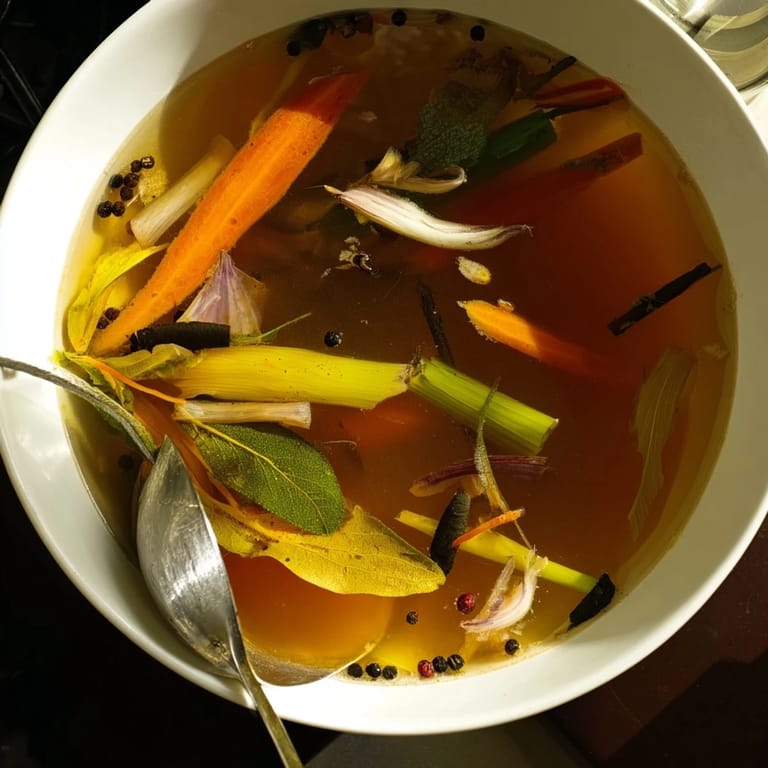
Save My grandmother kept a yogurt container in her freezer, never anything fancy, just accumulating carrot peels and onion ends until it was full. I thought it was eccentric until the day she turned that frozen mess into the most incredible soup base I had ever tasted. Now I have my own container, and it is the first thing I reach for when someone needs comfort.
Last winter my friend came over feeling under the weather, and I made a simple soup with this broth as the foundation. She kept asking what the secret ingredient was, and when I told her it was vegetable scraps she almost laughed out loud.
Ingredients
- Vegetable Scraps: Carrot peels, onion skins, celery ends, leek tops, and mushroom stems create the deepest flavor
- Bay Leaves: These add a subtle earthy backbone that ties all the vegetable flavors together
- Black Peppercorns: Whole peppercorns release a gentle warmth as they simmer
- Garlic: Smashed cloves infuse the broth with mellow savory notes
- Fresh Herbs: Parsley or thyme sprigs add brightness and freshness
- Salt: Essential for bringing out all the vegetable flavors
- Cold Water: Starting with cold water allows flavors to extract slowly and evenly
Tired of Takeout? 🥡
Get 10 meals you can make faster than delivery arrives. Seriously.
One email. No spam. Unsubscribe anytime.
Instructions
- Gather Your Scraps:
- Collect about 5 to 6 cups of vegetable trimmings, making sure they are clean and fresh
- Combine Everything:
- Place the scraps, bay leaves, peppercorns, garlic, herbs, and salt into a large stockpot
- Add Water:
- Pour in 2 liters of cold water, ensuring everything is submerged
- Bring to a Boil:
- Heat over medium-high until you see gentle bubbles, then immediately lower to a simmer
- Simmer Gently:
- Let the broth cook uncovered for 1 hour, skimming any foam that rises to the surface
- Season to Taste:
- Taste the broth and add more salt if needed
- Strain and Store:
- Pour through a fine-mesh sieve, discard the solids, and cool before refrigerating or freezing
 Save
Save This broth has saved so many meals that started as nothing special. A handful of pasta, some greens, and this liquid gold suddenly become something worth remembering.
Building Your Scrap Collection
Keep a large freezer bag and add trimmings as you cook during the week. When the bag is full, you have the perfect amount for a batch of broth.
Storage Solutions
Cool the broth completely before freezing in portions. I freeze 2-cup amounts which are perfect for most recipes.
Flavor Variations
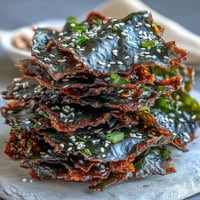
Sometimes I roast the scraps first for a darker, more intense broth. Other times I add a piece of kombu seaweed for extra umami depth.
- Add a tablespoon of apple cider vinegar to help extract minerals from the vegetable scraps
- Throw in a Parmesan cheese rind if you want a richer, savory depth
- A splash of soy sauce mimics the complexity of meat-based broths beautifully
 Save
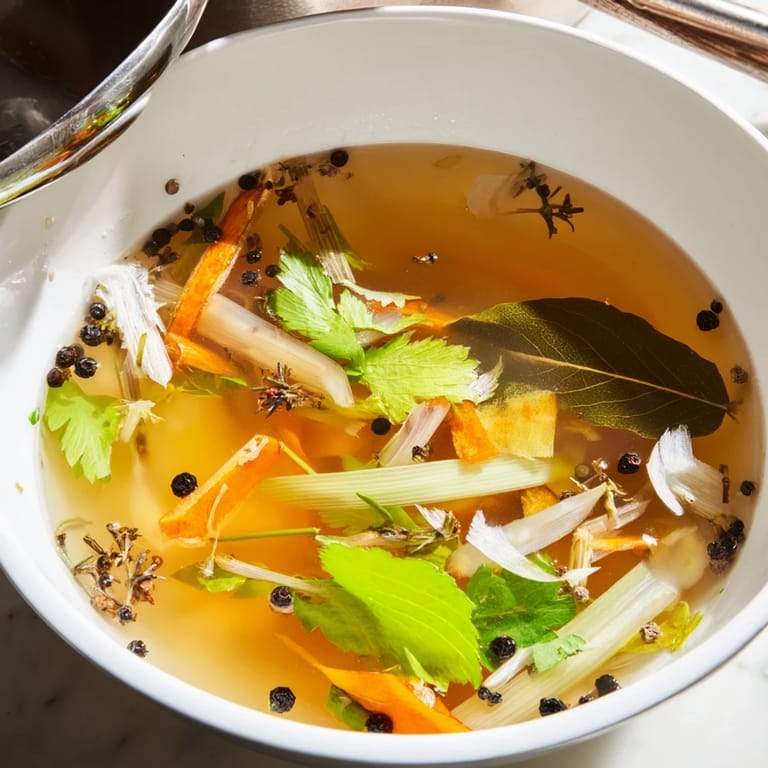
Save There is something deeply satisfying about turning kitchen scraps into liquid gold. Every bowl feels like a small victory against waste.
Questions & Answers
- → What vegetable scraps work best for homemade broth?
Carrot peels, onion skins, celery ends, leek tops, mushroom stems, garlic skins, and parsley stems create the most flavorful base. These aromatic vegetables release deep, savory notes during simmering.
- → Which vegetables should I avoid adding?
Skip cruciferous vegetables like broccoli, cauliflower, Brussels sprouts, and cabbage. These can impart bitter flavors that overpower the delicate, balanced taste of your finished broth.
- → How long can I store this broth?
Keep refrigerated in airtight containers for up to 5 days. For longer storage, freeze portions for up to 3 months. Ice cube trays work perfectly for small, convenient portions.
- → Can I freeze scraps until I have enough?
Absolutely. Store clean scraps in a freezer bag, adding trimmings as you cook. Once you accumulate 5–6 cups, you're ready to simmer a fresh batch of nourishing broth.
- → How do I enhance the umami flavor?
Add a piece of kombu seaweed or dried shiitake mushrooms during simmering. These ingredients deepen the savory profile and add restaurant-quality richness to your homemade creation.