 Save
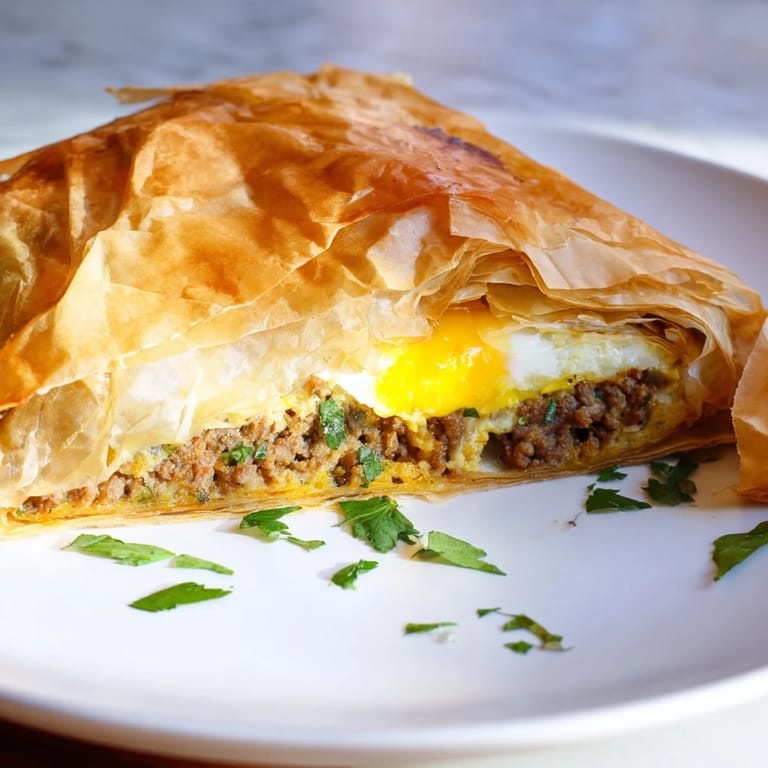
Save The first time I bit into a brik at a small stall in Tunis, oil dripped down my wrist and the egg yolk burst across my tongue—it was chaos and perfection at once. That moment stayed with me, and years later, I found myself attempting to recreate it in my own kitchen, determined to capture that same crispy-outside, custardy-inside magic. What started as a curious experiment became a weekend tradition, especially when friends stopped by unannounced. There's something about folding those delicate pastry triangles that feels like a small meditation, and then watching them transform into golden, puffy pillows in hot oil feels like kitchen alchemy.
I remember my neighbor Fatima watching me make my first batch and gently laughing at how cautiously I was handling the phyllo sheets. She showed me her technique—quick movements, no hesitation—and suddenly my pastries weren't tearing anymore. That single conversation changed everything about how I approach this recipe, and now when I make brik, I think of her patient hands and the way she made it all look effortless.
Ingredients
- Ground beef or lamb: The soul of the filling—lamb has a deeper, more traditional flavor, but beef works beautifully too and cooks just as reliably.
- Onion: Finely chopped and softened first; this gives the meat a sweet, mellow foundation that holds everything together.
- Fresh parsley: Adds brightness and a grassy note that cuts through the richness of the egg and oil.
- Ground cumin: Warm and slightly nutty, it's the spice that makes people ask what the secret ingredient is.
- Ground coriander: Subtle and floral, it whispers rather than shouts, creating depth without heat.
- Phyllo pastry: Handle it like you mean it, but don't be afraid—it's more forgiving than its delicate appearance suggests.
- Eggs: Room temperature if possible; they cook more evenly and the yolk stays runny exactly as it should.
- Gruyère or mozzarella cheese: Optional, but it adds a creamy richness that makes the egg taste even better—I rarely skip it.
- Oil for frying: Use sunflower or vegetable oil; it needs to be hot enough to crisp the pastry in minutes without browning too fast.
Tired of Takeout? 🥡
Get 10 meals you can make faster than delivery arrives. Seriously.
One email. No spam. Unsubscribe anytime.
Instructions
- Build the savory foundation:
- Heat a little oil in your skillet and let the onion soften until it's translucent and smells sweet. Add your meat and spices, breaking it apart as it browns—you want it cooked through but not dense, so keep the heat medium and don't rush it. Stir in the parsley right at the end, then let everything cool slightly so the egg doesn't scramble when it hits the filling.
- Prepare your pastry sheet:
- Lay out a phyllo sheet on a clean, dry surface; if they're paper-thin, layer two together for sturdiness. You're aiming for a strong enough base to hold the filling without tearing, but phyllo is actually tougher than it looks once you give it a moment.
- Assemble with intention:
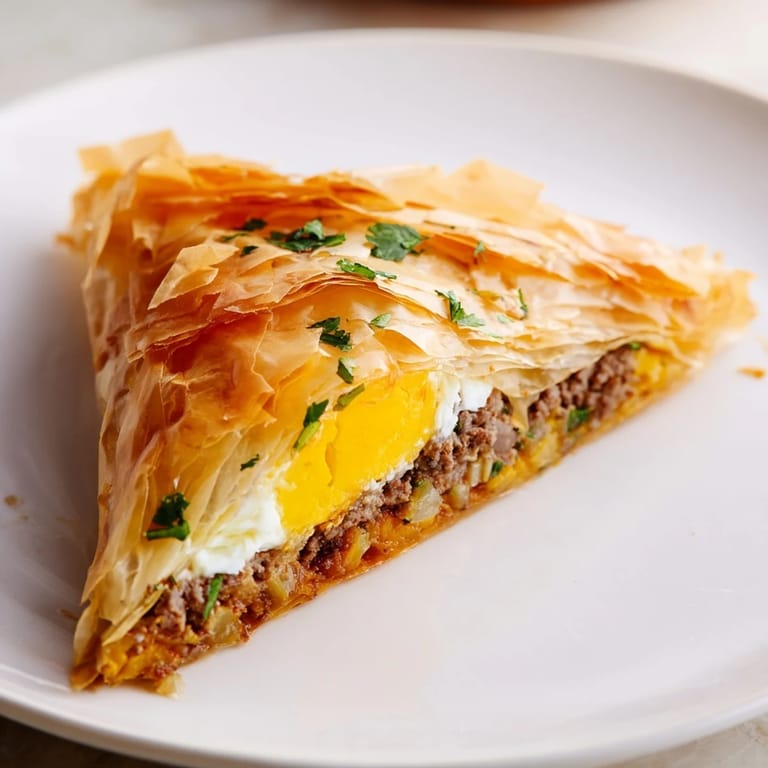
- Spoon 2 to 3 tablespoons of meat mixture into the center of the sheet, making a small well with the back of a spoon. Crack an egg directly into that well—this is the moment of truth, and it's okay if the white spreads a bit. If you're using cheese, sprinkle a tablespoon over the egg.
- Seal and fold:
- Fold the phyllo over the filling to form a triangle or rectangle, bringing opposite corners together and pressing gently. Use a wet fingertip or pastry brush to seal the edges with a tiny bit of water; this keeps everything from opening up in the oil.
- Fry to golden crispy:
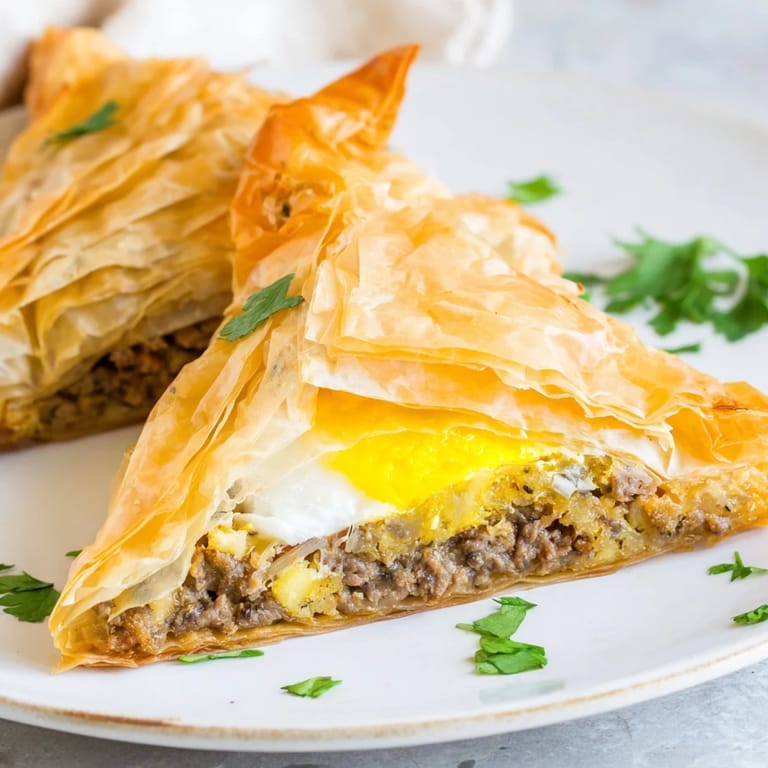
- Heat 3 to 4 centimeters of oil until it shimmers and a tiny piece of phyllo sizzles immediately upon contact—this usually takes 2 to 3 minutes. Carefully slide each brik in and don't move it for the first minute; you want the bottom to set and crisp before you flip it. Fry for 2 to 3 minutes per side until the pastry is deep golden and sounds crackling when you touch it.
- Rest and serve:
- Remove each brik with a slotted spoon, letting excess oil drip back into the pan, then set it on paper towels for just a minute. Serve immediately while the pastry is still crackling and the egg is still warm inside.
 Save
Save There was an evening when my daughter, who'd been picky about trying new foods, picked up a brik and took a hesitant bite. Her eyes went wide the moment the yolk broke, and she asked for another one before finishing the first—no complaints, no negotiation, just pure curiosity satisfied. That's when I realized brik had become more than just food in our kitchen; it was a bridge between cultures and a small moment of joy we could share together.
The Art of Phyllo: Patience Over Perfection
Phyllo sheets intimidate a lot of home cooks, but the truth is they're resilient once you stop treating them like they might shatter. The key is confidence—work quickly but not frantically, keep a damp kitchen towel nearby to cover unused sheets so they don't dry out, and accept that a tiny tear here or there doesn't ruin anything. I've made briouats with phyllo that looked nearly destroyed when I pulled it from the package, and they turned out just as good as the ones made with pristine sheets. What matters most is that you move with intention rather than hesitation.
Variations Worth Exploring
Once you master the basic formula, briouats become a playground for creativity. A tuna version is equally authentic and delicious—simply swap the cooked meat for flaked canned or fresh tuna mixed with a touch of caramelized onion and a pinch of harissa. Potato briouats are lighter and more vegetarian-friendly, using mashed or finely diced boiled potatoes seasoned the same way as the meat filling. Even mixing two fillings—like adding a bit of tuna to the meat, or swirling in some feta cheese alongside the egg—opens up new directions without losing the essential spirit of the dish.
Serving and Sharing
Briouats are best served the moment they leave the oil, still warm and crackling, but they're forgiving enough to sit for 10 or 15 minutes without losing too much texture. Pair them with lemon wedges—the acidity cuts through the richness perfectly—and a simple green salad dressed with olive oil and a pinch of salt. They're equally at home as a casual appetizer, a light lunch with extra salad, or even a late-night snack when you're craving something special.
- Squeeze fresh lemon over each brik right before eating for brightness that makes the whole thing feel lighter.
- Make the meat filling ahead of time and store it in the fridge for up to two days; assembly becomes even quicker on the day of serving.
- If you're cooking for a crowd, fry them in batches and keep the finished ones warm in a low oven while the rest finish cooking.
 Save
Save There's something deeply satisfying about mastering a dish that tastes like travel and tradition but comes together in your own kitchen. Brik isn't fussy or pretentious—it's honest food that asks only for good ingredients and a little bit of care.
Questions & Answers
- → What type of meat works best for Tunisian Brik?
Ground beef or lamb is traditionally used, offering a flavorful and tender filling when seasoned and cooked properly.
- → Can I substitute the phyllo pastry?
Phyllo is preferred for its delicate crispness, but doubling sheets can help prevent tearing and maintain texture.
- → How do I prevent the pastry from tearing during assembly?
Handle phyllo sheets gently and use a small amount of water to seal edges, keeping the pastry intact during folding and frying.
- → Is it necessary to use cheese inside the Brik?
Cheese is optional; adding Gruyère or mozzarella can enhance flavor, but the classic version focuses on meat and egg.
- → What oil is best for frying Brik pastries?
Vegetable or sunflower oil with a high smoke point ensures even frying and a crisp, golden crust.