 Save
Save My neighbor showed up at my door one crisp autumn afternoon with a bag of carrots so bright they practically glowed, and I had no idea what to do with them all. She mentioned her grandmother's ginger soup, how it was the first thing she'd make whenever someone in the family felt under the weather, and something about the way she described it—warm, golden, impossibly smooth—made me want to try immediately. That evening, my kitchen filled with the most unexpected perfume of ginger and caramelized onions, and by the time I took that first spoonful, I understood why she'd been smiling the whole time she talked about it.
I made this for a friend who was stuck inside during a cold snap, and she texted me a photo of her empty bowl with just the word wow. She'd added a dollop of coconut cream on top and apparently sat by the window watching the snow fall, which struck me as the perfect moment for a bowl of this soup. That text made me realize this recipe had become something I could share with people when words weren't quite enough.
Ingredients
- Olive oil: Just enough to coat the pot and let your onions turn soft and sweet without browning too hard.
- Medium onion, chopped: The foundation of everything—take your time letting it go translucent because that's where the gentle sweetness starts.
- Garlic cloves, minced: Two is the sweet spot; more can overpower the delicate ginger note you're building.
- Carrots, peeled and sliced: A kilogram sounds like a lot until you realize they shrink down to almost nothing when cooked, which is the whole magic of this soup.
- Medium potato, peeled and diced: Optional but honestly worth including if you want that luxurious mouthfeel without heavy cream.
- Fresh ginger, peeled and finely grated: This is where personality happens—use fresh, not powdered, because the difference is the difference between good soup and soup that makes people pause mid-conversation to ask what it is.
- Vegetable broth: Four cups of good quality broth carries all the flavor forward, so don't skimp here.
- Water: Keep some nearby because you're the judge of how thick or silky you want this to be.
- Salt and freshly ground black pepper: Taste as you go; seasoning is personal and should be yours.
- Lemon juice: Half a lemon's worth brightens everything and stops the soup from tasting flat.
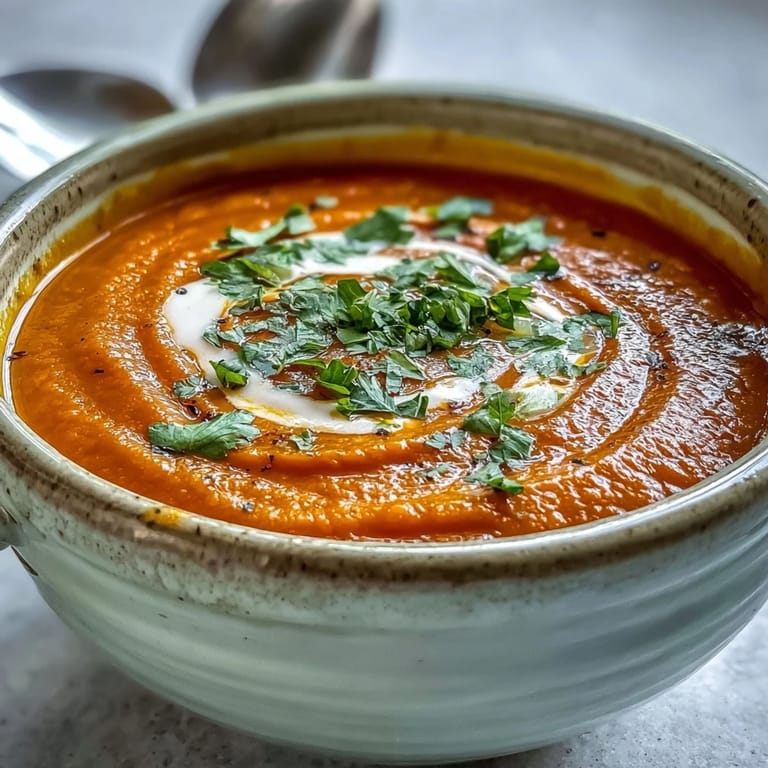
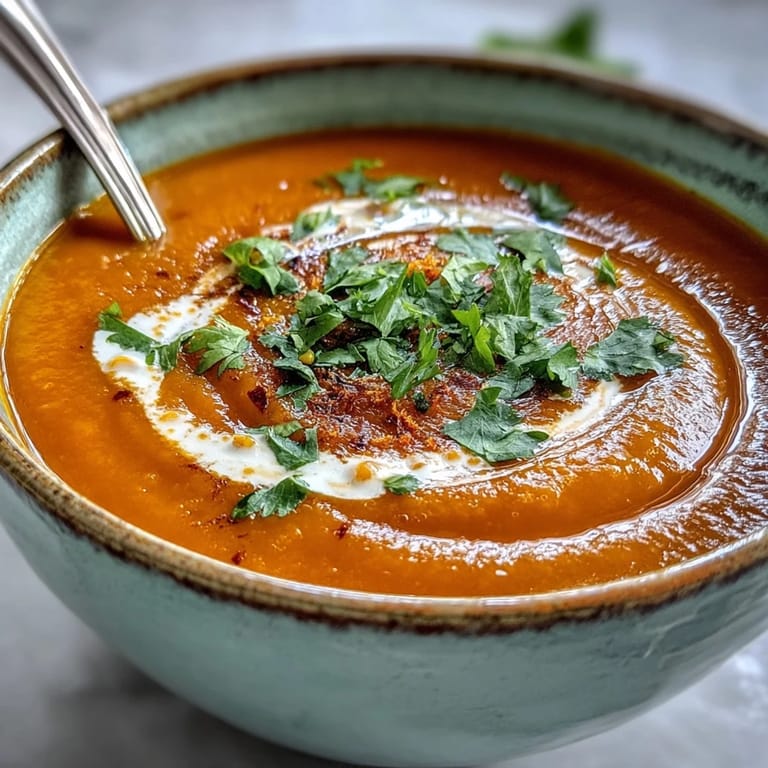
- Fresh coriander or parsley: A handful scattered on top adds color and a fresh herbal note that makes it look intentional.
- Coconut cream or yogurt: For serving, a small spoonful becomes a beautiful white swirl that guests find elegant.
Tired of Takeout? 🥡
Get 10 meals you can make faster than delivery arrives. Seriously.
One email. No spam. Unsubscribe anytime.
Instructions
- Warm your pot and soften the onion:
- Pour olive oil into a large pot and let it heat gently over medium. Once it shimmers, add your chopped onion and let it cook undisturbed for a minute, then stir occasionally until it turns translucent and smells sweet—about four minutes total.
- Wake up the aromatics:
- Add your minced garlic and grated ginger, then stir constantly for just one minute. You'll smell when it's right—that peppery, alive scent means you're done; any longer and it starts to taste sharp.
- Introduce the carrots and potato:
- Stir in your sliced carrots and diced potato, letting them sit in the warm oil for three to four minutes. This brief cooking step coats them and softens their edges just enough to let the flavors mingle before the liquid goes in.
- Build the broth:
- Pour in your vegetable broth, bring everything to a boil, then lower the heat and cover the pot. Let it simmer gently for twenty to twenty-five minutes until the carrots yield easily to a fork and the potato is completely tender.
- Puree into silk:
- Using an immersion blender, work slowly through the pot in sections, letting the blade pull the vegetables into a smooth cream. If you're using a countertop blender, work in batches and be careful with the heat; let the soup cool slightly first.
- Adjust and season:
- Add water a splash at a time until you reach your preferred thickness, then squeeze in lemon juice and taste. Add salt and pepper slowly, because seasoning should feel like tuning rather than guessing.
- Serve with intention:
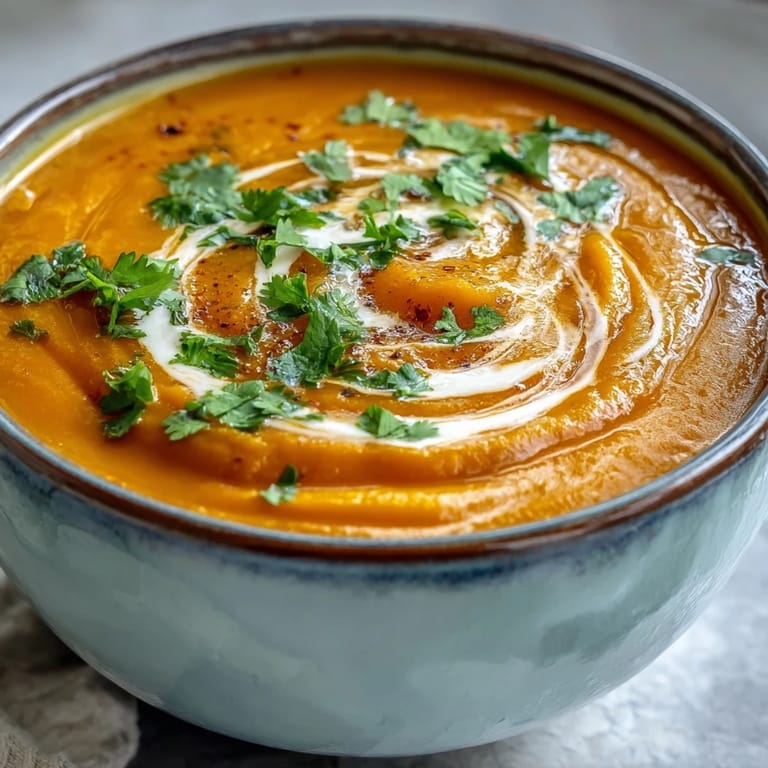
- Ladle into bowls and top with a small handful of fresh herbs and a delicate swirl of cream or yogurt if you're using it. The contrast of that white against the golden soup is worth the small gesture.
 Save
Save On a quiet morning when I was tired and had nothing planned, I made this soup just for myself and realized halfway through that I was actually smiling. There's something about the way your kitchen transforms when this soup is simmering—warm, fragrant, generous—that reminds you why cooking matters.
Why This Soup Feels Nourishing
Carrots are humble vegetables that most people overlook, but when you cook them down with ginger and broth, they become something almost medicinal in the best way. The soup never feels heavy or indulgent, yet it satisfies completely, which is why I've made it for people recovering from illness, for friends on quiet Sundays, and for myself on nights when I needed something that felt like care.
Creative Ways to Serve It
This soup is flexible enough to become whatever moment you need it to be. Serve it warm in winter with crusty bread for dipping, or chill it and serve it cold in summer with a handful of toasted seeds for crunch. I've also ladled it into mugs to carry it around while working, which somehow makes everything feel less urgent.
Small Variations That Change Everything
The beauty of this recipe is that it welcomes small changes without losing its soul. I've added a pinch of cayenne when I wanted warmth, stirred in coconut milk for richness, and once even added a handful of spinach at the very end just to see what would happen. Each version felt like the recipe was becoming more mine, which is exactly how cooking should feel.
- For heat, add cayenne or a chopped chili when you add the ginger, starting with just a pinch.
- Swap half the potato for sweet potato if you want deeper sweetness and earthiness.
- Stir in a splash of coconut milk at the end if you want it richer without using cream.
 Save
Save This soup has become one of those recipes I return to without thinking, the kind that shows up in my cooking when I'm not trying to impress anyone but instead just trying to do something kind. Make it once, and you'll understand why.
Questions & Answers
- → Can I freeze carrot ginger soup?
Yes, this soup freezes exceptionally well for up to 3 months. Let it cool completely before transferring to airtight containers. Thaw overnight in the refrigerator and reheat gently, adding a splash of water or broth if needed to restore consistency.
- → How can I make the soup creamier without dairy?
The optional potato in this recipe naturally adds creaminess when blended. For extra richness, stir in coconut cream or cashew cream before serving. You can also blend in a quarter of a cooked sweet potato or cauliflower for additional silky texture.
- → What can I serve with carrot ginger soup?
Crusty bread, warm naan, or toasted pumpkin seeds make excellent accompaniments. The soup pairs beautifully with a simple green salad dressed with citrus vinaigrette. For a heartier meal, serve alongside a grilled cheese sandwich or quiche.
- → Is it necessary to peel the carrots?
Peeling carrots ensures a smoother, more vibrant final soup without any fibrous bits. If your carrots are young and organic, a thorough scrubbing may suffice. For the silkiest texture, peeling is recommended, especially with mature carrots that have thicker skins.
- → Can I make this soup in advance?
This soup actually develops deeper flavor when made a day ahead. Store it in the refrigerator for up to 4 days. The flavors meld beautifully overnight, and reheating is simple—warm gently over medium-low heat, stirring occasionally, until heated through.
- → How do I adjust the ginger intensity?
Start with 1 tablespoon of fresh ginger if you prefer a milder flavor. For ginger enthusiasts, increase to 2 or 3 tablespoons. Remember that ginger mellows slightly during cooking, so taste and adjust after blending. You can always add more grated ginger during the final heating.