 Save
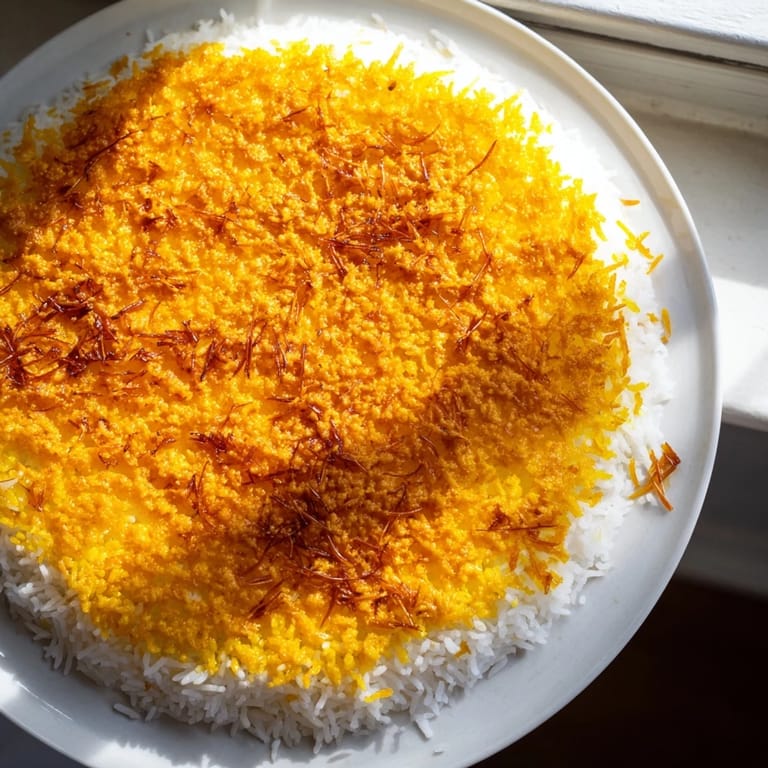
Save The first time I understood tahdig wasn't just rice, it was theater. My grandmother's kitchen filled with this impossible sound—a gentle crackling, almost like distant applause—as she tilted the pot toward the counter and slid it onto a plate with a flourish. That golden, crispy bottom, shattered and caramelized, was the whole point. I spent years thinking I was eating rice. Turns out I was eating an edible promise.
I made this for friends during a cold spring evening, and someone asked if I'd bought it from a Persian restaurant. The look on their faces when I said I'd made it at home, in my tiny kitchen, with ingredients from the regular grocery store—that moment was worth every minute of soaking rice and steeping saffron threads.
Ingredients
- Basmati rice (2 cups): The grains stay separate and delicate; rinsing it until the water runs clear removes the starch that would make it gluey.
- Salt (1 tablespoon for soaking): This seasons the rice gently from the beginning and helps the grains absorb water evenly.
- Saffron threads (1/4 teaspoon): Grinding these first releases their golden magic; the warmth of hot water coaxes out the color and earthy-floral flavor.
- Hot water (2 tablespoons): The vehicle for saffron, and later a drizzle of pure aromatic gold over the finished rice.
- Plain Greek yogurt (4 tablespoons): This creates the tahdig base, crisping up beautifully while the rice steams above it.
- Vegetable oil (2 tablespoons plus extra): It helps brown the yogurt mixture without burning, and survives the high heat needed for that crackling crust.
- Unsalted butter (2 tablespoons, melted): Butter adds richness and helps create that golden color, though oil does most of the heavy lifting.
- Ground turmeric (1/2 teaspoon): Optional but it deepens the color and adds a subtle earthiness that tastes like tradition.
- Black pepper (1/2 teaspoon): A whisper of pepper keeps everything from tasting flat.
Tired of Takeout? 🥡
Get 10 meals you can make faster than delivery arrives. Seriously.
One email. No spam. Unsubscribe anytime.
Instructions
- Rinse and soak the rice:
- Run cold water over the rice, stirring gently with your fingers until the water runs clear—this takes patience, maybe five rounds. Soak it with salt for at least thirty minutes; you're giving each grain time to absorb water evenly so it cooks tender, not mushy.
- Parboil the rice:
- Bring a pot of water to a rolling boil, add the drained rice, and let it cook for five to six minutes until it bends slightly when you lift a spoonful but still has a tiny firm center. You're not cooking it all the way; that happens in the pot where it steams.
- Steep the saffron:
- Grind the threads between your fingers into a small bowl, then pour hot water over them and wait ten minutes while the color blooms from pale yellow to deep gold. This liquid is precious—every drop gets used.
- Make the tahdig base:
- In a bowl, stir together yogurt, saffron water, turmeric, and one cup of the parboiled rice until it's smooth and golden, almost like a thick sauce. This mixture will be your crispy bottom layer, the whole reason you're doing this.
- Heat the pan:
- Pour oil and melted butter into a heavy-bottomed, nonstick pot and let it get hot over medium heat—it should shimmer and smell nutty. You want enough heat to brown the yogurt mixture but not so much that it burns.
- Spread the tahdig layer:
- Carefully spoon the yogurt-rice mixture onto the bottom of the hot pot and spread it into an even layer, like you're frosting a cake. Listen—you'll hear it start to sizzle almost immediately.
- Layer the remaining rice:
- Gently pile the rest of the rice on top, mounding it slightly toward the center. Drizzle the remaining saffron water over everything, then use the handle of a wooden spoon to poke a few holes through the rice pile—these let steam escape so the rice cooks evenly and the tahdig gets properly crispy.
- Steam the rice:
- Wrap your pot lid in a clean kitchen towel (this captures condensation so it doesn't drip back onto the rice), place it on the pot, and cook over medium heat for ten minutes while you listen for that subtle crackling sound to start. Then lower the heat to low and let it cook for thirty-five to forty minutes more—don't peek, just trust the process and enjoy the aroma seeping through your kitchen.
- Invert and serve:
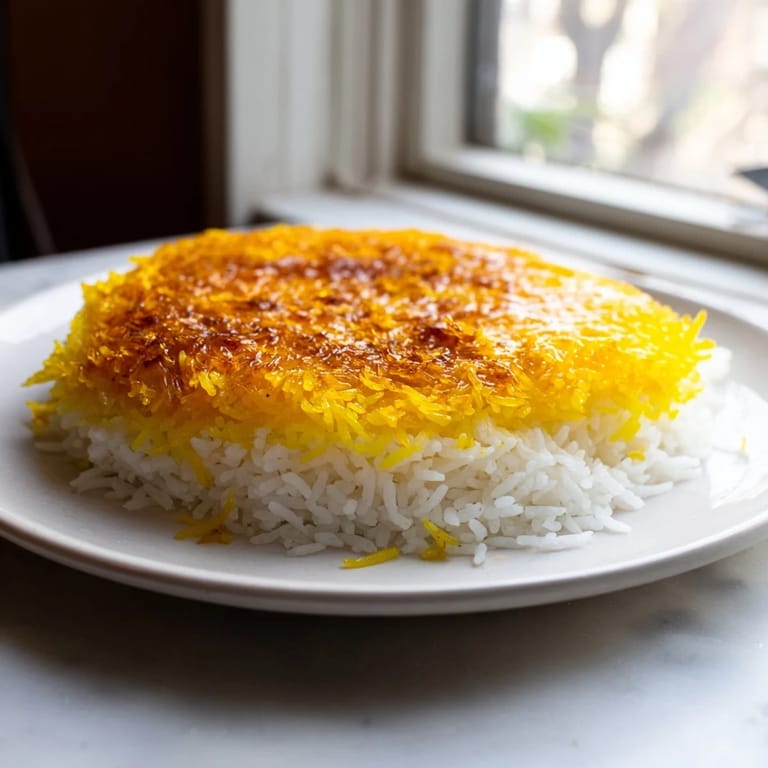
- Let everything rest for five minutes off the heat so the tahdig loosens from the bottom. Place a serving platter over the pot, take a breath, and flip it quickly and confidently so the golden crust lands on top. Slice into wedges and serve right away while it's still warm and crackling.
 Save
Save My neighbor tasted this once and started asking me questions in a way that meant she was tasting memory, not just food. She told me it reminded her of her own grandmother's kitchen, thousands of miles away. That's when I realized tahdig isn't about showing off—it's about creating a moment where people feel like they're home.
The Story Behind the Crust
Tahdig means 'bottom of the pot' in Persian, and it's treated like a treasure, not a mistake. In traditional Persian cooking, the crispy rice is reserved for guests of honor, sometimes served on its own plate before anything else hits the table. Making tahdig is a small act of care—you're not just cooking rice, you're creating texture, sound, and surprise all at once.
Why Saffron Matters
Saffron is expensive for a reason, but you need so little that a tiny container lasts for months. Don't skip it or substitute it; there's no real replacement for that floral, slightly earthy flavor and the way it turns everything golden. Grind the threads to release their full potential—it's one of those small gestures that transforms ordinary rice into something that tastes intentional and special.
Variations and Add-Ins
Once you master the basic tahdig, you can play. Some cooks layer thin potato slices instead of the yogurt mixture for a crispier, more delicate crust. Others crumble flatbread on the bottom, or stir in a beaten egg to the yogurt layer for extra richness. The technique stays the same; you're just changing what caramelizes.
- Add a cinnamon stick or a few cardamom pods to the boiling water to add warmth and spice to the whole pot.
- Scatter barberries, fresh dill, or sliced pistachios on top right before serving for color and brightness.
- Make tahdig in advance and reheat it gently—it keeps its crispness better than you'd expect.
 Save
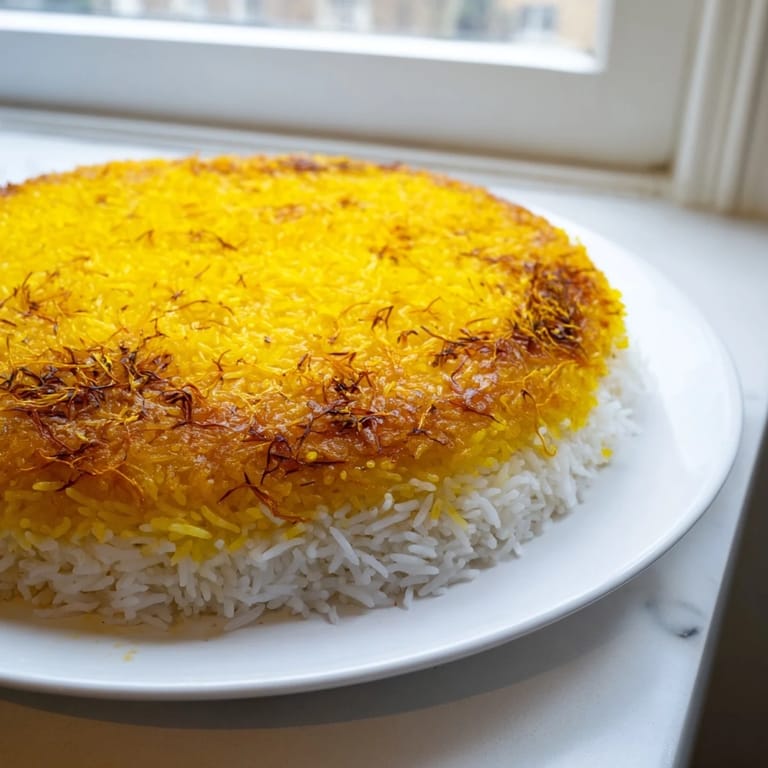
Save This rice deserves to be the star, not a side. Serve it with slow-cooked stews, grilled vegetables, or on its own with nothing but time and good company to appreciate it.
Questions & Answers
- → What makes the tahdig crust crispy?
The combination of yogurt, oil, and melted butter spread at the bottom creates a golden, crunchy layer when cooked slowly over low heat.
- → How do you achieve fluffy rice above the crust?
Parboiling the basmati rice until tender but firm helps maintain separate grains that steam to fluffy perfection atop the tahdig layer.
- → Can saffron be substituted?
While saffron imparts a unique aroma and color, turmeric or paprika can be used for similar fragrant and visual effects if saffron is unavailable.
- → Why wrap the lid with a kitchen towel?
Wrapping the lid absorbs steam to prevent moisture from dripping back onto the rice, preserving the crispy crust texture.
- → Are there variations to the tahdig layer?
Yes, thin potato slices or flatbread can replace the yogurt-rice mixture to create alternative crunchy bottoms.