 Save
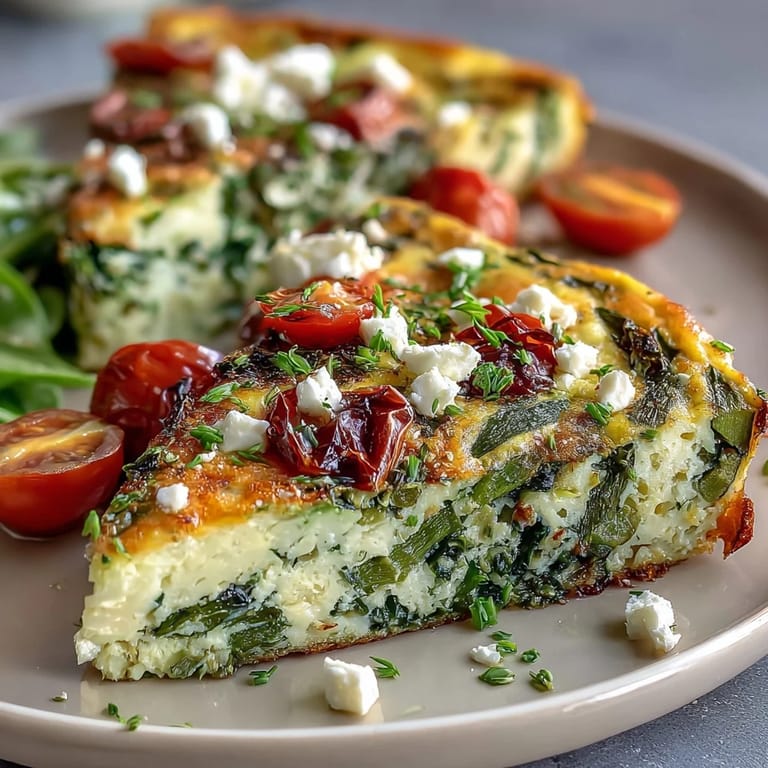
Save There's something about a spring morning that makes you want to cook with your hands, not your head. I was standing in the farmers market on a Saturday, overwhelmed by the sudden abundance of asparagus and baby spinach, when an older woman next to me mentioned she'd been making the same frittata for thirty years. She said it was impossible to mess up, which somehow gave me permission to stop overthinking breakfast entirely. That conversation turned into this recipe, a one-pan moment that feels less like cooking and more like assembling the season onto a plate.
I made this for my neighbor last spring when she was recovering from surgery, and watching her eat a proper meal instead of the casseroles everyone else had dropped off felt like small magic. She asked for the recipe immediately, then told me later she'd made it for her daughter's lazy Sunday, and now it's apparently a regular thing. That's when I knew it wasn't just a recipe, it was something that actually fit into people's lives.
Ingredients
- Asparagus: Trim the woody ends where they naturally want to break, then cut into bite-sized pieces that cook evenly in the eggs.
- Baby spinach: Don't chop it too fine; rough pieces hold their texture better and look more intentional in the finished frittata.
- Cherry tomatoes: Halving them releases their juice into the eggs without making everything soggy if you time it right.
- Zucchini: Dice small enough that it softens in minutes, not chunks that sit firm in the center.
- Red onion: Finely chopped onions mellow into sweetness and distribute their flavor throughout rather than leaving sharp surprises.
- Eggs: Six large eggs give you substance and structure; smaller eggs won't set properly in the time the vegetables need.
- Milk: A quarter cup adds richness and helps the eggs rise slightly; use dairy-free if needed, and it works just as well.
- Feta cheese: The saltiness means you use less salt in the egg mixture, and it doesn't melt into nothing like softer cheeses.
- Fresh parsley and chives: Added at the end so they stay bright green and taste like living herbs, not shadows of themselves.
- Olive oil: Just enough to coat the pan and keep everything from sticking without making the frittata greasy.
Tired of Takeout? 🥡
Get 10 meals you can make faster than delivery arrives. Seriously.
One email. No spam. Unsubscribe anytime.
Instructions
- Heat your oven and skillet:
- Get the oven to 375°F and warm your 10-inch oven-safe skillet over medium heat with a tablespoon of olive oil until it shimmers slightly. This step matters because your vegetables need a warm home ready for them.
- Start with the onion:
- Sauté the red onion first for about two minutes, just until it softens and becomes translucent. You'll smell its sharpness mellowing into something almost sweet, which is your cue it's ready.
- Add the harder vegetables:
- Toss in the asparagus and zucchini with a pinch of salt, and let them cook for three to four minutes with occasional stirring. They should be tender but still have a slight resistance when you press them with a spoon.
- Finish the vegetables:
- Stir in the spinach and cherry tomatoes, cooking just until the spinach wilts and darkens, about one to two minutes. This brief moment is important because overcooked spinach tastes bitter and gray.
- Prepare your egg mixture:
- In a separate bowl, whisk together the eggs, milk, salt, pepper, and red pepper flakes until everything is uniform and slightly pale. Whisking thoroughly means the eggs will set evenly without streaky bits.
- Combine and top:
- Pour the egg mixture evenly over the vegetables, letting it settle around them. Sprinkle the feta, parsley, and chives across the top so every bite gets something fresh.
- Start on the stovetop:
- Let the frittata cook on the stove for two to three minutes until you see the edges turning opaque and pulling slightly away from the pan. This head start prevents the center from staying runny while the edges overcook.
- Transfer to the oven:
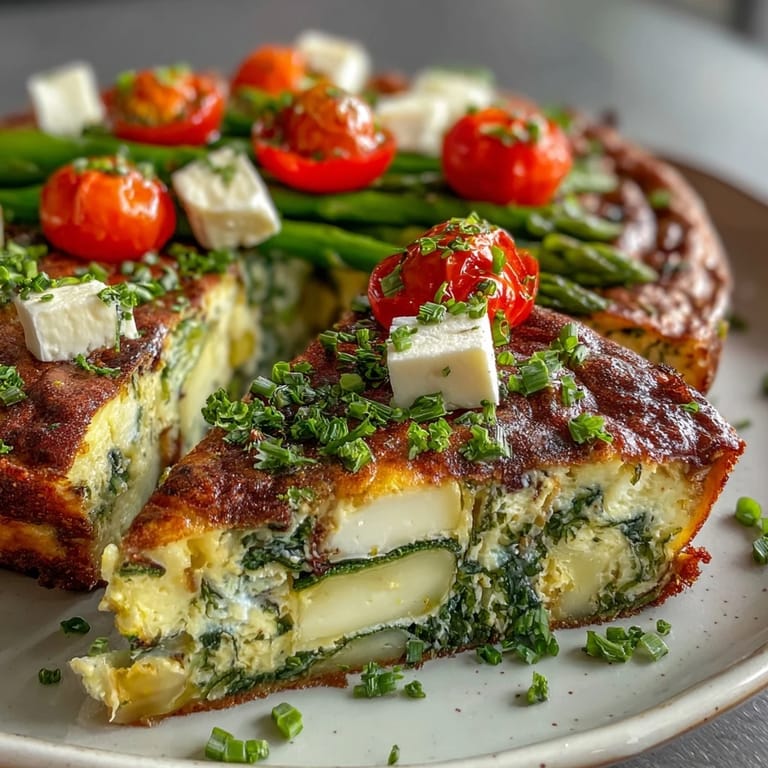
- Carefully move the skillet to the oven and bake for ten to twelve minutes until the center is set and the top is lightly golden. You'll know it's done when a knife inserted in the middle comes out clean.
- Rest and serve:
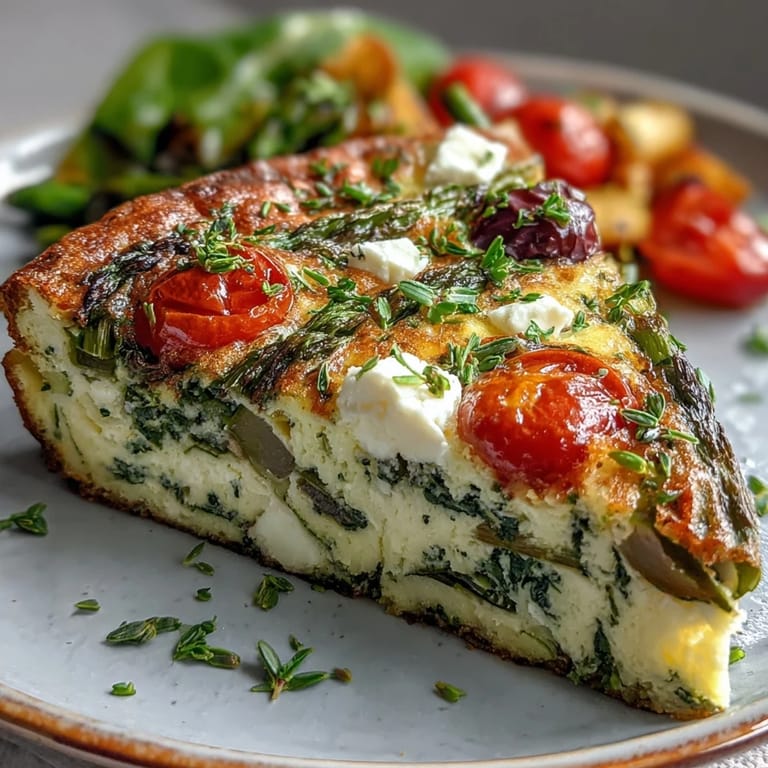
- Let it cool for a few minutes so you can slice it cleanly into wedges without everything falling apart. It's equally delicious warm, room temperature, or even cool the next day straight from the refrigerator.
 Save
Save My daughter came home from college hungry in that way only college students are, and I made this for her dinner because it was what I had and what I could make without thinking. She ate the entire frittata, then asked me to leave the recipe on the counter. It's been six months and she texts me photos of versions she's made in her apartment kitchen, sometimes with peas, sometimes with leeks, always with whatever's in her tiny fridge. That's when I understood that food is just language between people.
Timing and Temperature Matter
The oven temperature of 375°F is deliberate because it's hot enough to set the eggs gently without browning the top too aggressively. Too hot and the edges will overcook into rubber while the center stays soft; too cool and you'll be waiting forever while the vegetables start to dry out. I learned this by making frittatas at every temperature between 350 and 400, and 375 is the sweet spot where everything finishes at the same moment.
Spring Vegetables Are Forgiving
One of the best things about this recipe is that it genuinely doesn't matter which spring vegetables you use, as long as you respect their different cooking times. Softer vegetables like spinach go in last, while denser ones like asparagus need a head start. The only real rule is cutting everything into roughly the same size so nothing gets overlooked or overstuffed into a corner of the pan.
Make It Your Own
This frittata is a canvas, which means your kitchen and your preferences matter more than following me perfectly. Some mornings I add fresh dill instead of chives, other times I use goat cheese instead of feta, and once I threw in some smoked salmon left over from a brunch because it felt right. The eggs will hold whatever you want to put in them as long as you don't go wild and add more than a cup of extra ingredients.
- Swap in peas, leeks, broccoli, or mushrooms depending on what's in season or what your farmers market person recommends.
- Use dairy-free milk and skip the feta entirely if that's what your body needs, and it will still taste like spring.
- A squeeze of fresh lemon juice at the very end brightens everything without making it taste acidic.
 Save
Save This recipe taught me that the simplest meals are sometimes the ones worth repeating, and that feeding people well doesn't require complicated steps or hours in the kitchen. It's become my answer to a dozen different situations, from lazy Sunday brunches to feeding unexpected guests to eating well when nothing else feels manageable.
Questions & Answers
- → Can I substitute the feta cheese with a dairy-free option?
Yes, use a plant-based cheese alternative or omit it entirely for a dairy-free version.
- → What other vegetables can I add to this dish?
Seasonal options like peas, leeks, or bell peppers work well and add extra flavor and color.
- → How do I ensure the vegetables cook evenly?
Sauté harder vegetables like asparagus and zucchini first, then add softer ones such as spinach and tomatoes later.
- → What is the best way to cook this dish without a skillet?
Use an oven-safe baking dish or a cast-iron pan suitable for stovetop and oven to achieve similar results.
- → Can I prepare this dish ahead of time?
Yes, it can be assembled and refrigerated before cooking, then baked fresh when ready to serve.