 Save
Save My neighbor Maria handed me a jar of homemade guava paste one afternoon, still warm from her kitchen, and I understood immediately why her family guarded the recipe like treasure. The first spoonful melted on my tongue with this deep, floral sweetness that made me want to keep eating it straight from the jar. That same week, I watched her transform a pile of pink guavas into something that seemed almost impossible—a glossy, jewel-toned paste that held its shape perfectly. I had to learn how to make it myself, not just for the taste, but for that quiet satisfaction of stirring something on the stove and watching it transform into pure magic.
I made this for my daughter's Spanish class potluck, nervous it wouldn't set properly, but when I sliced it at the event and arranged it next to a wedge of Manchego, something shifted—suddenly we weren't just at a school function, we were having a conversation about family recipes and where food comes from. A teacher I'd never spoken to before asked for the recipe, and my daughter beamed like I'd just won an award. Those small moments remind me that cooking isn't really about the food; it's about the connections you build around it.
Ingredients
- Ripe guavas (1 kg or 2.2 lbs): Choose fruit that yields slightly to pressure and smells fragrant—this is where your paste's flavor begins, so resist the urge to use unripe ones.
- Granulated sugar (450 g or 2 1/4 cups): You'll adjust this based on your guavas' natural sweetness, but having it ready saves time during the crucial cooking phase.
- Fresh lemon juice (2 tbsp): This brightens the guava's flavor and acts as a natural preservative, cutting through the richness with just enough tang.
- Water (120 ml or 1/2 cup): Use filtered water if possible—it helps the guavas cook evenly and doesn't interfere with the pure guava taste.
Tired of Takeout? 🥡
Get 10 meals you can make faster than delivery arrives. Seriously.
One email. No spam. Unsubscribe anytime.
Instructions
- Prepare your guavas:
- Wash each one under cool running water, then trim the stem ends and cut them into quarters, letting them fall into a bowl as you work. If you prefer an ultra-smooth paste, remove the seeds now, though many cooks leave them in for added texture and don't mind straining later.
- Soften the fruit:
- Pour the guava quarters into your largest saucepan with the water and bring everything to a boil over medium heat, then cover and let it simmer for 15 to 20 minutes until the fruit collapses easily under a spoon. You'll notice the kitchen filling with this sweet, almost tropical perfume that signals the guavas are ready.
- Strain to smoothness:
- Once cooled slightly, run the soft guavas through a food mill or press them through a fine mesh strainer, using the back of your spoon to push the pulp through while leaving seeds and skins behind. This step is where patience pays off—don't rush it, and you'll reward yourself with the silkiest paste.
- Measure and sweeten:
- Count how much puree you've created (you're usually looking at about 3 cups), then add roughly equal parts sugar, adjusting down if your guavas were particularly sweet. Return the puree to the rinsed pot and stir in the lemon juice.
- Cook low and slow:
- Set the heat to low and stir almost constantly for 40 to 50 minutes—this is the meditation part of cooking, when your arm gets a workout but you're really just watching the transformation. The mixture will darken slightly, become glossy, and eventually pull away from the pan's sides when you draw your spoon through it.
- Set in the pan:
- When the paste holds its shape on a spoon and looks like thick jam, pour it into a parchment-lined loaf pan and smooth the top with the back of a wet spoon. The parchment makes unmolding later almost effortless.
- Cool and firm up:
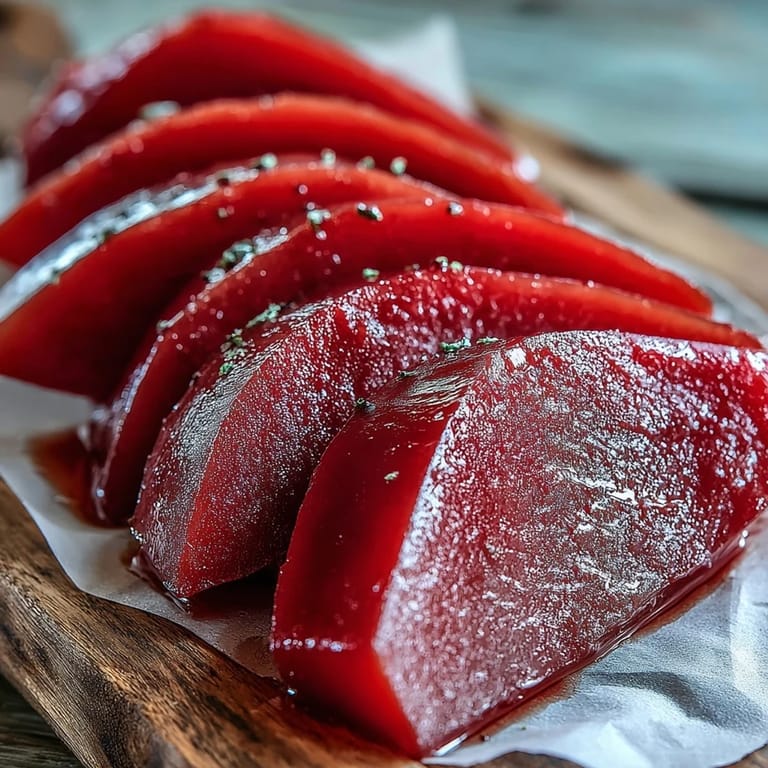
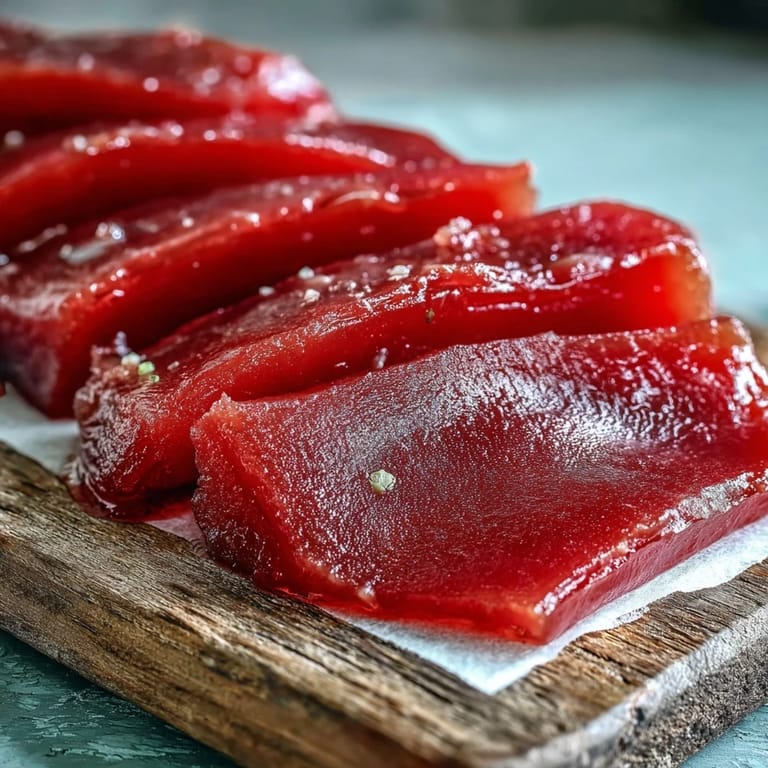
- Let it sit at room temperature for 2 to 3 hours until it's completely firm and no longer tacky, then unmold onto a cutting board and slice into thin rectangles with a sharp knife dipped in hot water between cuts.
 Save
Save There's a moment near the end of cooking when you stop stirring for just a second and listen to the paste bubble softly, and you realize you're about to create something that will last three months in the fridge and taste like summer every single time you open the container. That's when you know you've got this.
The Perfect Pairing
I learned by accident that guava paste with sharp Manchego cheese and good crackers is nearly impossible to stop eating—my dinner guests proved this when the board I'd carefully arranged was nearly bare within minutes. The sweet-tart paste plays off the cheese's nuttiness so beautifully that you'll find yourself planning your next cheese board around this paste before you even finish making it. Some cooks serve it alongside queso fresco or even crumbly aged goat cheese, and each pairing tells a slightly different story about what guava paste can do.
Beyond the Cheese Board
Once you have a jar of this in your fridge, it becomes the answer to so many kitchen questions—dollop it into thumbprint cookies before baking, swirl it into cream cheese for a quick pastry filling, or thin it slightly with a touch of water to glaze a pork roast or duck. I've discovered that spreading it between two butter cookies creates an elegant little treat that looks far more complicated than it actually is, and it's become my favorite thing to make when I need a gift that feels personal without screaming effort.
Storage and Keeping
The beautiful thing about this paste is its longevity—stored in an airtight container in the refrigerator, it'll last up to three months, which means you can make it during guava season and enjoy it well into winter. I keep mine in glass jars because I like seeing the gorgeous deep pink color through the glass, and it reminds me every time I open the fridge that I have something delicious waiting.
- Keep an airtight container handy because once you open that jar, you'll be back for more within a few days.
- If you notice any mold or off smell, trust your instincts and discard it—fresh paste should always smell sweet and fruity.
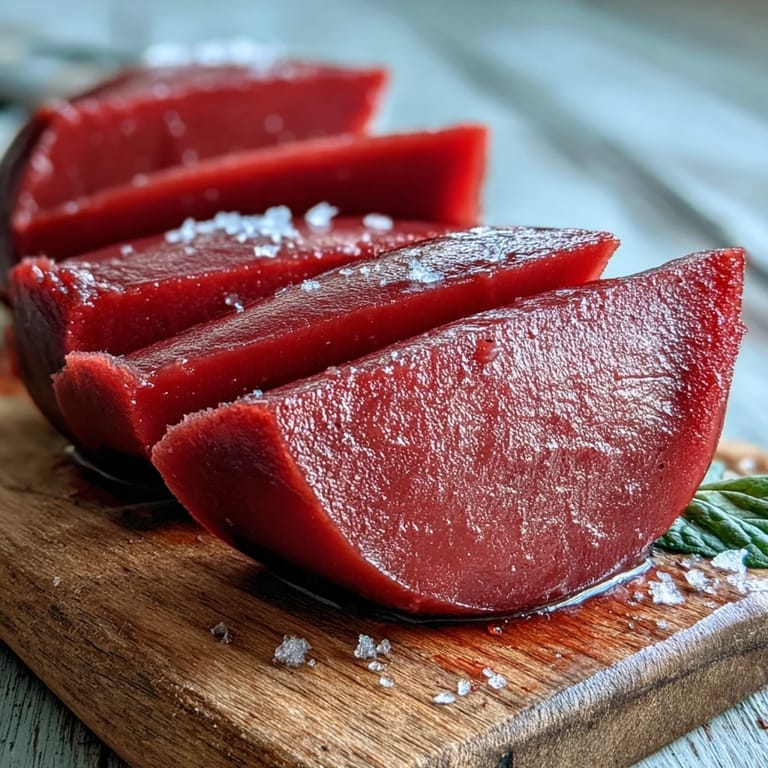
- Slice it with a hot knife for the cleanest cuts and to prevent the paste from sticking to the blade.
 Save
Save Making guava paste transforms you from someone who buys it at specialty shops to someone who makes something better in their own kitchen, and that's a shift worth experiencing. Every jar is proof that you can take something simple and turn it into something unforgettable.
Questions & Answers
- → How do I know when the paste is ready?
The paste is ready when it becomes thick and glossy, pulling away from the sides of the pan. When you drag a spoon through the mixture, it should hold its shape rather than flowing back together. The paste will also darken slightly to a deep rose color.
- → Can I use frozen guavas?
Yes, frozen guavas work well for this preparation. Thaw them completely before starting, and be aware that they may release more water during cooking, potentially requiring slightly longer cooking time to reach the proper consistency.
- → What's the best way to strain the guavas?
A food mill produces the smoothest results while efficiently separating seeds and skins. If using a fine mesh strainer, press the pulp through with a spoon or spatula. For an extra smooth texture, pass the puree through the strainer twice.
- → How should I store the finished paste?
Store in an airtight container in the refrigerator for up to 3 months. For longer storage, cut into portions, wrap tightly in plastic, then freeze for up to 6 months. Thaw in the refrigerator before serving.
- → Can I reduce the amount of sugar?
Sugar acts as both a sweetener and preservative while helping achieve the proper set. You can reduce slightly, but the paste may not firm as well or keep as long. If using very sweet guavas, taste the puree before adding all the sugar and adjust accordingly.
- → What are traditional serving suggestions?
Guava paste is classic with Manchego or cream cheese on crackers, part of a charcuterie board, or sliced as a dessert course. In Latin American cuisine, it's used as filling for pastries, empanadas, or sandwiched in cookies known as alfajores.