 Save
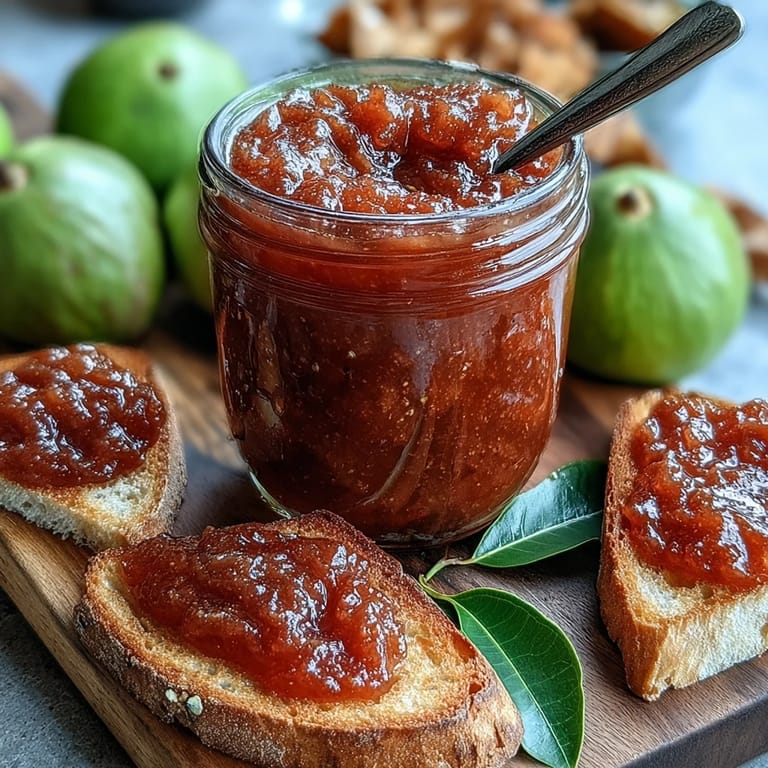
Save There's something magical about watching a pile of rosy guavas transform into jewel-toned preserves on a lazy afternoon. My neighbor handed me a bag of them one summer, insisting I had to do something with their abundance, and I found myself standing in the kitchen with no real plan beyond the vague memory of my grandmother stirring a copper pot. Three hours later, I understood why she'd made it look effortless—there's a rhythm to it, a patience that pays off in spoonful after spoonful of pure tropical sweetness.
I made this preserve on a Sunday morning when the kitchen was finally quiet, and by evening my daughter was spreading it thick on toast, making this small satisfied sound that made the whole effort worth it. She'd been skeptical about homemade anything until that first taste, and suddenly she was asking if we could make it again next week.
Ingredients
- Ripe guavas (1.5 kg or about 10–12 medium): Choose fruit that yields slightly to pressure and smells beautifully fragrant—this is where your flavor begins, so pick ones that smell like tropical sunshine.
- Granulated sugar (700 g or about 3.5 cups): This is your magic thickener and preservative, doing the real work of transforming soft fruit into something that stays shelf-stable and spreadable.
- Fresh lemon juice (2 tablespoons): More than just brightness, it cuts through richness and helps the preserves set properly by activating the pectin naturally present in the guavas.
- Water (1 cup or 240 ml): This gentle medium coaxes the flesh away from those stubborn seeds and helps everything cook evenly.
Tired of Takeout? 🥡
Get 10 meals you can make faster than delivery arrives. Seriously.
One email. No spam. Unsubscribe anytime.
Instructions
- Prepare your fruit:
- Wash the guavas thoroughly under cold water, rubbing them gently. Quarter each one and scoop out the seeds with a spoon, keeping all that beautiful flesh—you want every bit of it, so be patient and deliberate with your spoon work.
- Soften the guavas:
- Drop the flesh and water into a large saucepan and bring it to a boil, then turn it down to a gentle simmer. You're looking for the fruit to fall apart at a touch after 15–20 minutes, filling your kitchen with the most intoxicating tropical aroma.
- Break down the fruit:
- Once softened, use a potato masher to crush it, or blend briefly if you prefer a smoother texture—this is your preference, not a rule. Push it as far as you want; there's no wrong choice here.
- Strain for smoothness:
- Press the mashed mixture through a fine sieve or food mill, letting the pulp fall through while the seeds stay behind. Yes, it takes patience, but this step is what makes the preserve feel luxurious on your toast.
- Combine with sweetness:
- Return the smooth pulp to your saucepan and stir in the sugar and lemon juice until everything dissolves together. This moment, when you stir and watch it become one cohesive mixture, is oddly satisfying.
- Reach the rolling boil:
- Crank the heat to medium-high and stir constantly as it comes to a rolling boil—this matters because you're preventing sticking and starting the transformation into jam. The kitchen gets seriously fragrant at this stage.
- Simmer and stir until ready:
- Drop the heat to medium and let it bubble away for 35–45 minutes, stirring frequently to prevent the bottom from burning. This is the waiting game, the part where you actually get to taste what patience produces.
- Test for doneness:
- Drop a small spoonful onto a cold plate and push it with your finger—when it wrinkles and doesn't immediately run back together, you've hit that perfect jam consistency. Trust this test; it never lies.
- Finish and jar:
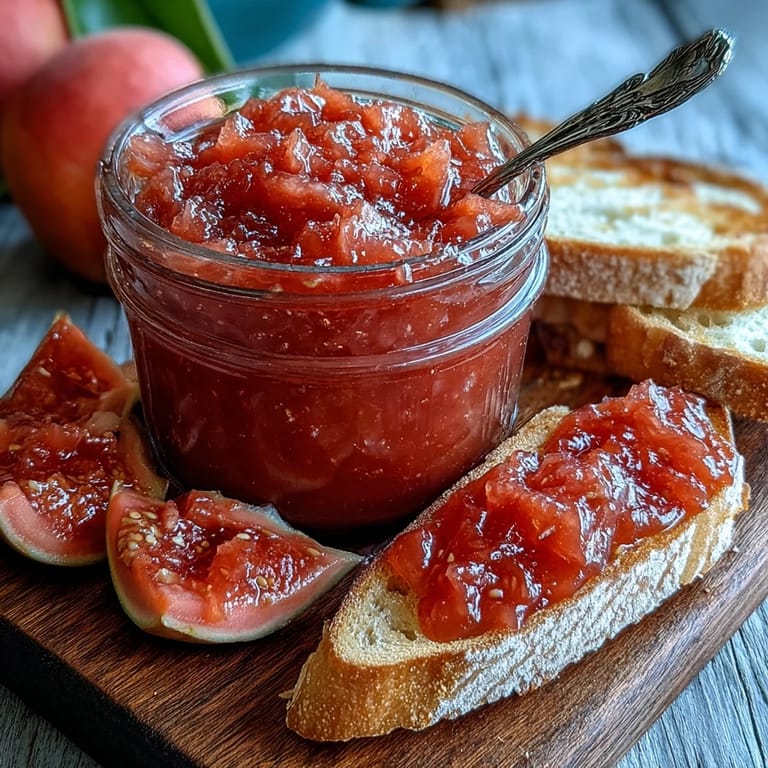
- Skim any foam off the surface if you want clarity, though some people love the rustic look of it. Pour the hot preserves into sterilized jars leaving a tiny half-centimeter headspace, seal immediately, and let them cool completely.
 Save
Save A few months later, a friend who'd received one of those jars came back to tell me she'd been bringing it to parties, and people kept asking where she'd bought it. There's something quietly proud-making about handing someone a homemade preserve and watching their face change when they taste it.
The Secret to Thick, Glossy Preserves
The thickness comes down to three things working together: the natural pectin in guavas, the sugar concentration, and knowing when to stop cooking. I used to second-guess myself, pulling the pot off heat too early because I was impatient, which is why I now swear by that cold plate test. Once you understand that this particular fruit has enough natural pectin to set without added help, you relax into the process and trust the science that's been working for centuries.
Flavor Variations Worth Trying
The baseline recipe is perfect on its own, but I've discovered that a whisper of vanilla extract or a tiny pinch of cardamom can make it feel like something you've never tasted before. A friend suggested adding a tablespoon of rum at the very end, after cooking, for something special, and now that's my go-to gift-giving version. You can also reserve some chunks of guava flesh before sieving and fold them back in at the end for a more textured preserve, which looks absolutely stunning in the jar.
Serving Suggestions and Storage
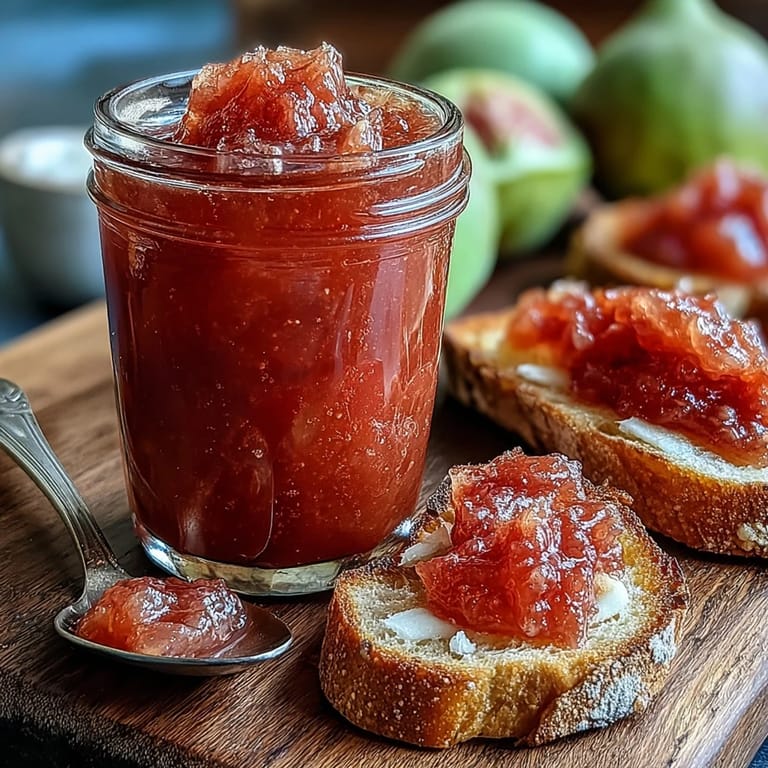
This preserve is unbelievably versatile, which is why you'll make it again and again once you start. Beyond the obvious toast situation, it's stunning with sharp aged cheddar or a creamy brie, swirled into plain yogurt for breakfast, spooned over vanilla ice cream, or used as a filling in pastries and thumbprint cookies.
- For longer storage than three months, process the sealed jars in a boiling water bath for ten minutes to create a proper seal that keeps for up to a year.
- If you make a batch and want to gift it, a handwritten label and a pretty ribbon transform it into something that feels genuinely thoughtful.
- Room-temperature storage works fine if the seal is good, but I keep mine in the refrigerator partly for safety and partly because cold preserves are somehow even better on warm toast.
 Save
Save Making guava preserves taught me that the best kitchen projects aren't about impressing anyone—they're about understanding a fruit so well that you can coax its best version onto a plate. There's freedom in that knowledge, and plenty of reasons to make another batch.
Questions & Answers
- → How do I know when the preserves are ready?
Test doneness by placing a small amount on a chilled plate—if it wrinkles when pushed with your finger, the preserves have reached the proper setting point. This typically takes 35-45 minutes of simmering.
- → Can I make these preserves with less sugar?
Yes, you can reduce the sugar amount, though this may affect the preserving qualities and final consistency. For best results, use at least 50% sugar relative to fruit weight or process jars in a boiling water bath for safe storage.
- → What's the best way to serve guava preserves?
These preserves shine when spread on buttered toast, paired with sharp cheddar or creamy brie cheeses, or used as a filling for pastries and thumbprint cookies. The tropical sweetness complements both savory and sweet applications beautifully.
- → How long do homemade guava preserves last?
When properly stored in sterilized jars and kept refrigerated, these preserves maintain quality for up to 3 months. For longer shelf life, process sealed jars in a boiling water bath for 10 minutes, which allows storage at room temperature for up to a year.
- → Can I use frozen guavas for this recipe?
Frozen guavas work well for preserves. Thaw completely before cooking, and note that frozen fruit may release more water, potentially requiring slightly longer simmering to achieve the desired thick consistency.
- → What gives guava preserves their distinctive aroma?
The natural tropical compounds in ripe guavas create the characteristic floral, sweet fragrance. Cooking releases these aromatic oils, while lemon juice enhances brightness and helps balance the intense sweetness.