 Save
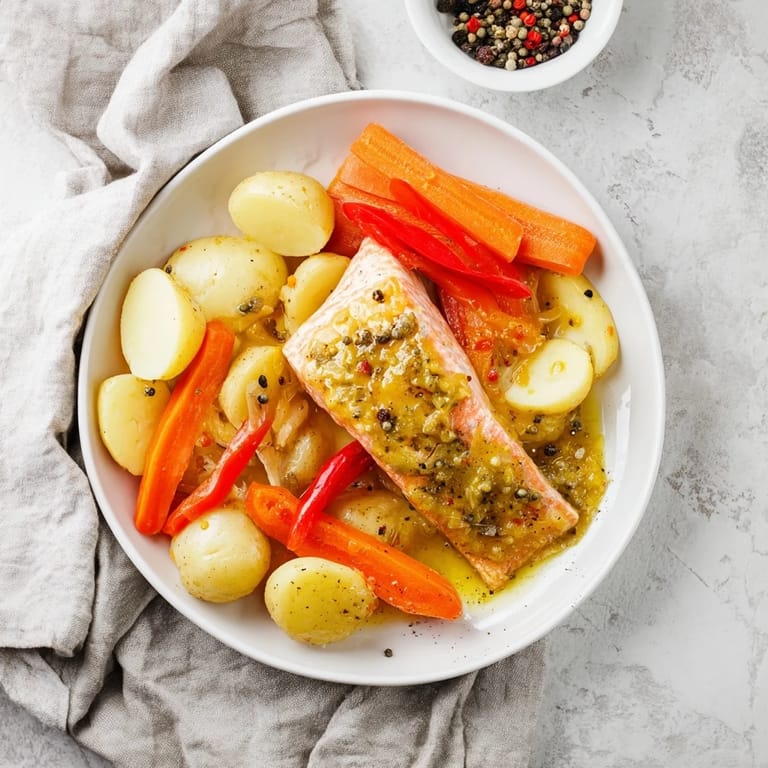
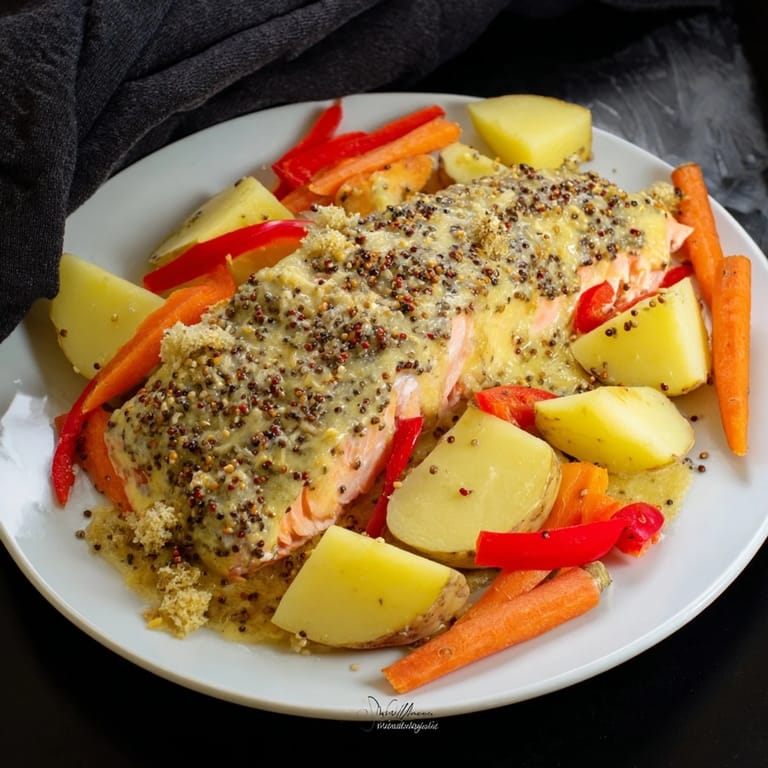
Save I was halfway through a hectic Tuesday when I realized I had nothing planned for dinner and a fridge full of random vegetables. That's when I remembered a trick my neighbor once shared: throw it all on one tray with salmon and let the oven do the work. The honey mustard sauce came from a jar of Dijon I'd been ignoring for months, and honestly, it turned everything golden and glossy in a way that felt like cheating. Now it's my go-to when I want something that looks impressive but doesn't leave me with a sink full of pans.
The first time I made this for friends, I panicked because the salmon fillets were different sizes and I was convinced they'd cook unevenly. But the vegetables acted like little heat buffers, and everything came out tender at the same time. We ate straight off the tray with forks, passing around lemon wedges and arguing about whether to add more honey to the leftover sauce. It felt less like a dinner party and more like a kitchen experiment that actually worked.
Ingredients
- Salmon fillets: Skin-on helps them hold together during baking, but skinless works just fine if you prefer less fuss when serving.
- Baby potatoes: Halving them ensures they roast through in the same time as the salmon, and their edges get crispy and golden.
- Carrots: Cut them into sticks rather than rounds so they cook evenly and don't roll around the tray.
- Red bell pepper: Adds sweetness and a pop of color that makes the whole tray look vibrant and inviting.
- Red onion: Wedges soften and caramelize beautifully, adding a mild, sweet depth to the vegetables.
- Green beans: Trim the ends so they don't turn tough, and they'll stay bright and snappy even after roasting.
- Dijon mustard: The sharpness balances the honey perfectly and gives the sauce its tangy backbone.
- Honey: Use a good quality one if you have it, because it really shines through in the glaze.
- Lemon juice: Freshly squeezed is worth it here, it cuts through the richness and brightens every bite.
- Garlic: Mince it finely so it melts into the sauce rather than sitting in clumps.
- Dried thyme: A subtle earthiness that ties the fish and vegetables together without overpowering anything.
Tired of Takeout? 🥡
Get 10 meals you can make faster than delivery arrives. Seriously.
One email. No spam. Unsubscribe anytime.
Instructions
- Prep the tray:
- Preheat your oven to 200°C and line a large baking tray with parchment paper so nothing sticks and cleanup stays simple. Make sure the tray is big enough that vegetables can spread out in a single layer.
- Toss the vegetables:
- In a large bowl, coat the potatoes, carrots, bell pepper, onion, and green beans with olive oil, salt, and pepper until everything glistens. Spread them evenly on the tray, leaving space in the center for the salmon later.
- Give them a head start:
- Roast the vegetables for 10 minutes so they begin to soften and caramelize before the salmon goes in. This timing trick keeps everything perfectly tender at the finish.
- Make the sauce:
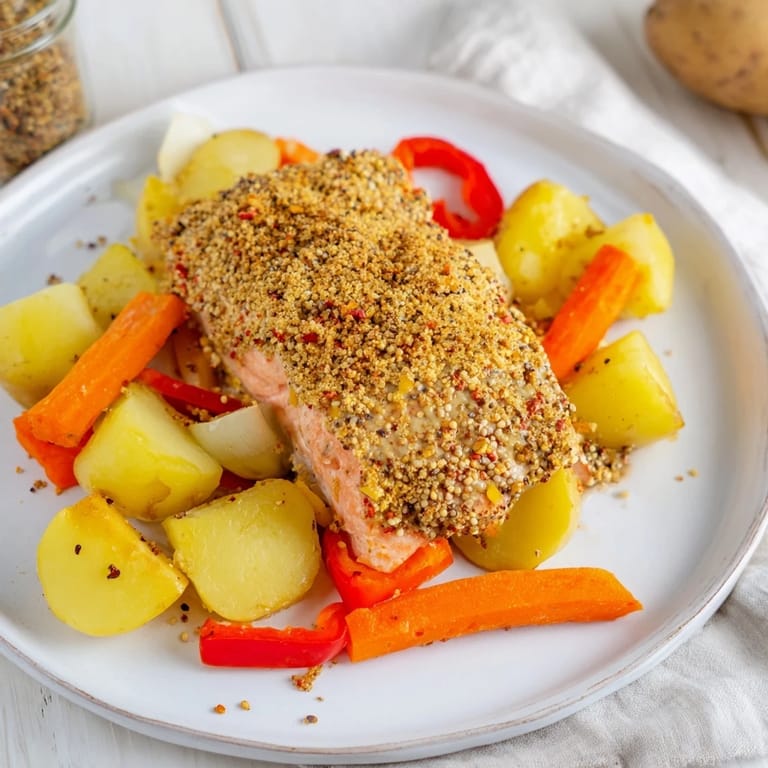
- Whisk together Dijon mustard, honey, wholegrain mustard if you like texture, lemon juice, olive oil, garlic, thyme, salt, and pepper until smooth and glossy. Taste it and adjust the sweetness or tang to your liking.
- Add the salmon:
- Pull the tray out and nestle the salmon fillets among the vegetables, then brush each one generously with the honey mustard sauce. Keep a little sauce aside for drizzling at the end.
- Bake to perfection:
- Return the tray to the oven and bake for 10 to 12 minutes, just until the salmon flakes easily with a fork and the vegetables are tender. The sauce will bubble and caramelize into a beautiful golden glaze.
- Finish and serve:
- Drizzle the remaining sauce over the salmon, garnish with fresh herbs if you have them, and bring the whole tray to the table. Serve with lemon wedges for squeezing over the top.
 Save
Save One evening I made this after a long day and forgot to set a timer, so I just watched through the oven door as the sauce turned from pale yellow to deep amber. That's when I realized the smell alone, sweet mustard mingling with roasted garlic and thyme, was enough to make me feel like I'd accomplished something. My partner wandered in, took one look at the tray, and said it looked like something from a restaurant. I didn't tell them it took me fifteen minutes of actual effort.
Choosing Your Salmon
Fresh salmon should smell like the ocean, not fishy, and the flesh should bounce back when you press it gently. If you're using frozen, thaw it in the fridge overnight so it cooks evenly and doesn't release too much water onto the tray. Skin-on fillets hold their shape better during baking, but if you prefer skinless, just be a little gentler when moving them around.
Vegetable Swaps and Timing
Zucchini and asparagus cook faster than potatoes, so if you're using them, add them to the tray at the same time as the salmon instead of roasting them first. Cherry tomatoes will burst and release their juices, which is delicious but can make the tray a bit saucy, so spread them around the edges. Harder vegetables like sweet potatoes or butternut squash need to be cut smaller or they won't finish in time.
Serving Suggestions and Pairings
This dish is hearty enough on its own, but a side of fluffy rice or crusty bread is perfect for soaking up any extra sauce that pools on the tray. A crisp green salad with a lemony vinaigrette balances the richness, and if you're feeling fancy, a chilled glass of Sauvignon Blanc cuts through the honey and complements the salmon beautifully.
- Sprinkle smoked paprika or chili flakes over the vegetables before roasting for a gentle kick of heat.
- Toss a handful of fresh dill or parsley over the finished tray for brightness and color.
- Leftovers reheat surprisingly well in a hot oven for five minutes, keeping the salmon moist and the vegetables from going soggy.
 Save
Save There's something quietly satisfying about pulling a single tray from the oven and knowing dinner is done, no last minute stirring or plating stress. Just good food that tastes like you tried, even when you didn't have much time to spare.
Questions & Answers
- → What temperature should I bake the salmon and vegetables at?
Preheat the oven to 200°C (400°F) for roasting the vegetables and salmon to ensure even cooking and tender results.
- → Can I substitute any vegetables in this dish?
Yes, feel free to swap in zucchini, asparagus, or cherry tomatoes to suit your preference or seasonal availability.
- → How can I tell when the salmon is fully cooked?
The salmon is done when it flakes easily with a fork and has an opaque appearance throughout.
- → Is the honey mustard sauce adjustable in sweetness or tang?
Absolutely; you can tweak the amount of honey or lemon juice to balance the sauce to your taste.
- → What are some good serving suggestions with this dish?
Serve with lemon wedges and optionally alongside crusty bread or rice. A crisp Sauvignon Blanc pairs exceptionally well.