 Save
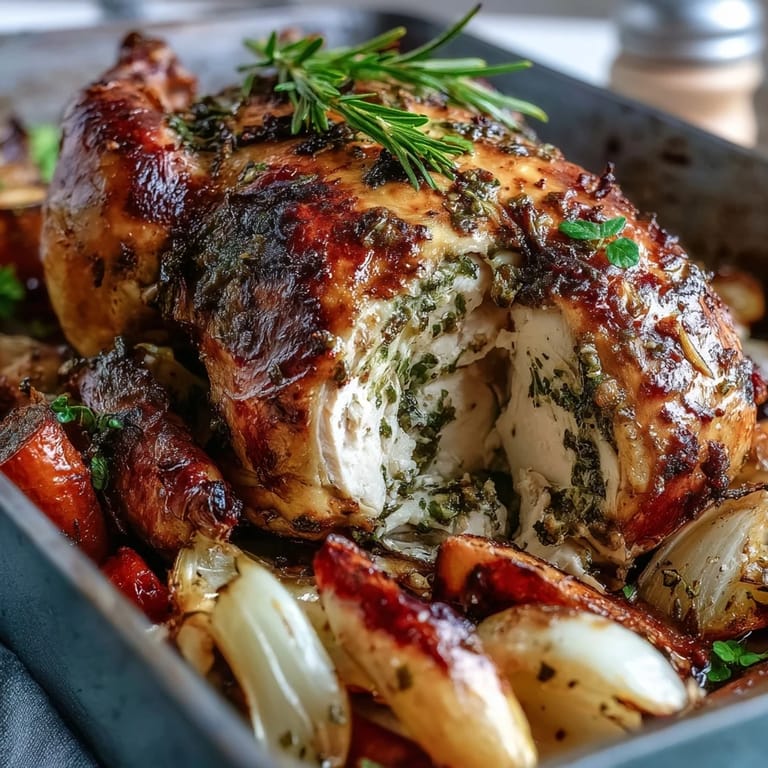
Save The sound of sizzling butter never fails to lift my spirits, especially when it meets a scatter of fresh herbs on a chilly evening. The first time I played with herb butter under chicken skin, it was less about impressing guests and more about curiosity—I’d read about how the flavors seep in but hadn’t realized how the aroma would fill my kitchen, making my neighbor ask what was cooking as she passed by my door. There’s a tiny thrill in massaging softened butter and bright preserved lemon directly onto the bird, the stickiness giving way to the promise of crispy skin. No matter how many times I roast a chicken, the blend of citrus and herbs feels like a little kitchen magic. This isn’t just dinner; it’s the faint echo of laughter and busy hands at a table crowded with plates.
One Sunday, I made this roast for friends who lingered long after dessert, pulling shreds of chicken from the platter with their fingers. We kept glancing at the skin, golden and crackling, as if daring someone to grab the last piece. When someone finally did, it was with a sheepish smile and a buttery napkin. The room smelled like herbs and a touch of lemon—familiar, but just unusual enough to spark conversation. That’s when I realized how a well-roasted chicken can steal a show without even trying.
Ingredients
- Unsalted butter: Using high-quality, well-softened butter ensures it spreads easily under the skin and melts into every crevice—let it sit out until pliable, never microwave it.
- Fresh parsley: Its grassy notes brighten the butter—finely chop to avoid big herb clumps.
- Fresh thyme leaves: Earthy and robust—strip the leaves from tough stems for the most tender bite.
- Fresh rosemary: Just a tablespoon, minced, transforms the aroma—too much turns bitter, so measure with care.
- Garlic cloves: Mince finely for even distribution, sidestepping any shocking raw chunks.
- Preserved lemon rind: The sharpness is gentler than fresh—if new to preserved lemons, taste first to gauge saltiness.
- Sea salt and black pepper: Freshly ground pepper makes a difference, and sea salt brings subtle crunch and flavor pop.
- Whole chicken: Start with a dry bird for that coveted crispy skin—pat every nook with paper towels.
- Preserved lemon, onion, and lemon: Stuffing the cavity infuses the meat—use small pieces so flavors don’t overpower.
- Olive oil: Drizzled on top, it encourages even browning; measure generously but don’t drown the bird.
- Vegetables (carrots, celery, onion): These act as a roasting rack and flavor the pan juices—the chunks must be large so they don’t turn to mush.
- Dry white wine or chicken broth: Adds richness and prevents burning—save the best wine for sipping, but use one you’d happily drink.
- Fresh herb sprigs: For stuffing, tuck a few inside for extra fragrance, or scatter around the pan for aroma.
Tired of Takeout? 🥡
Get 10 meals you can make faster than delivery arrives. Seriously.
One email. No spam. Unsubscribe anytime.
Instructions
- Warm up the oven:
- Preheat to 220°C (425°F) while you gather your ingredients—the heat should feel assertive, not shy.
- Make the herb butter:
- Stir butter, herbs, garlic, preserved lemon rind, salt, and pepper in a small bowl until green flecks are woven through pale yellow creaminess.
- Prepare the chicken:
- Slip your fingers under the skin, gently loosening it above breast and thighs—this part gets a little messy, but it’s worth every sticky second.
- Butter under the skin:
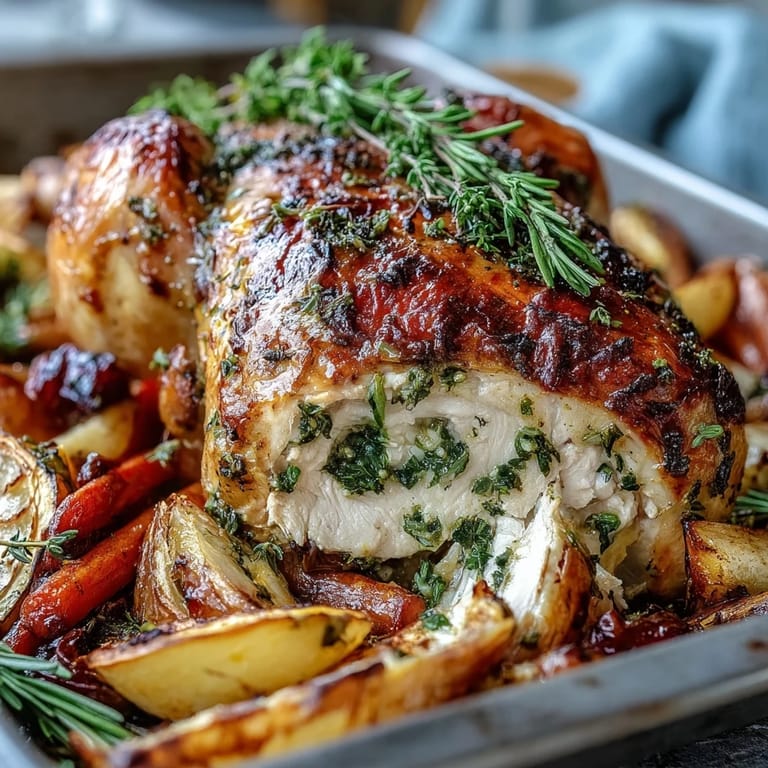
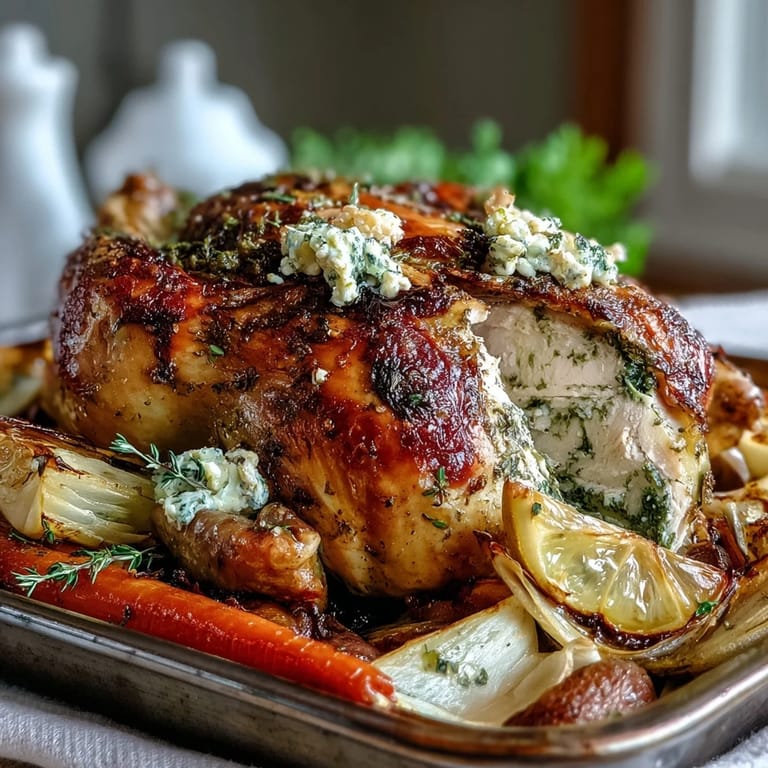
- Spread two-thirds of the herb butter under the loosened skin; massage it evenly, then rub the rest all over the outside, breathing in the scent as you go.
- Stuff and truss:
- Fill the cavity with preserved lemon quarters, onion, halved lemon, and a few herb sprigs, then tie the legs together and tuck the wings—this keeps everything tidy as it roasts.
- Build your roasting bed:
- Scatter carrots, celery, and onion wedges in the pan, pouring in wine or broth until the vegetables feel bathed but not drowned.
- Nestle the chicken:
- Place the chicken breast-side up atop the vegetables, then drizzle olive oil over the skin and sprinkle generously with salt and pepper.
- Roast high and then slow:
- Roast for 20 minutes at full blast, then turn down to 180°C (350°F) and cook for about an hour, basting occasionally so the skin glistens and crisps.
- Rest and serve:
- Once golden and internal temp hits 75°C (165°F), tent with foil and rest for 15 minutes—the juices will redistribute, rewarding your patience; carve and serve with roasting pan veggies and their fragrant juices.
 Save
Save 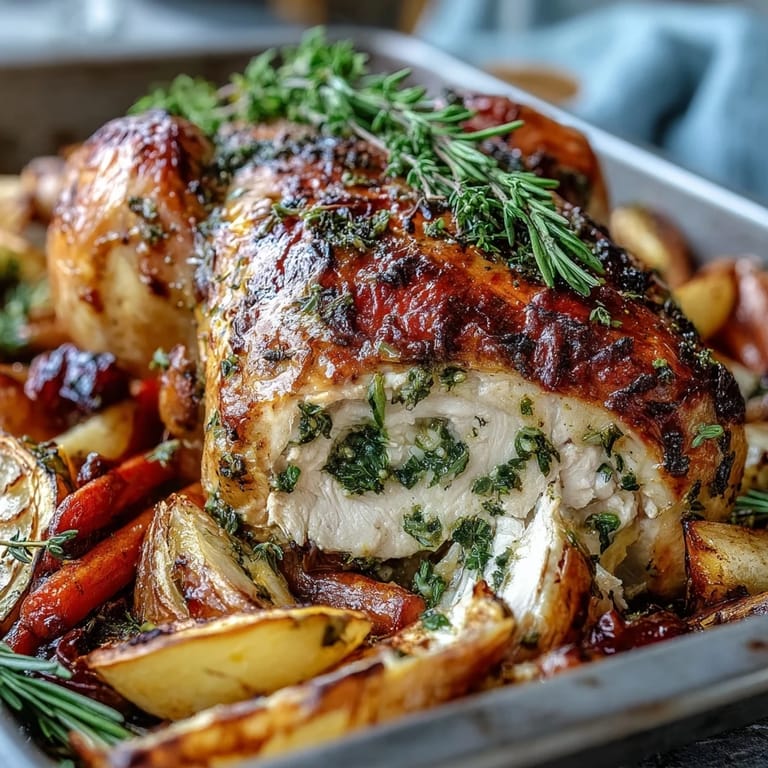 Save
Save The first time someone asked for seconds—with a conspiratorial wink and a request for more pan juice—I knew this recipe had crossed over from ‘something I tried’ to ‘something I’ll make again and again.’ Moments like these make the messier kitchen counters feel completely worth it.
Choosing Your Chicken: What Matters
Buying a well-raised bird makes all the difference here: good fat means golden skin and flavor that stands out. Once, out of impatience, I grabbed a pre-brined supermarket chicken, and it roasted up saltier and a bit rubbery—lesson learned, fresh and unbrined is better for this method.
Making Herb Butter Your Own
Swapping in tarragon or sage can turn the flavor profile on its head—don’t be afraid to mess around based on what’s in your garden or fridge. The one non-negotiable is soft butter; anything colder refuses to blend and leaves you with uneven bursts of flavor.
Troubleshooting Common Roasting Hiccups
If the skin’s browning too quickly, a loose tent of foil saves the day without sacrificing crispness. Should your veggies look dry halfway through, just splash in a little extra broth so nothing sticks, and never roast straight on a bare pan—something underneath preserves both flavor and moisture.
- Herb butter can also be dotted on veggies to double the flavor hit.
- Preserved lemon is potent: use enough to brighten, but not overwhelm.
- Let leftovers rest uncovered before storing to keep the crispy edges intact.
 Save
Save 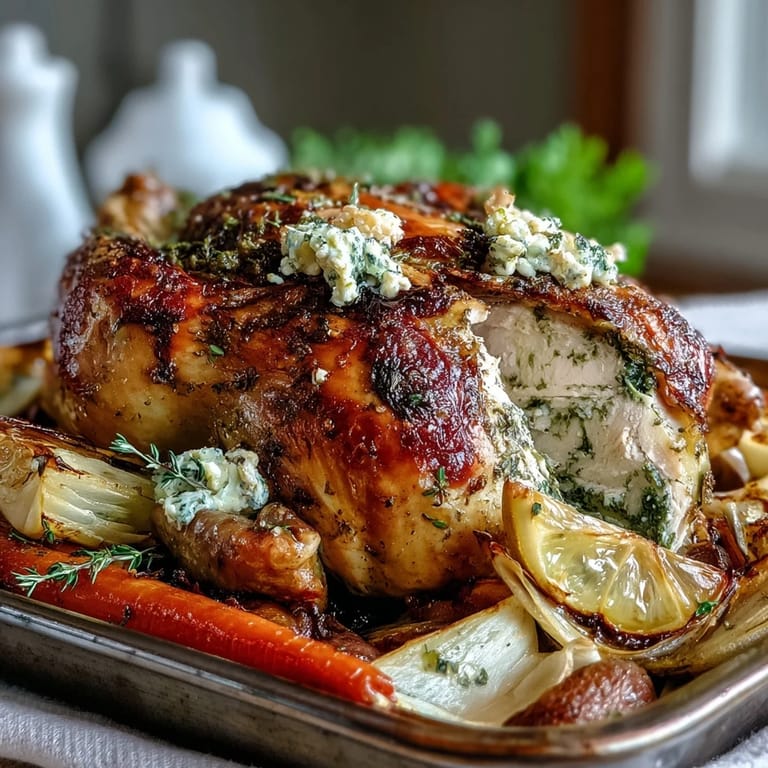 Save
Save If there’s ever a good excuse to gather, this roast chicken does the trick—no special occasion required. I hope it brings your kitchen as much flavor and cheer as it has brought to mine.
Questions & Answers
- → How do I get extra-crispy skin?
Pat the bird thoroughly dry before applying the herb butter, start roasting at a high temperature for 20 minutes to render fat and brown the skin, then reduce the heat and finish cooking until done.
- → Can I swap preserved lemon if unavailable?
Yes. Use finely grated fresh lemon zest and a little extra lemon juice to mimic brightness, or a touch of lemon rind mixed into the butter for acidity without the preserved texture.
- → What’s the best way to check doneness?
Use an instant-read thermometer and verify the thickest part of the thigh reaches 75°C (165°F). Alternatively, check that juices run clear and the leg moves easily at the joint.
- → Should I baste the chicken while roasting?
Occasional basting with pan juices helps flavor and browning, but avoid opening the oven too often. Baste every 20–30 minutes after reducing the temperature for best results.
- → What vegetables pair well in the roasting pan?
Carrots, celery and onion make a classic bed that flavors pan juices. Add potatoes or parsnips for a heartier tray that roasts alongside the bird.
- → How long should the chicken rest before carving?
Let the chicken rest loosely tented for 15 minutes to allow juices to redistribute; this yields juicier slices and prevents the pan juices from running out when carved.